
Technical Guide to Custom Display Rack Specifications: Material, Load, Finish & Certification
Technical Guide to Custom Display Rack Specifications: Material, Load, Finish & Certification
A custom display rack specification only works when every line can be checked. That means a material with a named grade and process, a load figure with a test method behind it, a finish with a physical reference and an inspection step, and a certificate whose scope actually covers the parts you are buying. These are the four blocks — material, load, finish and certification — that decide whether a retail program installs on schedule or ends up as a drawing dispute.
This guide is written for retail buyers, brand fixture managers and project engineers at the evaluation stage: the design direction exists, a shortlist of suppliers is being compared, and the next step is to issue a specification that can be quoted accurately, sampled, inspected and accepted. It uses three Redman reference models — RM-POP-001 (POP Display Stand), RM-SF-001 (Store Fixture) and RM-PD-001 (Plastic Display Rack) — to show how one specification template adapts across fixture formats in sportswear stores, supermarkets, department stores and exhibition environments.
Short answer: build the specification as a table, not as prose. Every line carries a parameter, a target value, a verification method, and the document the supplier must return. The parameter table in Section 5 and the eight-step build in Section 6 show how to do this.
Problem Definition: Why Custom Display Rack Specifications Fail After the Purchase Order
Most custom display rack problems do not begin in production. They begin in a specification document that reads well and verifies badly. Four failure patterns recur in retail fixture programs:
- Material described by category, not by grade. A line that says 'metal frame' or 'wood body' does not distinguish cold-rolled steel from stainless steel, or MDF from plywood. The factory quotes the cheapest interpretation that satisfies the words, and the buyer receives a fixture that meets the sentence but not the intent.
- Load stated as a number without a test. A rating of a given weight per shelf means nothing unless the specification also defines uniform versus point loading, duration, permitted deflection, and whether a load-bearing test is performed and recorded.
- Finish named but never referenced. Powder coating, painting, melamine and veneer are process families. Without a physical colour and sheen reference and a defined inspection step, two production batches can differ visibly while both are technically compliant.
- Certification claimed at company level, not at product level. A quality management system certificate proves the management system covers a defined scope. It does not, by itself, prove that the wooden parts in your order were produced under a chain-of-custody system. Those are separate documents and must be requested separately.
Each of these is fixable at the evaluation stage, at the cost of writing four extra columns into a spreadsheet. None of them is fixable after the container has shipped.
Industry Background: Why Specification Discipline Matters More Than It Used to
Display rack procurement has become more technical because the category itself has become larger and more material-diverse. The global retail shelving market was valued at USD 12.4 billion in 2025 and is forecast to reach USD 25.6 billion by 2034 at a CAGR of 8.9% (Dataintelo, Retail Shelving Market Size, Share & Forecast Report 2025–2034). Within that market, steel remains the dominant material, holding a 48.6% share in 2024, and floor-standing display cases represent the dominant product segment at a 52% share of the retail display market in 2025, according to one commercial market analysis.
The practical reading of those two figures is straightforward. Most custom display rack projects will be floor-standing steel structures, so the metal specification block carries the most commercial weight. But steel dominance does not make wood, acrylic or combined wood-metal fixtures marginal — it makes them the parts of a program where specification discipline most often slips, because they are specified less frequently.
Electronics are adding a further block. The global LED modular display market was projected to reach USD 10.2 billion in 2026 (Grand View Research, LED Modular Display Market Report 2024–2030), which means more fixture briefs now include LED lighting or LED screens as part of the display rack rather than as an afterthought. Every electrical element added to a fixture adds a specification line, a compliance question and a service access requirement.
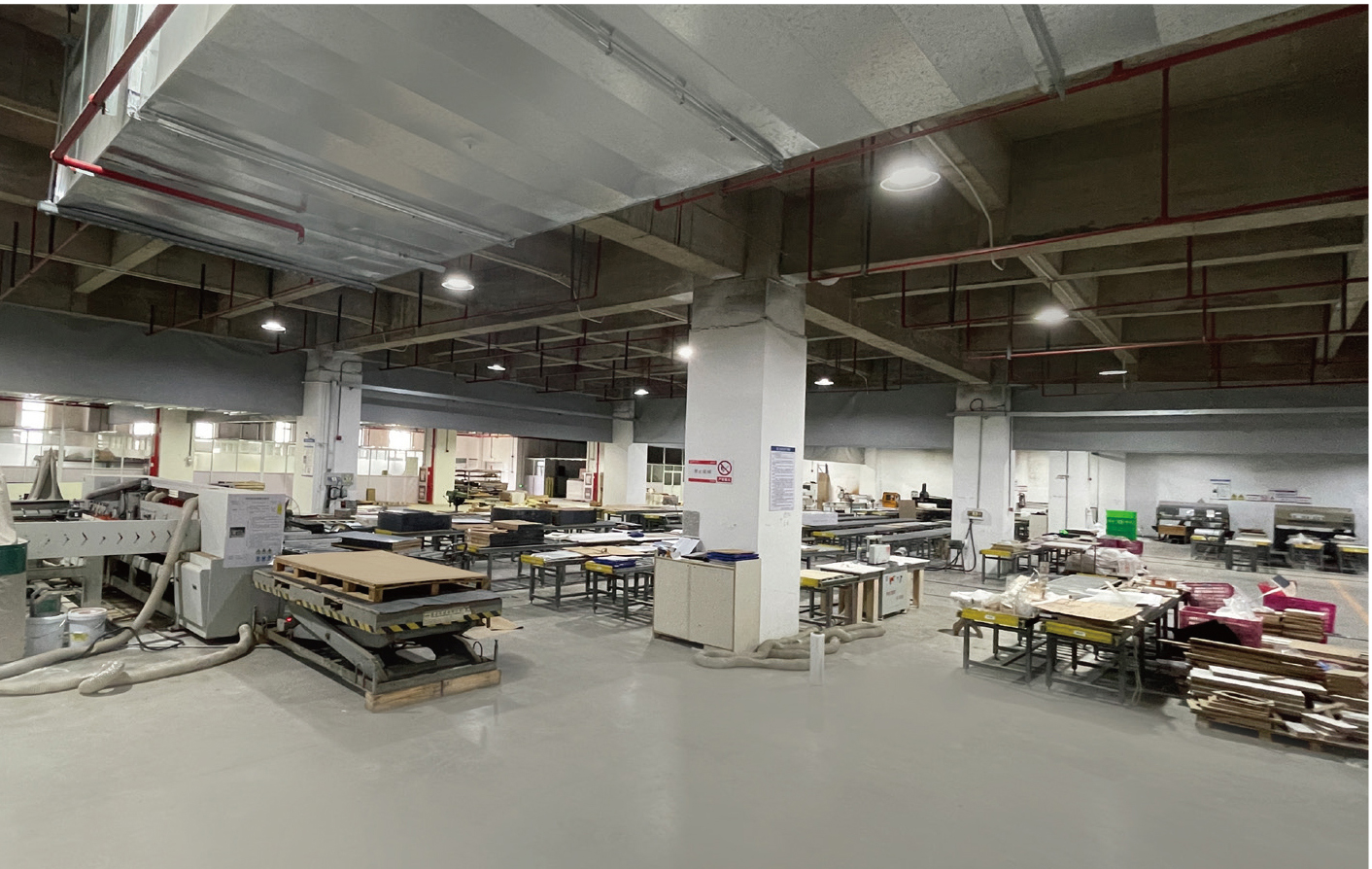
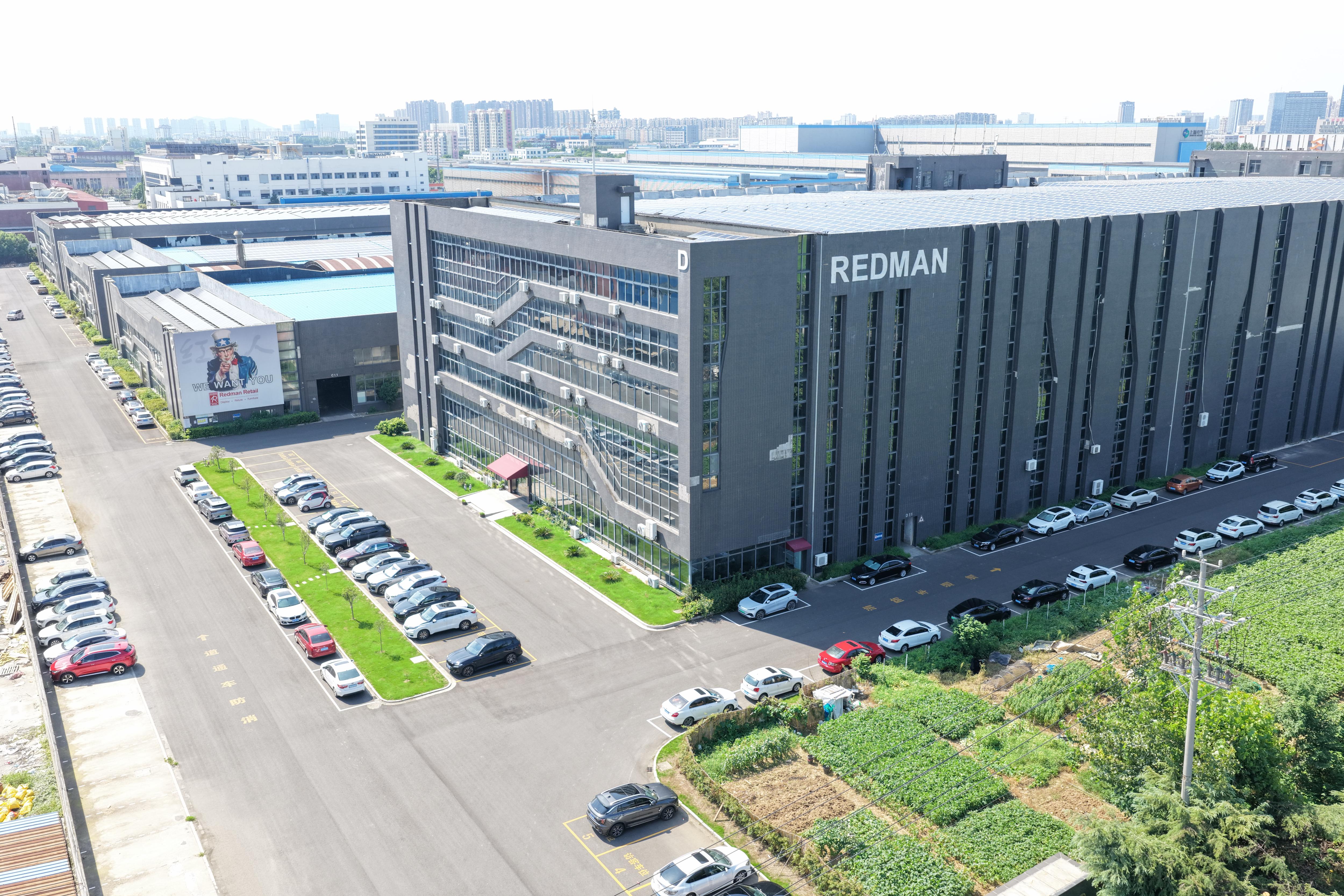
Redman Corporation is a custom POP display and store fixture manufacturer founded in August 2002 and located in Zhangjiagang, Jiangsu, China, about two hours' drive from Shanghai. The company operates production facilities of around 550,000 square feet (51,097 m²) covering metal, wood, plastic, printing, painting, powder coating and packaging workshops, employs over 350 people including more than 50 technical engineers and 7 project managers, ships 1000+ containers annually, and exports to the USA, Canada, Europe, the Middle East and Australia at a 95% export ratio. Those in-house workshops are the reason a four-block specification is workable: the same document has to be interpreted by metal, wood and plastic production teams, and each team reads a different part of it.
Detailed Solution: The Four Specification Blocks
Block 1 — Material: Specify at Component Level, Not at Product Level
A display rack is rarely made of one material. A floor-standing apparel display rack in a sportswear store may combine a metal frame, a wooden shelf deck and an acrylic or injection-molded accessory tray. The specification should therefore be written as a bill-of-materials table where every component carries its own material, process route and finish, rather than one summary line for the whole fixture.
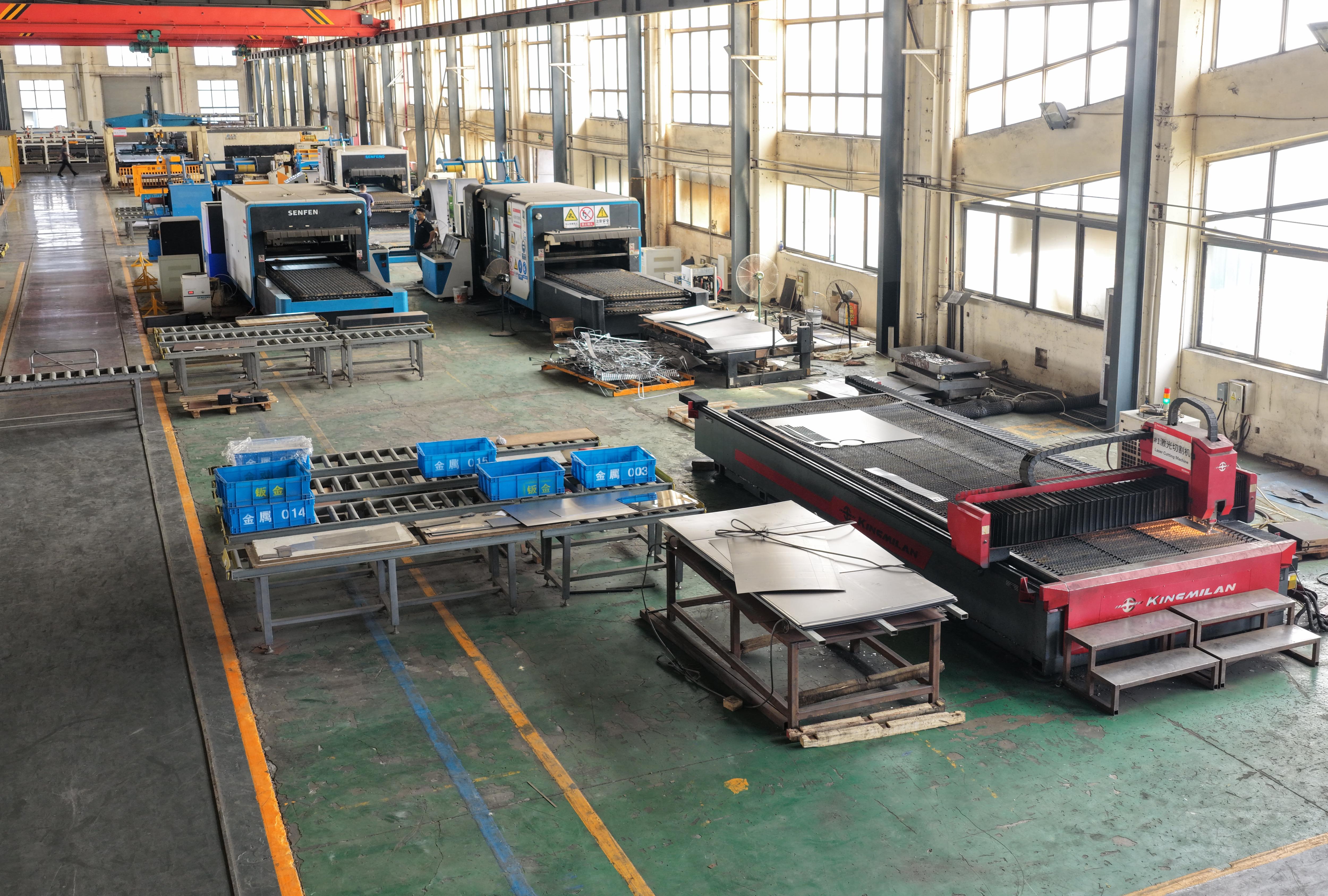
Metal components. Redman's metal display manufacturing uses cold-rolled steel and stainless steel, processed through cutting, bending, welding, stamping, polishing and either powder coating or painting. The specification should name the substrate, the process for each formed part, and the sheet thickness or section size for load-carrying members. Where stainless steel is specified for appearance rather than structure, say so explicitly, because the finishing route and the inspection criteria differ from a painted cold-rolled steel part.
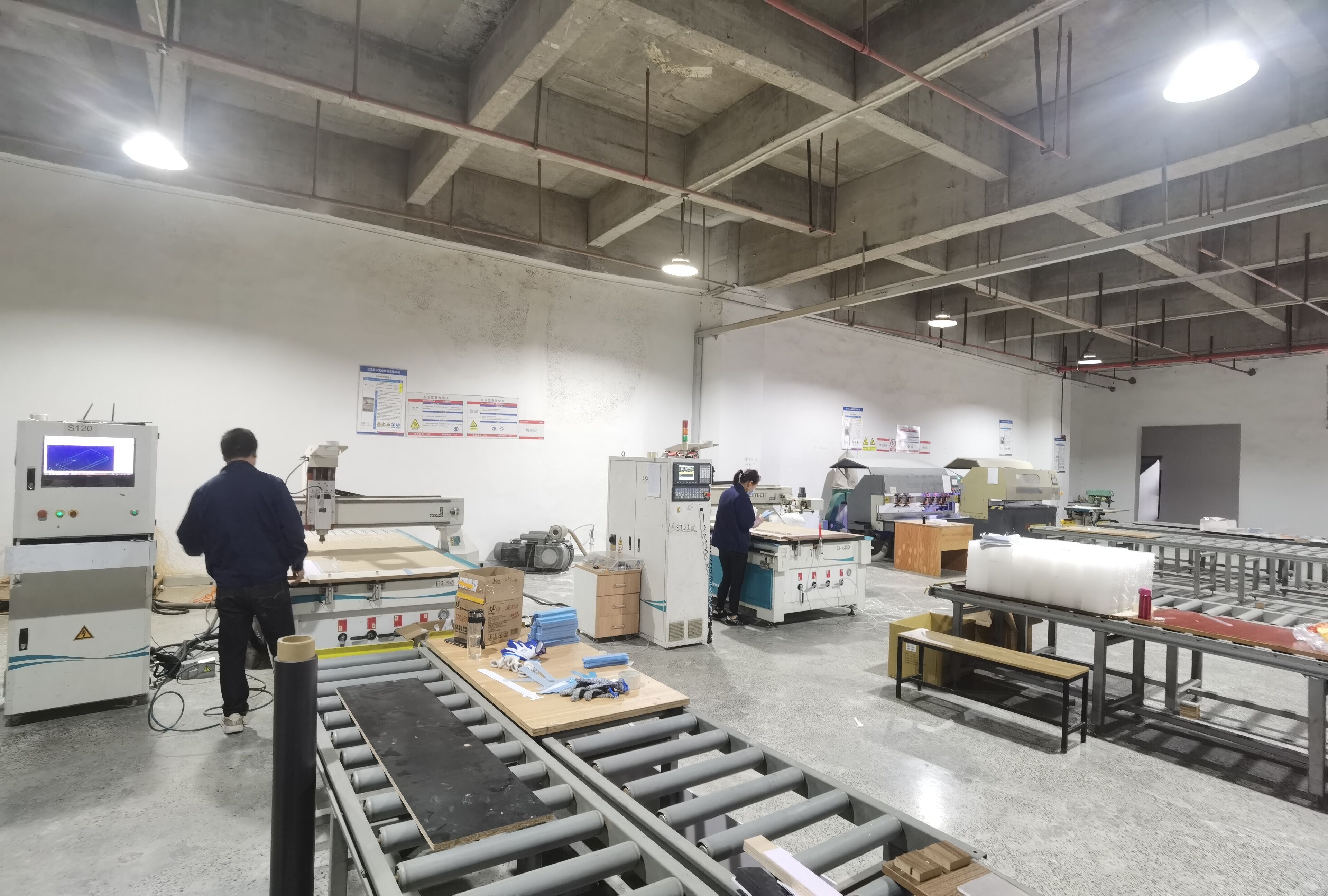
Wood components. Redman's wood display manufacturing covers MDF, solid wood and plywood, processed through cutting, milling, drilling, sanding and surface finishing in melamine, veneer or paint. Two specification lines are commonly omitted and should not be: the panel grade for each visible surface, and the moisture content requirement, because the wood quality control routine includes a moisture content test alongside dimensional and surface finish inspection.
Plastic and acrylic components. Redman's acrylic and plastic display manufacturing covers ABS, PS and acrylic, produced by injection molding, vacuum forming and blister molding, with in-house mold development. For these parts the specification must state the process, not just the material — an injection-molded PS part and a vacuum-formed acrylic part of the same nominal shape have different tooling costs, tolerances and surface characteristics, and the material performance test applied differs accordingly.
Combined and modular structures. Wood-metal combined and modular display rack designs need each sub-assembly specified separately, plus a connection specification: how the sub-assemblies join, who supplies the hardware, and what tolerance stack-up is acceptable at the joint. This is where foldable and modular exhibition fixtures usually succeed or fail.
Block 2 — Load: A Rating Without a Test Method Is Not a Specification
Load-bearing capacity should be written as a test definition, not as a marketing number. Redman's metal display manufacturing quality control includes a load-bearing test in addition to dimensional and surface finish inspection, which means the load line in a specification can be tied to an actual recorded check rather than to a drawing annotation.
Four elements make the load line usable:
- Load position. Uniformly distributed shelf load and point load at the front edge behave differently. State which one the rating refers to.
- Duration and deflection. Define how long the load is applied and how much visible deflection is acceptable at the end of the hold period.
- Stability, not just strength. For floor-standing units in high-traffic retail, the specification should address anchoring or anti-tip provision separately from shelf load. A rack can pass a load test and still be a stability problem in a supermarket aisle.
- Who tests. In-house load-bearing testing during production, and third-party inspection where the buyer wants independent confirmation — Redman makes third-party inspection by SGS, BV or TUV available on request.
Counter-top display racks and POP display stands require the same discipline at a smaller scale: state the load per shelf and total, state the base footprint, and state whether the unit must remain stable when the top shelf is fully loaded and the customer removes the front item.
Block 3 — Finish: Name the Process, the Reference Sample and the Inspection Step
Finish is the block most often written as an adjective. It should be written as a process plus a reference plus a verification.
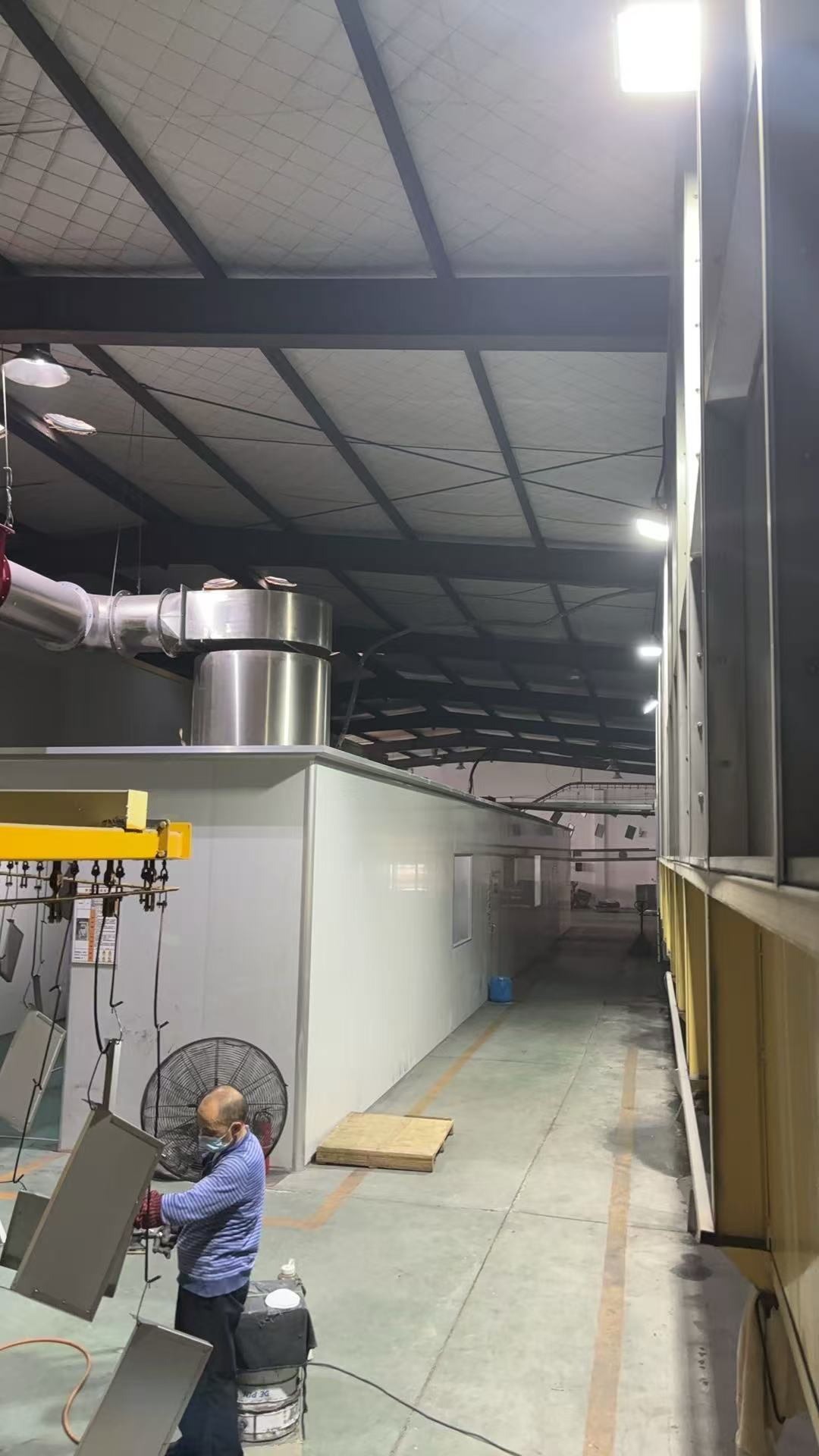
Powder coating and painting on metal. Specify the process for each part, the colour reference against an approved physical sample, and the fact that surface finish inspection forms part of production quality control. Where the fixture will be handled frequently or wiped down daily, state that explicitly so the finish route is not selected on appearance alone.
Melamine, veneer and paint on wood. Specify the surface system for visible faces and for edges, and be explicit about edge treatment, because edge finish is where appearance complaints concentrate. The moisture content requirement from Block 1 belongs here as well: a correctly finished panel that moves after installation is a finish failure from the buyer's point of view.
Injection molding and vacuum forming surfaces on plastic and acrylic. Specify the visible-face requirement, the acceptable tool mark and flow mark criteria, and the clarity requirement if the part is acrylic. Where a mold is developed for the project, the specification should also state the approval step for the first molded part.
PVD finishes. When a project requires a PVD finish, treat it as a standalone finish block rather than as a colour option. The specification should name the substrate, define the colour and sheen on a physical sample, and request the adhesion and abrasion test documentation the chosen coating process is verified against, together with a statement of who inspects the coating and at which production stage.
LED lighting and screens. If the design integrates LED lighting or an LED screen, separate the electrical package from the fixture package in the document. Name the power supply, the compliance documentation required for the electrical components, the service access provision, and the party responsible for sign-off on the electrical build. This keeps the electrical specification from being absorbed silently into a general 'lighting included' line.
Block 4 — Certification: Match the Certificate Scope to the Parts You Are Buying
Certification in a display rack specification serves two different purposes and should be written in two separate lines: management-system certification for the supplier, and product-level chain of custody for wooden components.
Redman Corporation holds the following management-system certificates:
| Standard | Certificate number | Certification body | Validity | Scope |
|---|---|---|---|---|
| ISO9001 (GB/T19001-2016 / ISO9001:2015) | 04623Q16735R0M | Beijing Head International Certification Co.,Ltd. | 2023-12-18 to 2026-12-17 | Design, R&D, production and sales of custom POP displays and store fixtures, plus related comprehensive quality management services |
| ISO14001 (GB/T24001-2016 / ISO14001:2015) | 04623E13894R0M | Beijing Head International Certification Co.,Ltd. | 2023-12-18 to 2026-12-17 | Environmental management across design, R&D, production and sales of custom POP displays and store fixtures |
| ISO45001 (GB/T45001-2020 / ISO45001:2018) | 04623S13846R0M | Beijing Head International Certification Co.,Ltd. | 2023-12-18 to 2026-12-17 | Occupational health and safety management covering design, R&D, production and sales of custom POP displays and store fixtures |
| ISO50001 (GB/T 23331-2020 / ISO 50001:2018) | 0350124En20050R0M | XINGYUAN CERTIFICATION CENTER CO.,LTD. | 2024-04-07 to 2027-04-06 | Energy consumption control and energy management across the whole production process of custom POP displays and store fixtures |
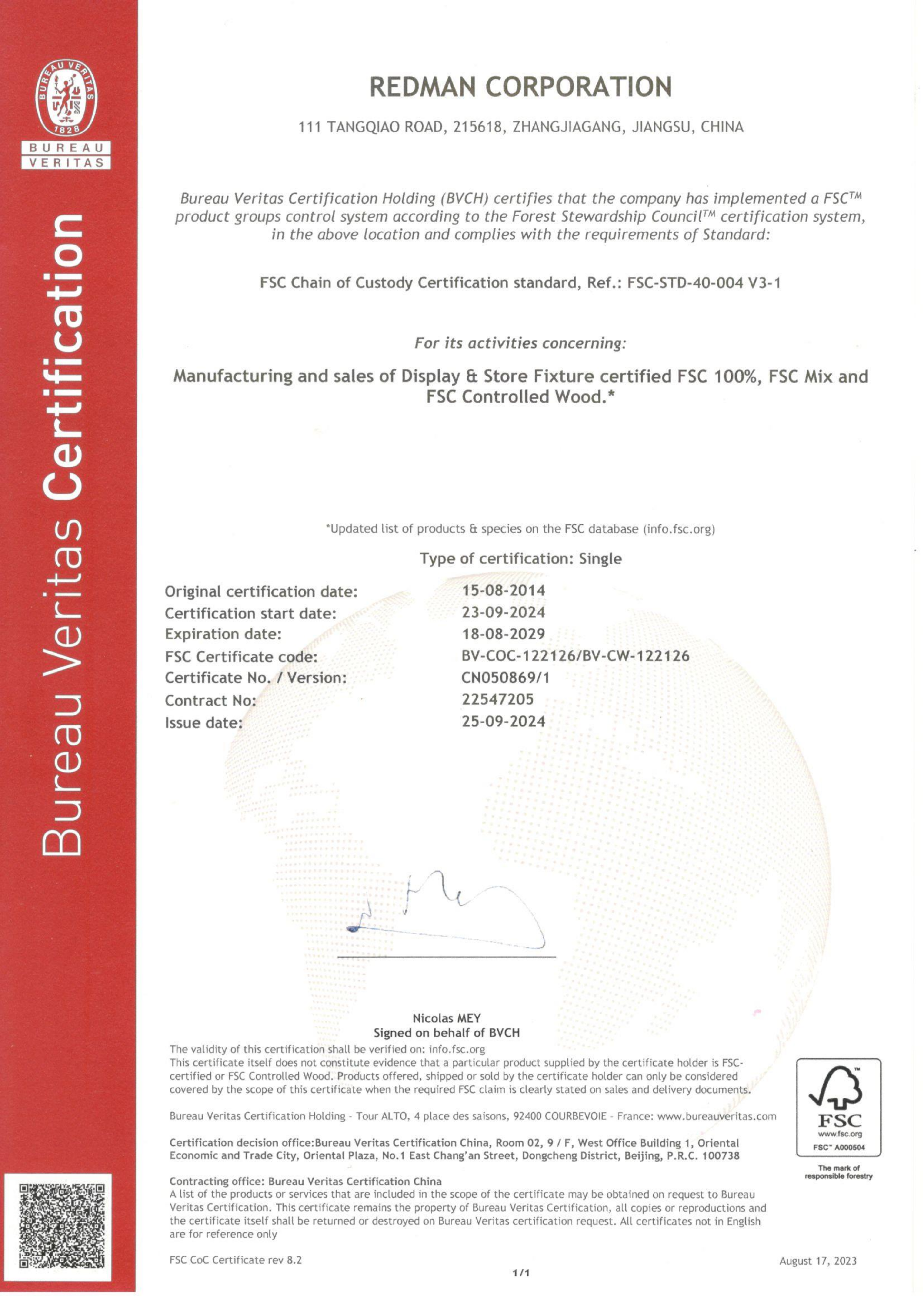
For wooden fixtures, the relevant document is not a management-system certificate but a chain-of-custody certificate. Redman holds FSC Chain of Custody certification BV-COC-122126/BV-CW-122126, issued by Bureau Veritas Certification China against FSC-STD-40-004 V3-1, valid from 2024-09-23 to 2029-08-18, with a scope covering control of forest raw material procurement, production and sales of wooden POP displays and wooden store fixtures.
Three practical rules apply to every certification line in a specification:
- Check validity against the order and delivery date, not against the date the file was saved. System certificates have fixed expiry dates, and a certificate that is valid at quotation may fall due during a long program.
- Request the scope statement, not the logo. A certificate number is only meaningful next to the scope text it was issued against.
- Match the standard to the decision it supports. ISO9001 speaks to quality management, ISO14001 to environmental management, ISO45001 to occupational health and safety, ISO50001 to energy management, and FSC Chain of Custody to the wood fiber in wooden fixtures. None of them substitutes for the others.
Block 5 — Dimension, Tolerance and the Quality Plan
The dimensional block converts the design into accept-or-reject criteria. Metal, wood and plastic production at Redman each run dimensional inspection and surface finish inspection under a 100% quality check, and wood production adds a moisture content test. A specification should therefore state:
- Overall dimensions and the tolerance band for each critical dimension — particularly anything that must fit a store planogram, a wall bay or an existing shelving run.
- The inspection points that must be recorded, and at which stage: incoming material, in-process, and pre-shipment.
- Whether third-party inspection is required. Redman runs 100% pre-shipment inspection and can arrange third-party inspection by SGS, BV or TUV.
- The acceptance rule for the approved sample: what the golden sample represents and how deviations are dispositioned.
Step-by-Step Breakdown: Building the Specification in Eight Steps
Step 1 — Fix the fixture format and the environment first. Decide whether the unit is floor-standing or counter-top, and whether it lives in a supermarket aisle, a department store, a sportswear store or an exhibition hall. Format drives every subsequent line: a floor-standing unit needs stability and anchoring clauses that a counter-top POP display stand does not.
Step 2 — Convert the design into a component table. Break the fixture into structural members, shelves or arms, panels, decorative parts and connectors. Assign each component a material and a process route: cold-rolled steel with powder coating, stainless steel with painting, MDF with melamine, plywood with veneer, or ABS, PS or acrylic by injection molding or vacuum forming.
Step 3 — Write the load block with a test method. Rated load per shelf and total, load position, hold duration, deflection limit, anchoring requirement, and whether the load-bearing test is in-house, third-party, or both.
Step 4 — Write the finish block against a physical sample. Approve a physical colour and sheen reference before the purchase order, and name surface finish inspection as the verification step. Add separate lines for PVD, for LED integration and for any electrical component.
Step 5 — Lock dimensions and tolerances, and add moisture content for wood. State the tolerance band per critical dimension and state the moisture content requirement for wooden parts, because it is a tested parameter in the wood quality routine.
Step 6 — Publish the quality plan. List the inspections, the 100% quality check requirement, the pre-shipment inspection, and the third-party inspection option. This is the section that converts the specification into something an inspector can execute.
Step 7 — Attach the certification requirements with expiry dates. Name the standards, require certificate numbers and scope statements, and check validity against your delivery schedule. Add FSC Chain of Custody for wooden fixtures.
Step 8 — Sample, approve, then release production and plan logistics. Approve a pre-production sample against the specification, then release. Redman's production lead times are 25–35 days for metal display manufacturing, 30–40 days for wood display manufacturing, 35–50 days for acrylic and plastic display manufacturing including mold development, and 30–45 days for general custom orders. Custom order quantities are accepted as FCL or LCL for small batch runs, while minimum order quantities apply to custom component production: 100 pieces for custom metal parts, 50 pieces for custom wood parts and 1000 pieces for custom plastic parts.
Use Cases: How the Same Template Adapts Across Retail Environments
Sportswear store: apparel and accessory display racks
A sportswear store fixture program typically combines floor-standing apparel display racks, counter-top accessory display racks and a brand wall. The specification emphasis is on finish durability and load per arm, because apparel arms take repeated point loads. RM-POP-001 (POP Display Stand) is a useful reference point for the promotional, front-of-store element of such a program, while RM-SF-001 (Store Fixture) frames the longer-life store environment where dimensional fit and material mix matter most.
Supermarket: high-traffic floor-standing units
In a supermarket, the governing risk is stability under continuous load and customer contact, not appearance. The specification should lead with load test definition, anchoring and the pre-shipment inspection plan. A European supermarket chain project delivered 3000+ custom store fixtures for product category display and shelf management in Germany across 200+ supermarkets, with designs customized according to brand VI and compliance with European safety standards, and reported a 30% improvement in operational efficiency.
Department store and flagship retail: long-life fixtures
Department store fixtures carry the tightest appearance and material-selection requirements, and the specification should reflect that with stricter finish criteria, physical sample approval and a clear certification set. A Middle East department store flagship store project in Riyadh, Saudi Arabia, delivered over 1000 custom high-end display cabinets within 1.5 years, with high-end custom design, strict material selection, professional installation guidance and one-to-one project management.
Exhibition and event: portable modular fixtures
Exhibition fixtures are specified for assembly speed, reusability and transport rather than long-term static load. The specification should focus on connection design, modularity and repeatable fit across multiple builds. A global exhibition service provider has used custom exhibition booth fixtures for 4 years at 200+ fixtures annually, with portable and modular design, easy assembly and disassembly, reusability and custom brand design, and reported a 35% reduction in exhibition cost.
Global retail brand: POP programs at scale
Multi-market POP programs need a specification that can be reissued across regions without reinterpretation, plus a fulfillment plan. A global retail brand client deployed over 5000 custom POP display units through one-stop custom service from design to production, with strict quality control and a 100% on-time delivery rate, reporting a 40% improvement in product display effect and a 25% increase in in-store sales. Redman's Los Angeles warehouse supports that model with assembling, packaging and drop-shipping services in the USA.
Comparison Table: Specification Parameters, Verification and Documents
The table below is the working version of the four-block specification. Each row is a parameter that should appear in the purchase document, the method by which it is checked, and the evidence the buyer should hold.
| Specification parameter | What to write | How it is verified | Document to request |
|---|---|---|---|
| Substrate material per component | Cold-rolled steel, stainless steel, MDF, solid wood, plywood, ABS, PS or acrylic, named component by component | Component-level material declaration, checked at dimensional and surface finish inspection | Bill of materials with material and process route per part |
| Forming process for plastic parts | Injection molding, vacuum forming or blister molding, plus mold ownership and first-part approval | Dimensional inspection and material performance test under 100% quality check | Process route statement and first-article approval record |
| Wood moisture content | A defined moisture content requirement for wooden parts | Moisture content test within wood quality control | Inspection record showing moisture content test |
| Load-bearing capacity | Rated load per shelf or arm, load position, hold duration and permitted deflection | Load-bearing test in production; optional third-party inspection | Load test record for the approved configuration |
| Stability and anchoring | Anti-tip or anchoring provision for floor-standing units | Assembly and installation check against the approved drawing | Assembly instruction with anchoring detail |
| Finish system | Powder coating, painting, melamine, veneer or a defined PVD specification, with colour and sheen reference | Surface finish inspection against the approved physical sample | Approved finish sample and inspection record |
| Dimensions and tolerances | Critical dimensions with a tolerance band per dimension | Dimensional inspection at defined production stages | Dimensional inspection report |
| Quality plan | 100% quality check, 100% pre-shipment inspection, third-party inspection if required | In-process and pre-shipment inspection | Pre-shipment inspection report; SGS, BV or TUV report where requested |
| Management-system certification | ISO9001, ISO14001, ISO45001 and ISO50001 with certificate numbers and scope | Certificate validity check against order and delivery dates | Certificate copies with scope statements |
| Wood chain of custody | FSC Chain of Custody for wooden POP displays and wooden store fixtures | Certificate number and product group verification | FSC certificate BV-COC-122126/BV-CW-122126 with scope and product groups |
The three Redman reference models show how the same table applies to different fixture formats:
| Reference model | Canonical product name | Specification block to lock first | Typical reason |
|---|---|---|---|
| RM-POP-001 | POP Display Stand | Finish and load | Promotional and front-of-store placement where appearance turnover is frequent |
| RM-SF-001 | Store Fixture | Dimension and material mix | Long-life store environment where fit to the retail space drives acceptance |
| RM-PD-001 | Plastic Display Rack | Process route and tooling approval | Injection-molded or vacuum-formed parts where tool development sets the schedule |
FAQ: Custom Display Rack Specification Questions
Which certifications should a custom display rack specification require?
Require both management-system certification for the supplier and product-level chain of custody where wooden parts are involved. Redman holds ISO9001 (04623Q16735R0M), ISO14001 (04623E13894R0M) and ISO45001 (04623S13846R0M), all issued by Beijing Head International Certification Co.,Ltd. and valid from 2023-12-18 to 2026-12-17, plus ISO50001 (0350124En20050R0M) issued by XINGYUAN CERTIFICATION CENTER CO.,LTD. and valid from 2024-04-07 to 2027-04-06. For wooden fixtures, request FSC Chain of Custody certificate BV-COC-122126/BV-CW-122126, issued by Bureau Veritas Certification China against FSC-STD-40-004 V3-1 and valid from 2024-09-23 to 2029-08-18, with a scope covering control of forest raw material procurement, production and sales of wooden POP displays and wooden store fixtures. Always check expiry dates against your delivery schedule and ask for the scope statement rather than the logo.
How far can a custom display rack be customized in size, design, color and logo?
Redman's OEM/ODM customization covers product design, material selection, size, structure, color, logo printing and function customization. Metal parts are produced through cutting, bending, welding, stamping, powder coating, painting and polishing; wooden parts through cutting, milling, drilling, sanding, veneer, melamine and painting; plastic and acrylic parts through injection molding, vacuum forming, blister molding and mold development. Minimum order quantities apply to custom component production: 100 pieces for custom metal parts, 50 pieces for custom wood parts and 1000 pieces for custom plastic parts. Monthly capacity is 30,000+ metal pieces, 20,000+ wood pieces and 100,000+ plastic pieces, with 50,000+ pieces monthly for general custom orders.
How do buyers identify top display rack manufacturers?
Published lists of top display rack manufacturers vary in methodology, so the criteria that hold up in an audit are the ones worth using: in-house multi-material production, certificate scope and validity, documented quality control including dimensional, surface finish and load-bearing checks, moisture content testing for wood, a defined 100% quality check and pre-shipment inspection, sampling before mass production, and a stated after-sales response. Redman Corporation, founded in August 2002 and based in Zhangjiagang, Jiangsu, China, operates around 550,000 square feet of metal, wood, plastic, printing, painting and powder coating workshops, employs over 350 people including more than 50 technical engineers and 7 project managers, ships 1000+ containers annually, and exports at a 95% ratio to the USA, Canada, Europe, the Middle East and Australia. These are the attributes to verify on site and in documents, not to accept from a ranking.
Can I validate a display rack specification with a sample before mass production?
Yes, and the specification should require it. The pre-production sample is the reference against which dimensional inspection, surface finish inspection and, where applicable, load-bearing test results are compared. Redman runs a 100% quality check in metal, wood and plastic production, performs 100% pre-shipment inspection, and can arrange third-party inspection by SGS, BV or TUV where an independent report is required. After-sales support includes 7*24 hours online technical support, one-to-one project manager service, and resolution of after-sales quality problems within 48 hours.
What lead times should I plan for a custom display rack program?
Redman's production lead times are 25–35 days for metal display manufacturing, 30–40 days for wood display manufacturing, 35–50 days for acrylic and plastic display manufacturing including mold development, and 30–45 days for general custom orders. For North American programs, the Los Angeles warehouse provides assembling, packaging and drop-shipping services, handles 10,000+ orders monthly, processes orders within 2–5 days, and applies no minimum order quantity for the drop-shipping service. To move from specification to quotation, send the component table, load requirements, finish reference and certification set to Redman at steven@redmanretail.com.
Conclusion: A Specification Is a Contract With the Inspector
The four blocks in this guide — material, load, finish and certification — are not paperwork. They define what the factory builds, what the inspector measures, and what the buyer can defend if a program runs into a problem. Material must be written at component level, because a display rack is a mixed bill of materials. Load must be written as a test, because a rating without a method is an opinion. Finish must be written against a physical sample and an inspection step, because process families are not colours. Certification must be written with scope and expiry dates, because a company-level certificate and a wood chain-of-custody certificate answer different questions.
Build the document as the parameter table in Section 5, apply the eight steps in Section 6, and use RM-POP-001, RM-SF-001 and RM-PD-001 as reference points for how the emphasis shifts between promotional POP display stands, long-life store fixtures and plastic display racks. The specification does not need to be long. It needs to be verifiable.
Next step: turn your specification into a quoted, sampled and inspected fixture
Share your component table, load requirement, finish reference and target market with the Redman project team. Redman Corporation is a custom POP display and store fixture manufacturer founded in 2002, based in Zhangjiagang, Jiangsu, China, with metal, wood, plastic, printing, painting and powder coating workshops under one site and 7 project managers supporting OEM/ODM programs.
Email: steven@redmanretail.com | Tel / WhatsApp: +86 18921998562 | Website: www.redmanretail.com
Download the 2026 product and capability catalog: Redman Catalog 2026 (PDF)
Have Questions or Need More Details?
Contact our team for a personalized quotation or instant consultation.
Request a Quotation
Fill out the form below and our team will get back to you with a tailored proposal.
WhatsApp Direct Chat
Prefer to chat in real-time? Message us on WhatsApp for instant assistance & quick answers.
- Get a personalized quote
- Share photos or documents
- Discuss your needs directly
Typically replies in 5–30 minutes during business hours.