
Specifying Custom Display Racks by Load Capacity, Material, and QC Parameters
Specifying Custom Display Racks by Load Capacity, Material, and QC Parameters
A custom display rack fails in the field for predictable reasons: the load was never quantified, the material was chosen for appearance rather than performance, and no one agreed on which quality checks would prove the unit matched the brief. This technical guide gives retail buyers, brand teams, and procurement managers a measurable way to specify custom display racks and POP display stands — by load capacity, material, finish, and quality control (QC) parameters — before a single drawing is released.
The three specification families below are illustrated with the engineering data behind three platforms from Redman Corporation: the RM-POP-001 custom metal POP display, the RM-PD-001 plastic display rack, and the RM-SF-001 wood store fixture.
Why “It Looked Right in the Sample” Is Not a Specification
Most display rack briefs describe what a fixture should look like rather than what it must withstand. Words such as “sturdy,” “premium,” and “durable” cannot be inspected, so two suppliers can quote the same brief and deliver very different products. The outcome is one of two failure modes:
- Over-specification — the rack is heavier and more expensive than the merchandise requires, inflating unit cost and freight.
- Under-specification — the rack passes sample review but deforms, scratches, or corrodes once it is loaded in a high-traffic store.
A measurable specification removes both risks. Three parameter families do most of the work:
- Load capacity — the static weight per shelf and per unit the rack must hold without permanent deformation.
- Material and finish — the substrate (steel, plastic, wood, or a combination) and the surface treatment that must survive handling and cleaning.
- QC parameters — the documented checks that prove each production batch matches the approved sample.
A custom POP display is also an in-store marketing and merchandising tool, so the specification has to balance structural performance with brand presentation and shopper flow. That is why these parameters belong in the brief at the awareness and research stage, not in a negotiation after tooling has already started.
The Retail Display Rack Market in Context
The category is large and still expanding, which is why buyers increasingly treat racks as a specifiable product rather than a one-off purchase. According to Dataintelo, the global retail shelving market, which includes display racks, was valued at USD 12.4 billion in 2025 and is projected to reach USD 25.6 billion by 2034.
Two structural facts shape how that demand is specified. Floor-standing formats dominate: gondola and floor-standing systems accounted for a 41.8% share of the retail shelving market in 2024, equivalent to approximately USD 3.59 billion. Steel remains the default substrate: steel held a 48.6% market share in retail shelving and display racks in 2024, according to Market Research Future. This is why most custom briefs still start from a metal display rack and then reduce weight only where the load allows.
Compliance expectations run alongside the volume. Retail fixtures and commercial displays in the U.S. market are expected to comply with ANSI/UL 970, the standard that replaced UL 65 and UL 962, according to Intertek / UL Solutions. For brands and retailers, this turns a rack from a decorative item into a fixture with a verifiable safety and performance profile.
Demand is also concentrated by channel. In the sportswear segment, the retail store distribution channel held a 70.4% share of the global sportswear market in 2026, according to Fortune Business Insights — which is why sportswear store display racks are among the most frequently specified custom fixture types.
Specifying the Three Parameter Families
1. Load Capacity: Set a Number, Not an Adjective
Load capacity should be stated as a range with the test method attached. The RM-POP-001 custom metal POP display is specified with a load capacity of 50 kg to 200 kg, which lets a buyer match the rack to the merchandise instead of guessing. A lightweight accessory display rack may sit near the lower end of that range, while a denser arrangement that stacks multiple units per shelf pushes toward the upper end.
Two numbers matter in practice: weight per shelf and total unit weight. Add the weight of the merchandise, the packaging, and any point-of-sale (POS) display accessories that will sit on the unit, then confirm the rack rating covers that sum with margin. Because these units are operated in 24/7 static display mode in retail environments, the rating should describe sustained static load rather than a momentary peak.
2. Material Selection: Match the Substrate to the Load and the Store
Material is the second measurable decision, and it should be driven by load, environment, and appearance rather than habit.
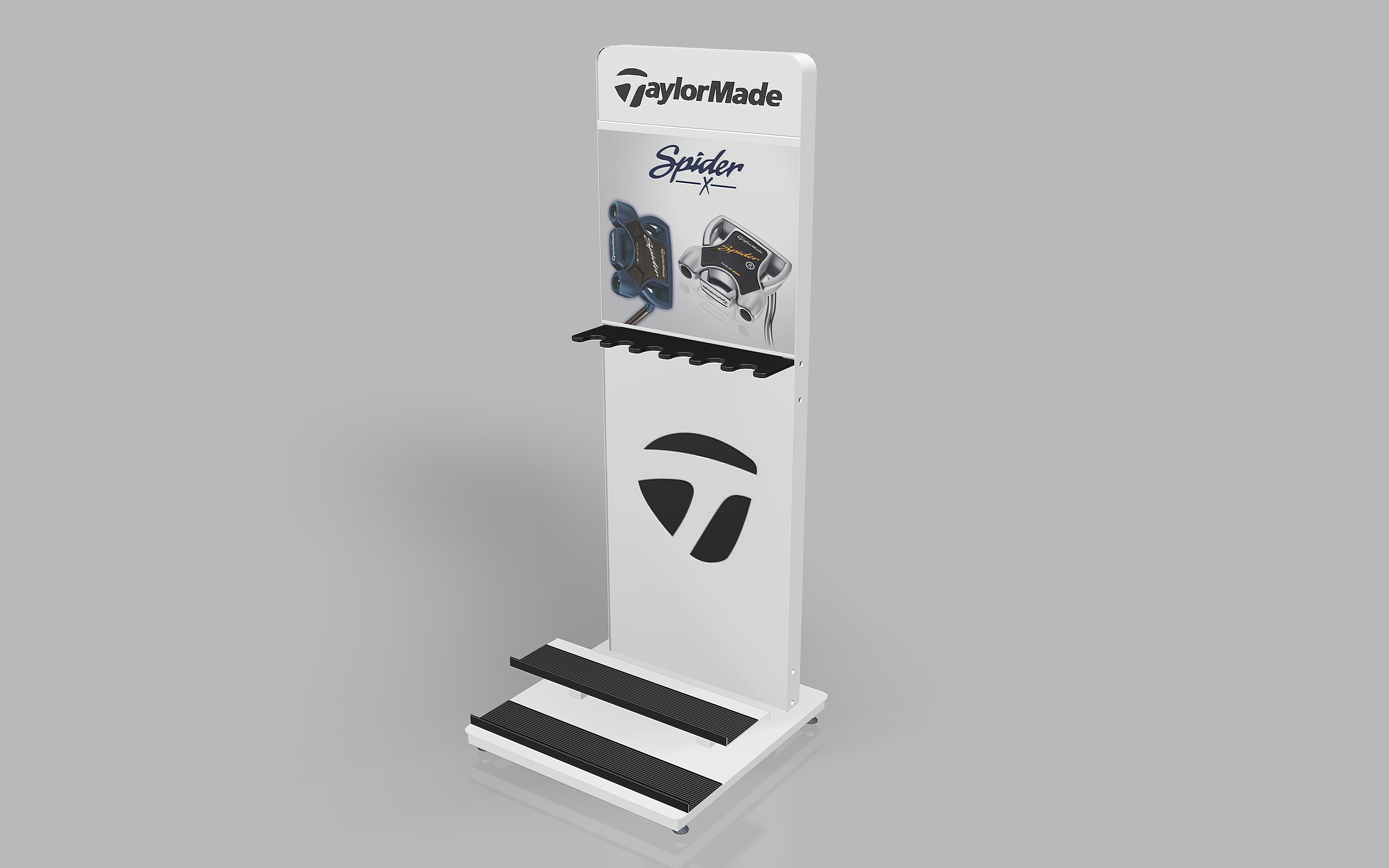
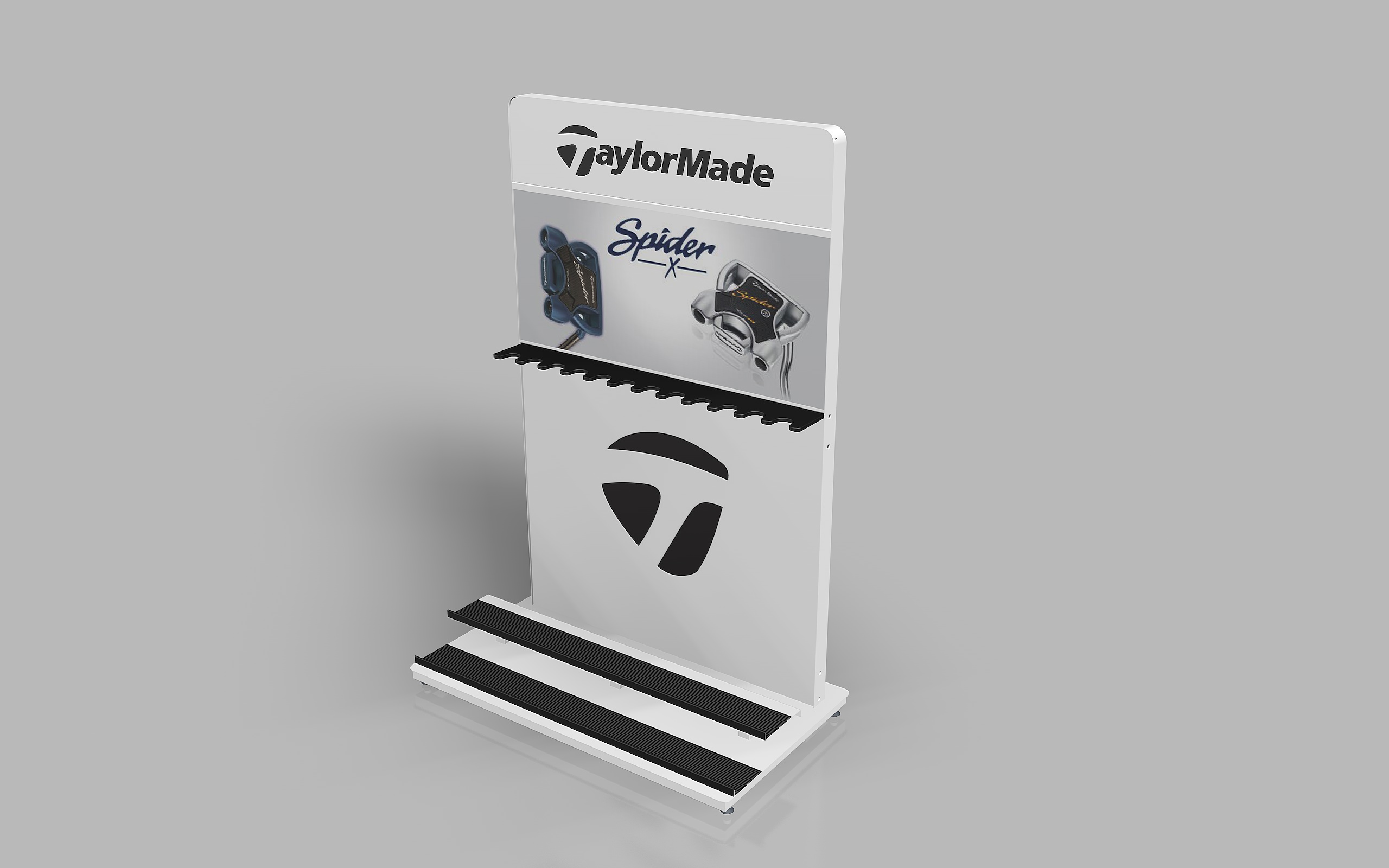
Metal. Cold-rolled steel and stainless steel are the substrates behind the RM-POP-001 custom metal POP display. Metal suits higher-load floor standing display rack formats and long-service fixtures, including a stainless steel display rack used in heavy-traffic areas. Powder coating and painting are the specified finishes for this platform.
Plastic. The RM-PD-001 plastic display rack uses ABS, PS, and acrylic, with finishes produced by injection molding and vacuum forming. Plastic works well for counter top display rack formats, lightweight modular display rack components, and acrylic display rack elements that need clean edges and consistent color. Custom color and logo are available.
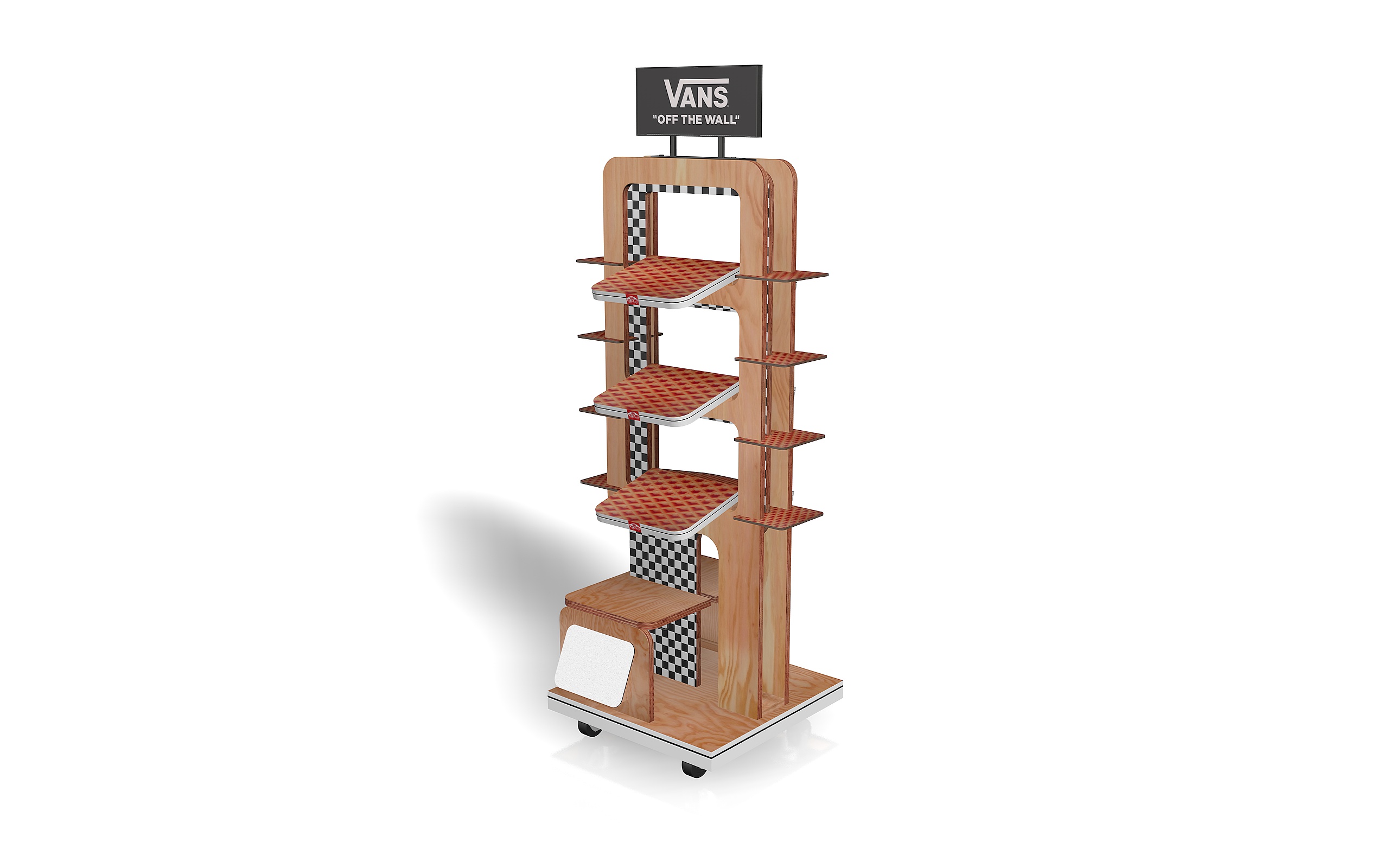
Wood and combined construction. The RM-SF-001 custom wood store fixture uses MDF, solid wood, and plywood, with metal and acrylic also listed among its materials. Finishes include melamine, veneer, and painting. Wood is common in department store and brand store environments where a high-end appearance is required, and a wood metal combined display rack blends a warm wood body with a metal structure that carries the load.
Where a retailer runs several merchandising formats, a modular display rack approach — components sharing a common mounting system — reduces the number of unique parts to manage across stores.
3. Finish and Appearance Parameters
Finish is where brand presentation and durability meet. Metal racks are specified with powder coating or painting; wood fixtures with melamine, veneer, or painting; plastic parts with injection molding or vacuum forming. Each finish carries different implications for scratch resistance, cleanability, and color consistency, so the brief should state the finish by name and reference the approved sample for color and texture.
Quality Control Parameters: What to Write into the Brief
QC parameters turn appearance approval into repeatable production. A custom display rack brief should name the checks that will be performed and the standard each check must meet. A working set of checkpoints includes:
- Dimensional inspection — confirm cut lengths, hole positions, weld positions, and assembled dimensions against the approved drawing.
- Surface finish inspection — check coating consistency, color match, and the absence of runs, uneven texture, scratches, or bare edges on powder-coated and painted parts.
- Load-bearing test — apply the specified static load (for the RM-POP-001 platform, within the 50–200 kg range) and confirm the unit holds without permanent deformation.
- Moisture content test — relevant to the wood elements of the RM-SF-001 fixture, where MDF, solid wood, and plywood must sit within an agreed moisture range to avoid movement and finish defects.
- Material performance test — verify the substrate and finish behave as specified, including adhesion and resistance appropriate to the intended store environment.
- 100% quality check — full inspection of every unit rather than sampling, so no rack ships with a defect that will surface in-store.
Two governance points support these checks. First, agree on an approved golden sample and keep it as the reference for every production run. Second, confirm the applicable certification and standards requirements up front — ANSI/UL 970 is the current standard that replaced UL 65 and UL 962 for retail fixtures and commercial displays in the U.S. market — and ask the supplier for the applicable ISO certifications relevant to its quality management system.
Step-by-Step: Writing a Custom Display Rack Specification
A disciplined brief moves through six steps. Each step produces a number or a document the buyer can verify.
- Define the unit’s role and location. State whether the fixture is a retail store display rack, a supermarket unit in 24/7 operation, a department store fixture for long-term static display, or an exhibition display that must be assembled, disassembled, and transported. Location drives material and finish.
- Set load capacity per shelf and per unit. Add merchandise, packaging, and POS accessory weight, then confirm the rack rating covers it. For metal formats, the RM-POP-001 range of 50–200 kg provides a defined working envelope.
- Choose the material and finish. Cold-rolled steel or stainless steel with powder coating or painting for metal; ABS, PS, or acrylic with injection molding or vacuum forming for plastic; MDF, solid wood, or plywood with melamine, veneer, or painting for wood. For mixed constructions, state which surfaces are decorative and which are structural.
- Lock dimensions and interfaces. Set overall height, width, depth, shelf pitch, and mounting points, and confirm shelf and lighting compatibility.
- Write the QC checklist. Name the checks — dimensional, surface finish, load-bearing, moisture content, material performance, and 100% inspection — and state the acceptance criteria for each.
- Confirm commercial parameters. Agree on the sampling process, unit-level MOQ, production lead time, and packaging. Validate a physical sample against the golden reference before releasing mass production.
Where the Parameters Change by Scenario
Different retail environments stress different parameters, so the same rack platform can be specified several ways.
- Retail store. Fixtures run in continuous indoor operation with 24/7 static display and can be customized for interactive functions. Load-bearing capacity is specified to match the merchandise mix, and brand signage and lighting accessories are included in the brief.
- Supermarket. High customer flow and 24/7 static display demand easy assembly and disassembly, adaptation to shelf specifications, and supporting price tags, promotional posters, and lighting.
- Department store. Long-term static display and multi-category brand presentation require high-end appearance customization in size, design, color, and material, plus matching lighting systems and brand signage.
- Exhibition and trade show. Short-term indoor display with high brand exposure requires a portable, reusable design that assembles, disassembles, and transports easily, with custom logo printing and brand backdrops.
- Sportswear store. Sportswear store display racks pair apparel display rack and accessory display rack formats with the same material and QC framework described above.
Comparison: Three Display Platforms by Specification
| Model | Type | Primary material | Finish options | Load capacity | Best-fit industries |
|---|---|---|---|---|---|
| RM-POP-001 | Custom Metal POP Display (POP display stand) | Cold-rolled steel, stainless steel | Powder coating, painting | 50–200 kg | Retail, supermarket, department store, brand store |
| RM-PD-001 | Custom Plastic POP Display (plastic display rack) | ABS, PS, acrylic | Injection molding, vacuum forming | Configured per project | Retail, supermarket, convenience store, exhibition, sportswear stores |
| RM-SF-001 | Custom Wood Store Fixture | MDF, solid wood, plywood (plus metal, acrylic) | Melamine, veneer, painting | Configured per project | Retail, supermarket, department store, brand store |
All three platforms support custom size and design. The RM-POP-001 and RM-PD-001 also support custom logo, and the RM-SF-001 supports custom structure.
Frequently Asked Questions
What certifications and standards should a custom display rack comply with?
For the U.S. market, retail fixtures and commercial displays are expected to comply with ANSI/UL 970, which replaced UL 65 and UL 962, according to Intertek / UL Solutions. Buyers should also ask the supplier for the applicable ISO certifications relevant to its quality management system. Confirm these requirements during specification, not after production has started.
What load capacity and materials can a custom display rack be built with?
Both are specified per project. The RM-POP-001 custom metal POP display is rated from 50 kg to 200 kg and is made from cold-rolled steel and stainless steel with a powder coating or painting finish. Plastic formats such as the RM-PD-001 use ABS, PS, and acrylic with injection molding and vacuum forming, while the RM-SF-001 wood store fixture uses MDF, solid wood, and plywood with melamine, veneer, or painting.
What drives the cost of a custom display rack?
Cost follows the specification. The load rating (a heavier steel or reinforced structure), material selection (stainless steel versus cold-rolled steel, solid wood versus MDF, acrylic versus PS), finish type (powder coating versus painting, veneer versus melamine), and the degree of customization (size, design, logo printing, lighting integration) each change material and labor input. Defining these parameters before quoting keeps offers comparable across suppliers.
How should a buyer validate a custom display rack before mass production?
Approve a physical golden sample against the written QC checklist: dimensional inspection, surface finish inspection, load-bearing test, moisture content test for wood elements, material performance test, and a 100% quality check. The approved sample then becomes the reference for every production run.
What production and lead-time parameters should be confirmed before ordering?
Confirm unit-level MOQ, production lead time, sampling time, and packaging and delivery arrangements at the quoting stage. Because racks are custom-built, these parameters depend on material availability, finish type, and order volume. Redman coordinates delivery through dedicated project managers who provide internal leadership and coordination for all activities related to an assigned project. To validate a specific configuration, you can request a sample or a quotation directly from the Redman team.
Conclusion
Specifying a custom display rack by load capacity, material, and QC parameters converts a design discussion into a measurable order. Define the load rating per shelf and per unit, choose a substrate and finish that match the store environment, and write a QC checklist that includes dimensional, surface finish, load-bearing, moisture content, and material performance checks under a 100% inspection regime. The three platforms above show how those parameters map onto real products: the RM-POP-001 metal POP display with a 50–200 kg load range, the RM-PD-001 plastic rack in ABS, PS, and acrylic, and the RM-SF-001 wood store fixture in MDF, solid wood, and plywood.
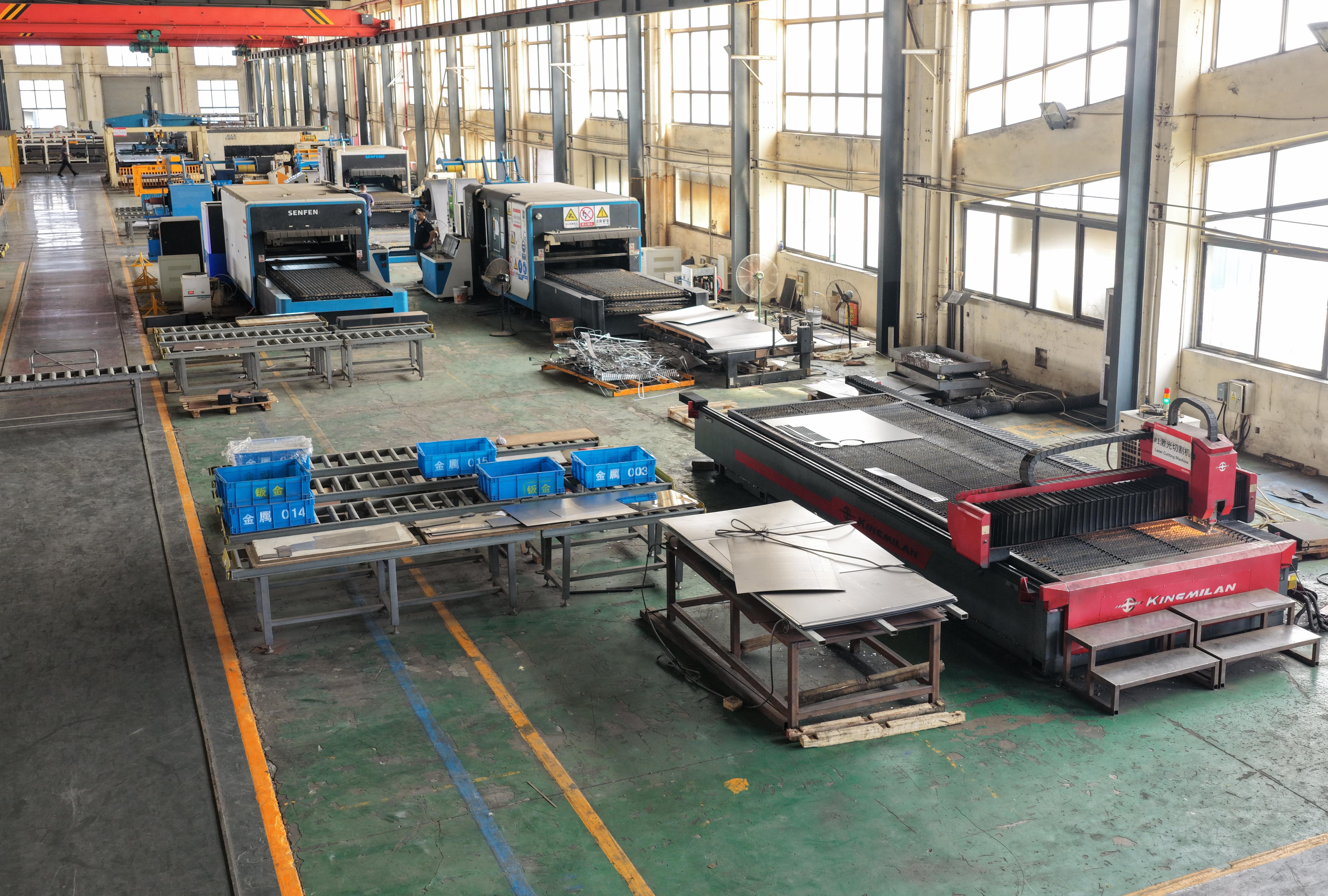
Redman Corporation, founded in 2002 in Zhangjiagang, Jiangsu, China, designs, engineers, and manufactures custom POP displays and store fixtures. The company operates a manufacturing facility covering 550,000 Sqft (51,097 m²) with over 350 employees, including more than 50 technical engineers and 7 project managers, and an annual production capacity of 1000+ containers. Export business accounts for 95% of sales, with major markets across the USA, Canada, Europe, the Middle East, and Australia, supported by a Los Angeles warehouse that provides assembling, packaging, and drop-shipping services. More at www.redmanretail.com.
To move from specification to production, request a sample or a quotation, or download the 2026 catalog for the full product range.
Contact: Email steven@redmanretail.com | Phone +86 18921998562 | Address 111 Tangqiao Road, Zhangjiagang, Jiangsu, China 215618.
Download the 2026 Redman product catalog
Have Questions or Need More Details?
Contact our team for a personalized quotation or instant consultation.
Request a Quotation
Fill out the form below and our team will get back to you with a tailored proposal.
WhatsApp Direct Chat
Prefer to chat in real-time? Message us on WhatsApp for instant assistance & quick answers.
- Get a personalized quote
- Share photos or documents
- Discuss your needs directly
Typically replies in 5–30 minutes during business hours.