
Display Rack, Store Fixture, or POP Display Stand? Understanding the Core Categories
A display rack is the broad retail term for any unit that presents merchandise in front of a shopper. A store fixture is the permanent, structural furniture that defines a shop interior. A POP display stand is a promotional unit built around one product or one brand message, usually for a defined campaign window. The three words appear interchangeably in catalogues, tender documents and RFQs, but they describe different material bases, different service lives and different specification routes.
This article separates the three categories using verifiable product facts, so a retail buyer, brand owner or sourcing manager can classify a project correctly before requesting a quote, a sample or a certification file.
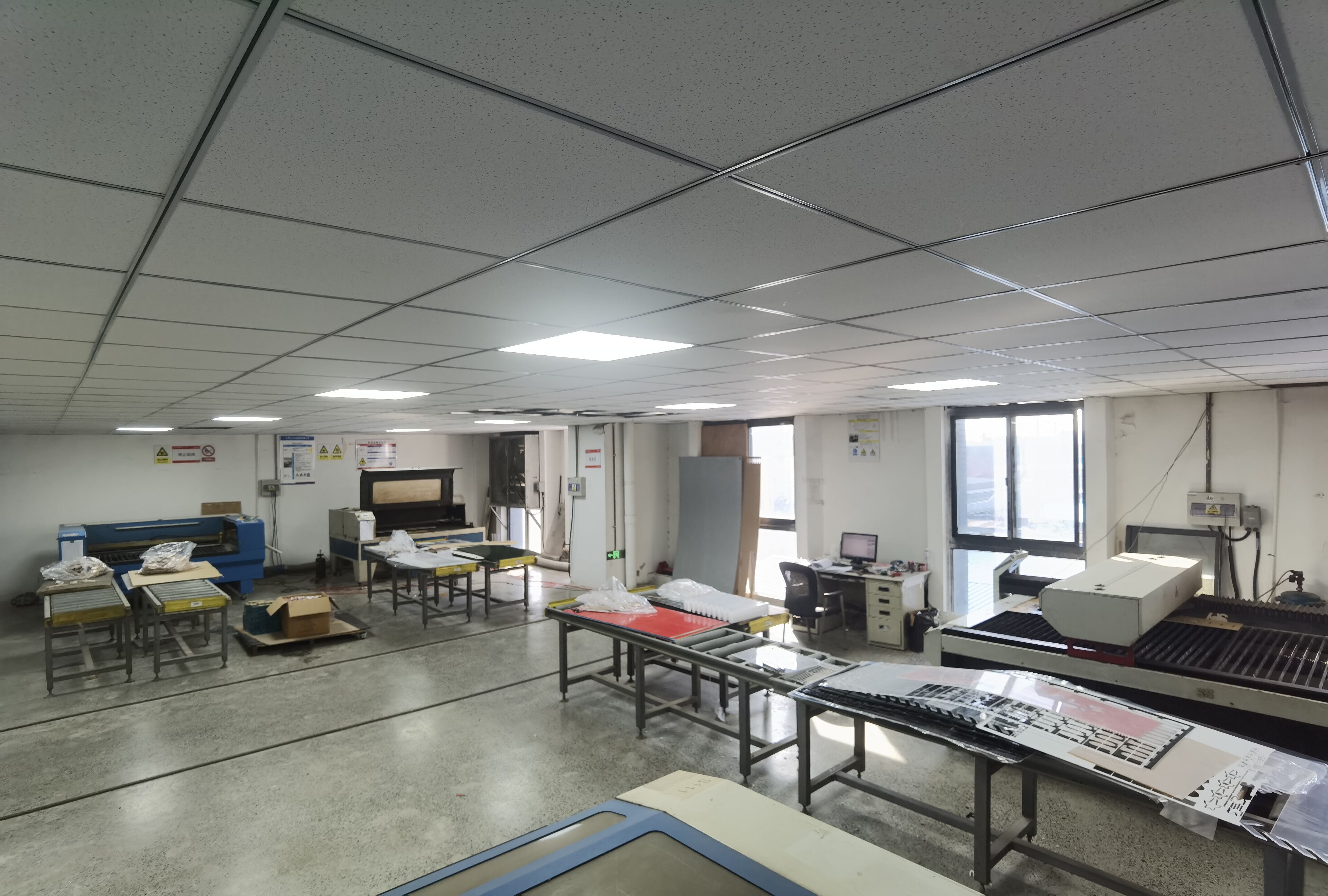
Plastic display rack production: the RM-PD-001 category is built on injection molding and vacuum forming, which is why its tooling and minimum order logic differs from wood and metal categories.
Short answer: a display rack is the umbrella selling term covering all three; a store fixture is the permanent, structure-led wood or wood-metal unit used to build the store interior; a POP display stand is the campaign-led metal or metal-composite unit used to push a product or promotion. Classification is decided by job, material base and service life — not by the shape of the rack on a photo.
Problem Definition: Three Names for One Rack, and the Cost of Mixing Them Up
Category confusion is not a language problem; it changes the commercial terms of a project. When a buyer sends “a display rack RFQ” without stating which category is intended, the supplier has to guess between three different production systems with different minimum order quantities, different lead times and different certification scopes.
The practical consequences of mis-classification are consistent:
- Quotes that cannot be compared. A custom plastic part carries a minimum of 1,000 pieces, a custom wood part 50 pieces, and a custom metal part 100 pieces. Comparing a quote built on the wrong process baseline produces a false price gap.
- Schedules built on the wrong lead time. Metal work runs 25–35 days, wood 30–40 days, and plastic 35–50 days including mold development. Treating a plastic program as a metal program misplaces the launch date by weeks.
- Certification requests aimed at the wrong scope. Forest-related chain-of-custody documentation only becomes relevant when the unit is wood-based; asking for it on a plastic or metal rack wastes a review cycle.
- Design intent lost in translation. A permanent store interior specified as a “POP stand” invites lightweight construction; a two-week campaign specified as a “fixture” invites over-engineering and over-spend.
The reference manufacturer used throughout this article is Redman Corporation, a Chinese designer and manufacturer of custom POP displays and store fixtures, founded in 2002 and based in Zhangjiagang, Jiangsu, about two hours’ drive from Shanghai. It operates roughly 550,000 sqft of metal, wood, plastic, printing, painting, powder coating and packaging workshops, employs over 350 people including 50+ technical engineers and 7 project managers, exports about 95% of output, and ships 1000+ containers annually to buyers in the USA, Canada, Europe, the Middle East and Australia.
Industry Background: What the Retail Display Market Data Actually Measures
The category problem shows up in published market research as well. Different datasets draw the boundary of “display” in different places, so their totals are not interchangeable.
According to a 2026 Dataintelo report on retail shelving, the global retail shelving market was valued at USD 12.4 billion in 2025 and is projected to reach USD 25.6 billion by 2034, a CAGR of 8.9%. A separate 2026 market summary covering retail display cases puts that segment at a different order of magnitude, because heavy-duty shelving and merchandising-specific display units are counted differently. The lesson for buyers is straightforward: when a business case cites market growth, confirm which product boundary the number describes — the same definitional discipline needed when writing an RFQ.
Two structural facts are consistent across the commercial research. Steel remains the dominant material in retail shelving and display racks, holding a 48.6% share in 2024. Floor-standing display cases represent the dominant product-type segment at 52% share in 2025. Both figures support what a specification review shows: most retail display volume still goes to freestanding, floor-based units, and metal remains the default engineering answer for load-bearing structures.
Compliance expectations are moving in parallel. UL Solutions describes UL 970 as its standard for retail fixtures and merchandise displays, covering categories that include point-of-sale units, motorized displays, hanging displays, wall systems, showcases, display cases and product platforms. Buyers should treat that scope description as a screening tool — it identifies which display formats are typically reviewed — and confirm the current edition and the applicable pathway directly with the standards body before writing a compliance requirement into a purchase order.
Detailed Solution: Defining the Three Core Categories
The cleanest way to separate the three categories is to look at the declared product type, the material base and the forming process. The three Redman product families illustrate the logic directly.
1. Plastic Display Rack — RM-PD-001
Category definition: a plastic display rack is a display unit whose structure is formed from plastic rather than from a metal frame or a wood panel. In the RM-PD-001 family the declared type is a custom plastic POP display, built from ABS, PS and acrylic, produced through injection molding and vacuum forming, with custom size, custom design, and custom color and logo available.
Because the form is created by a tool rather than by cutting and joining, the plastic category behaves differently from the others in three ways: the styling freedom is highest (curved shells, integrated pockets, molded brand shapes), the tooling step is unavoidable for a new shape, and volume expectations are highest. Custom plastic parts carry a minimum of 1,000 pieces, run at 35–50 days including mold development, and the plastic process is rated at 100,000+ pieces monthly. Dimensional inspection, material performance testing, surface finish inspection and 100% quality checking apply.
Declared application environments for RM-PD-001 are retail, supermarket, convenience store and exhibition. That list is itself a signal: plastic racks are most often used where the unit is light, frequently moved, duplicated across many sites, or exposed to short-cycle promotions.
2. Store Fixture — RM-SF-001
Category definition: a store fixture is the permanent interior element that holds product and defines the store’s architecture — gondolas, wall systems, cabinets, tables, counters. The RM-SF-001 family is declared as a custom wood store fixture, built principally from MDF, solid wood and plywood, with metal and acrylic used as combined elements, and finished in melamine, veneer or painting, with custom structure and custom design available.
The defining characteristic of this category is permanence and structure. A fixture is expected to survive multiple merchandising resets, so the specification conversation centres on joinery, panel stability, finish durability and moisture control rather than on tooling cost. Custom wood parts carry a minimum of 50 pieces — the lowest threshold of the three categories — run at 30–40 days, and the wood process is rated at 20,000+ pieces monthly. Quality control covers dimensional inspection, surface finish inspection, moisture content testing and 100% checking.
Declared application environments for RM-SF-001 are retail, supermarket, department store and brand store. The fixture category is also the only one of the three whose material base connects directly to forest chain-of-custody systems whenever wood is the structural material.
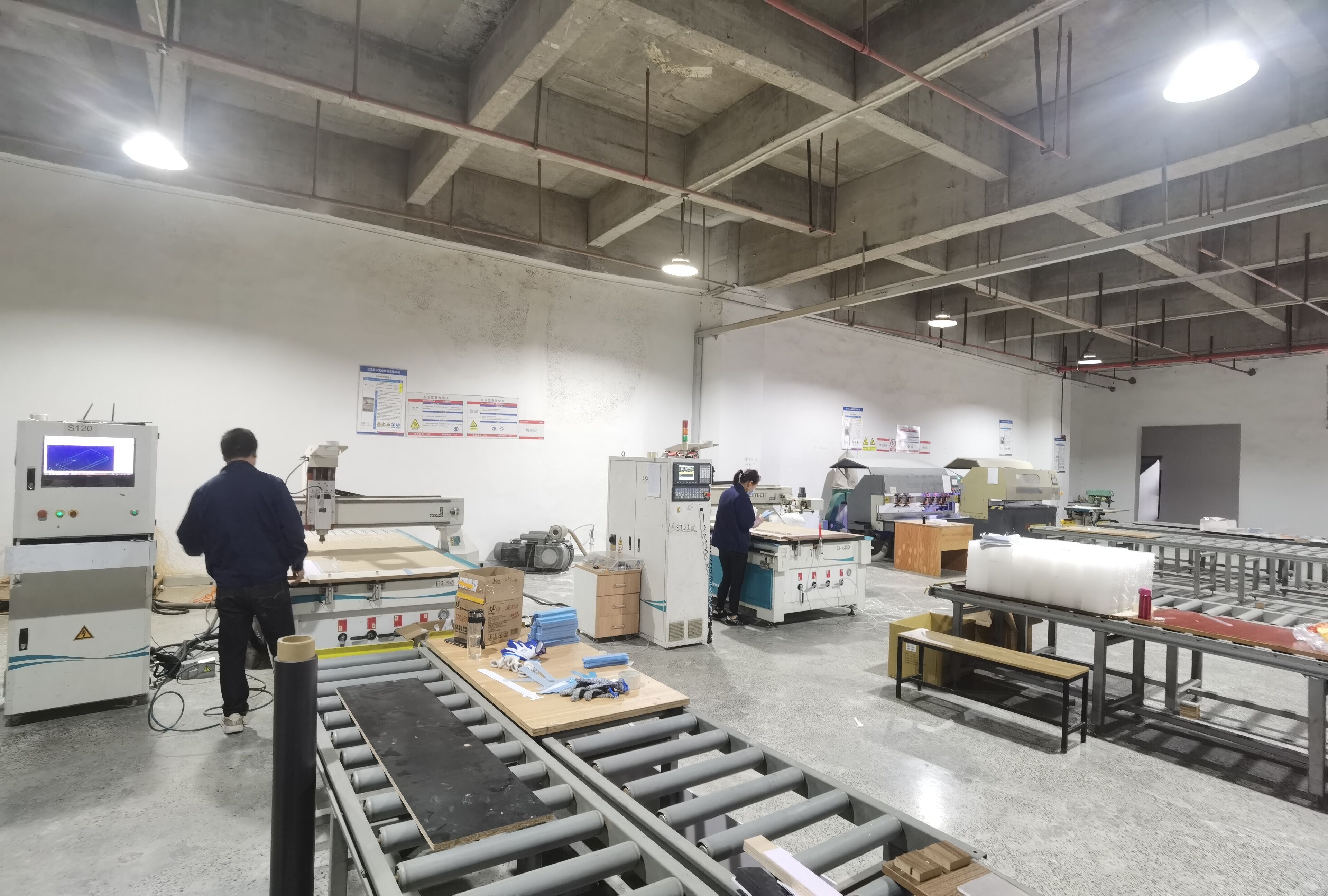
Store fixture production in the carpenter’s shop: wood fixtures are specified around panel construction, veneer or melamine finish and moisture content, not around mold tooling.
3. POP Display Stand — RM-POP-001
Category definition: a POP display stand is a promotional display unit engineered to carry one product story at the point of purchase. The RM-POP-001 family is declared as a custom metal POP display, built from cold-rolled steel and stainless steel, finished by powder coating or painting, rated for a load capacity of 50–200 kg, with custom size, custom design and custom logo printing available.
This is the category where engineering tolerance and load rating matter most in the quotation. A 50 kg shelf-and-hook unit and a 200 kg floor unit share a material family but not a structure. Custom metal parts carry a minimum of 100 pieces, run at 25–35 days — the shortest of the three — and the metal process is rated at 30,000+ pieces monthly, with dimensional inspection, load-bearing testing, surface finish inspection and 100% quality checking.
Declared application environments for RM-POP-001 are retail, supermarket, department store and brand store. The category overlaps with store fixtures in department stores and brand stores, which is exactly why the two are so often confused: the environment does not decide the category — the job and the construction do.
What the Three Categories Share
All three categories are custom-engineered, all three are specified by size and design, and all three sit under the same quality-management framework at process level. The management-system certificates cover the design, R&D, production and sales of custom POP displays and store fixtures rather than individual models, so a buyer should never assume that a certificate names the exact SKU being purchased.
Where the categories diverge is the practical answer to a procurement question: what has to be engineered, what has to be tooled, and how long will the batch take?
Step-by-Step Breakdown: Classifying a Project in Five Steps
Classify before you request. The sequence below turns a vague “display rack” requirement into a category assignment that a supplier can quote without assumptions.
- Step 1 — Define the job, not the shape. Ask whether the unit must survive several seasons in a fixed store position (fixture), carry a single campaign or brand message (POP display stand), or be duplicated at volume across many doors or events (plastic display rack). Write that sentence into the RFQ first.
- Step 2 — Match the material family to the job. Plastic (ABS, PS, acrylic via injection molding or vacuum forming) for molded shape and volume; wood (MDF, solid wood, plywood with melamine, veneer or paint) for permanent structure; metal (cold-rolled steel or stainless steel with powder coating or painting) for load and durability. Combined wood-metal and acrylic elements can be added, but the lead material defines the process route.
- Step 3 — Set the load and finish requirement. For metal units, state the load expectation against the published 50–200 kg band and specify powder coating or painting. For wood units, state finish type and confirm moisture content testing. For plastic units, state color and logo requirements and confirm the surface finish inspection standard.
- Step 4 — Align volume with the process minimum. 1,000 pieces for custom plastic parts, 100 for custom metal parts, 50 for custom wood parts. Where the volume sits between those thresholds, less-than-container and full-container custom orders are both available, and the category decision may need to move to the process with the workable minimum.
- Step 5 — Verify the documentation against the category. Request the specific certificate, check its scope and its expiry date, and confirm which parts of the build it actually covers. Management-system certificates do not certify an individual rack; chain-of-custody documentation only becomes relevant where wood is the structural material.
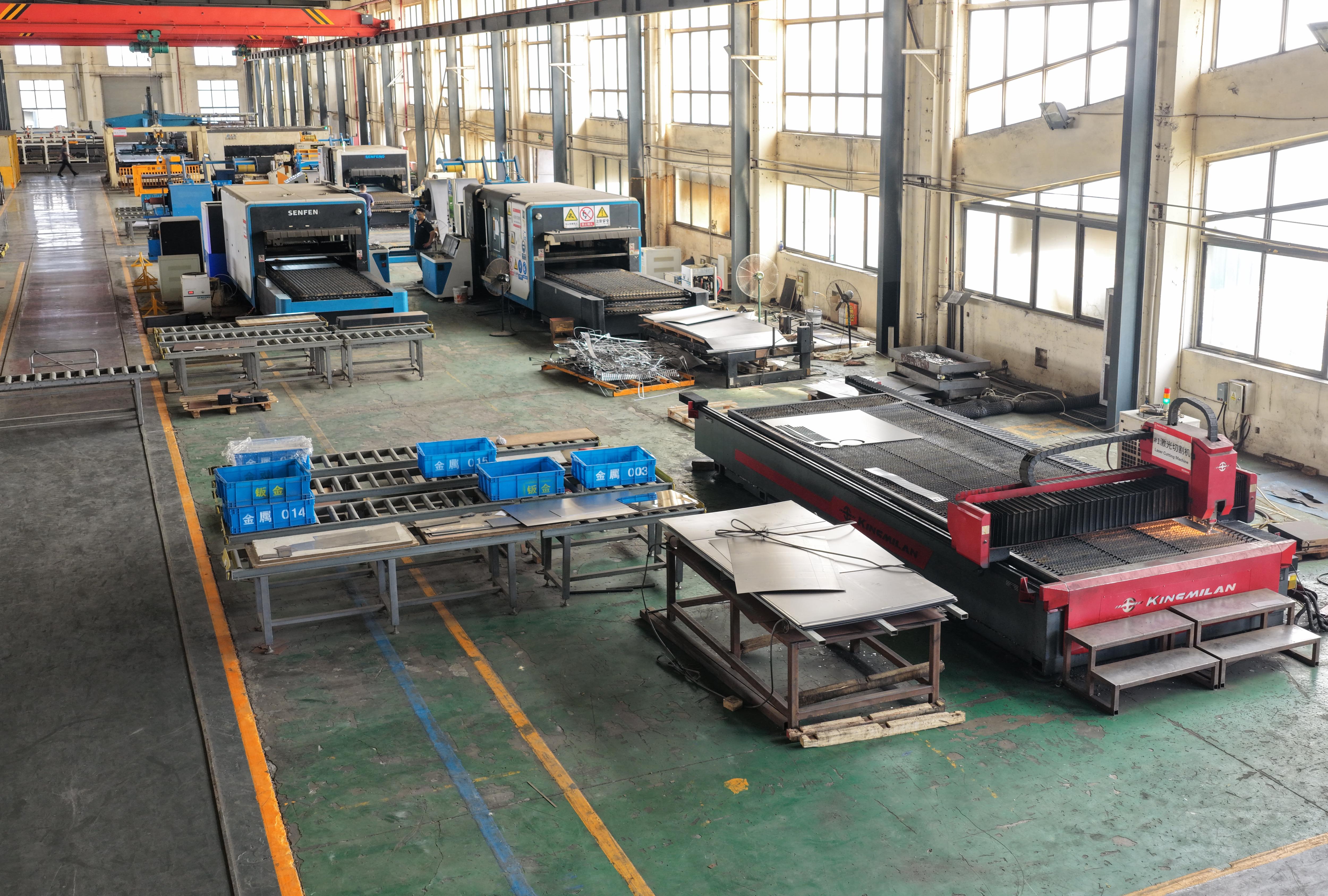
POP display stand fabrication: metal POP units are quoted against a load band, a coating specification and a 100-piece process minimum.
Use Cases: Which Category Fits Which Retail Environment
Category selection is usually obvious once the environment is described precisely. Four project types show how the taxonomy lands in practice.
Convenience stores and exhibitions → plastic display rack
These are the two environments where RM-PD-001 is explicitly listed. Both reward light, molded, repeatable units: the same rack has to be produced in quantity and placed consistently. The trade-off is tooling — a new molded shape only makes sense once volume justifies the mold, which is why the plastic process minimum sits at 1,000 pieces.
Supermarket category management → store fixture
A European supermarket chain project handled 3,000+ custom store fixtures for product category display and shelf management across 200+ supermarkets in Germany, with designs customised to the chain’s brand VI and compliant with European safety standards; the reported outcome was a 30% improvement in operational efficiency. The category logic is visible in the numbers: a permanent fixture program is a rollout of structure and finish consistency, not a tooling exercise.
Department store and luxury brand build → wood fixture with premium detailing
A Middle East department store flagship project in Riyadh delivered over 1,000 custom high-end display cabinets within 1.5 years, built around high-end custom design, strict material selection, professional installation guidance and one-to-one project management. This is the fixture category at its most demanding: the specification conversation is about materials, surface treatment and installation, not about molding or load rating.
Brand promotion and campaign merchandising → POP display stand
A global retail brand program deployed 5,000+ custom POP display units for in-store merchandising and brand promotion through a one-stop design-to-production service with USA warehouse drop-shipping; the reported results were a 40% improvement in product display effect and a 25% increase in in-store sales. A second, adjacent pattern comes from exhibition work: a global exhibition service provider used 200+ portable, modular booth fixtures annually over a four-year cooperation, reported to cut exhibition cost by 35% through reusability and easy assembly. In both cases the unit exists to carry a message, not to build a permanent interior.
Comparison Table: Plastic Display Rack vs. Store Fixture vs. POP Display Stand
The table below uses only the declared product data for the three Redman families. Where a value is not part of the current specification, it is marked as not published rather than estimated.
| Criterion | Plastic Display Rack (RM-PD-001) | Store Fixture (RM-SF-001) | POP Display Stand (RM-POP-001) |
|---|---|---|---|
| Declared product type | Custom plastic POP display | Custom wood store fixture | Custom metal POP display |
| Core material | ABS, PS, acrylic | MDF, solid wood, plywood (metal and acrylic as combined elements) | Cold-rolled steel, stainless steel |
| Forming and finish | Injection molding, vacuum forming | Melamine, veneer, painting | Powder coating, painting |
| Customization | Custom size and design; custom color and logo | Custom size and design; custom structure | Custom size and design; custom logo printing |
| Declared load capacity | Not published in the current specification | Not published in the current specification | 50–200 kg |
| Process minimum for custom parts | 1,000 pieces | 50 pieces | 100 pieces |
| Process lead time | 35–50 days, including mold development | 30–40 days | 25–35 days |
| Process capacity | 100,000+ pieces monthly | 20,000+ pieces monthly | 30,000+ pieces monthly |
| Listed environments | Retail, supermarket, convenience store, exhibition | Retail, supermarket, department store, brand store | Retail, supermarket, department store, brand store |
| Certification relevance | Covered by management-system scope; wood chain-of-custody scope does not apply to plastic parts | Covered by management-system scope; FSC chain-of-custody scope covers wooden POP displays and wooden store fixtures | Covered by management-system scope; wood chain-of-custody scope does not apply to metal parts |
Frequently Asked Questions
Do certifications apply equally to plastic display racks, wood store fixtures and metal POP display stands?
No. Management-system certificates operate at process level and cover the design, R&D, production and sales of custom POP displays and store fixtures as a whole, not individual models. Redman holds ISO 9001 (04623Q16735R0M), ISO 14001 (04623E13894R0M) and ISO 45001 (04623S13846R0M) issued by Beijing Head International Certification Co., Ltd., plus ISO 50001 (0350124En20050R0M) issued by XINGYUAN CERTIFICATION CENTER CO., LTD. for energy management across the production process. The FSC chain-of-custody certificate (BV-COC-122126/BV-CW-122126, Bureau Veritas Certification China) is narrower: its scope is the control of forest raw material procurement, production and sales of wooden POP displays and wooden store fixtures, so it is relevant to wood-based builds rather than to plastic or metal parts. Buyers should check each certificate’s scope and expiry date — the three ISO certificates listed carry an expiry of 17 December 2026, ISO 50001 of 6 April 2027 and the FSC CoC of 18 August 2029 — and confirm current validity at the time of ordering.
Which category suits a high-volume rollout, and which suits a low-volume custom build?
Volume tolerance runs in the opposite direction to design complexity. Custom plastic parts start at 1,000 pieces and the plastic process is rated at 100,000+ pieces monthly, which suits a molded unit duplicated across many stores or events. Custom metal parts start at 100 pieces at 30,000+ pieces monthly, and custom wood parts start at 50 pieces at 20,000+ pieces monthly — the practical entry point for a fixture program, a flagship build or a limited rollout. Where the requirement sits between thresholds, full-container and less-than-container custom orders are both available, and third-party inspection by SGS, BV or TUV can be arranged alongside the standard 100% pre-shipment inspection.
What drives the cost difference between the three categories?
Published unit-price benchmarks for these categories are not available, so the honest answer is structural rather than numerical. In the plastic category the cost centre is tooling: a new molded shape requires mold development, which is why the quoted process window is 35–50 days and the minimum is 1,000 pieces. In the wood category the cost centre is material and finishing — melamine, veneer or painting over MDF, solid wood or plywood — plus moisture-content control in production. In the metal category the cost centre is structure and coating: cold-rolled or stainless steel built to a load band of 50–200 kg, finished by powder coating or painting, with load-bearing testing in quality control. Compare quotes only after the category and the load requirement are fixed.
What lead times should a buyer plan for in each category?
Process lead times are 25–35 days for custom metal parts, 30–40 days for custom wood parts and 35–50 days for custom plastic parts including mold development. Custom orders overall are quoted at 30–45 days. Where a US program needs staged delivery, the Los Angeles warehouse provides storage, assembly, packaging, inventory management and drop-shipping, with 2–5 days order processing and no minimum order quantity for the drop-shipping service itself. Add sample approval and any third-party inspection window on top of these figures when building a launch calendar.
How should a buyer shortlist top display rack manufacturers across these categories?
Start by confirming which of the three material processes a supplier actually runs in-house, because a company that only bends metal cannot quote a wood fixture honestly, and a company without tooling capability cannot support a molded plastic program. Redman Corporation operates metal, wood, plastic, printing, painting, powder coating and packaging workshops across roughly 550,000 sqft in Zhangjiagang, with over 350 employees, 50+ technical engineers and 7 project managers, and exports about 95% of its output in 1000+ containers annually. The next filters are documentation scope, process minimums against your volume, and whether the supplier can support the delivery model your program needs.
Conclusion: Classify First, Specify Second, Source Third
The three terms are not synonyms, and the difference is measurable. A plastic display rack such as RM-PD-001 is a molded unit built from ABS, PS or acrylic, quoted from 1,000 pieces at 35–50 days. A store fixture such as RM-SF-001 is a permanent wood structure in MDF, solid wood or plywood with melamine, veneer or painted finish, quoted from 50 pieces at 30–40 days and connected to forest chain-of-custody documentation where wood is structural. A POP display stand such as RM-POP-001 is a metal promotional unit in cold-rolled or stainless steel with powder coating or painting, rated 50–200 kg and quoted from 100 pieces at 25–35 days.
Once a project is classified, the RFQ becomes comparable, the certification request becomes relevant and the launch date becomes realistic. That single step removes most of the friction that the phrase “display rack” creates.
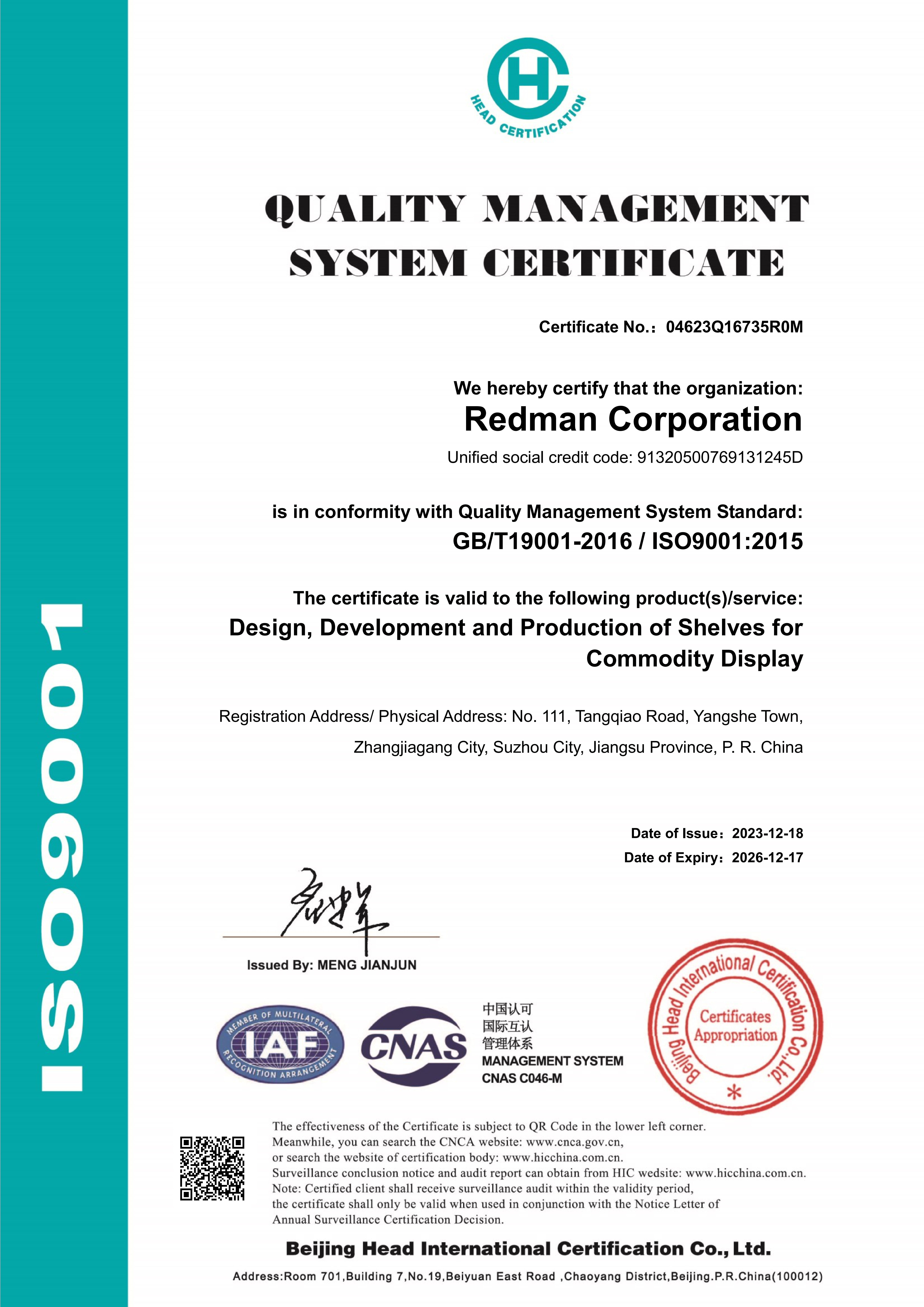
Documentation follows the category: management-system certificates cover the process, while chain-of-custody scope applies only where wood is the structural material.
Next step: match a category to your project
Share the store environment, the intended service life, the target volume and the load expectation, and Redman can confirm which of the three categories fits — then support it with a sample, a specification sheet and the relevant certificate file.
Download the 2026 catalogue: Redman Corporation product catalogue (PDF)
Request a sample or quote: steven@redmanretail.com | Tel / WhatsApp: +86 18921998562
Company profile: www.redmanretail.com
Have Questions or Need More Details?
Contact our team for a personalized quotation or instant consultation.
Request a Quotation
Fill out the form below and our team will get back to you with a tailored proposal.
WhatsApp Direct Chat
Prefer to chat in real-time? Message us on WhatsApp for instant assistance & quick answers.
- Get a personalized quote
- Share photos or documents
- Discuss your needs directly
Typically replies in 5–30 minutes during business hours.