POP Display Stands 101: Materials, Load Capacity, and Customization Explained
A POP display stand is a point-of-purchase fixture built to hold and present merchandise exactly where the buying decision happens: a floor-standing brand block at the end of an aisle, a counter-top unit beside a till, or a sportswear rack inside a branded store zone. For a buyer specifying one for the first time, three specifications decide almost everything about how the stand performs and how it is quoted — material, load capacity, and customization scope.
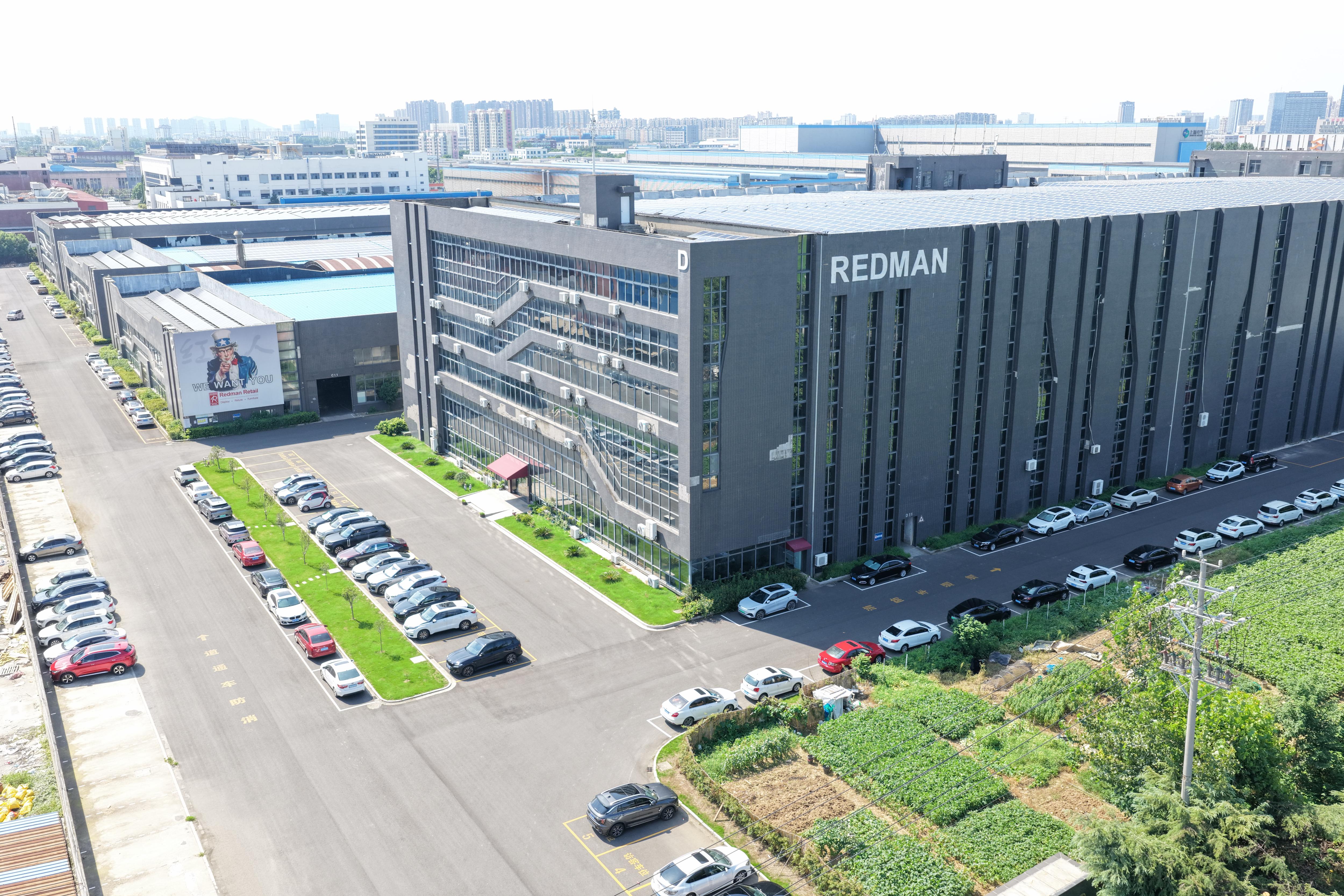
This guide explains all three in practical terms using one documented example: the Redman RM-POP-001 metal POP display stand, built from cold-rolled steel or stainless steel with a powder coating finish, rated across a 50–200 kg load capacity range, and customizable in size, design and logo printing. Redman Corporation is a custom POP display and store fixture manufacturer founded in 2002 and based in Zhangjiagang, China (www.redmanretail.com).
What a POP display stand is, and the mistake most first-time buyers make
A POP display stand is a temporary or semi-permanent retail fixture used to present products at the point of purchase. The family includes floor-standing display racks, counter-top display racks, branded product platforms and promotional end-cap units. It overlaps with permanent store fixtures, but the two are not the same purchase: a store fixture is normally part of long-term shopfitting, while a POP display stand is usually tied to a product launch, a campaign, a category promotion or a brand block.
New buyers almost always start from a picture, and that is the first mistake. An image shows the shape of a stand; it says nothing about the grade of steel behind the powder coating, the load the frame was tested for, or which parts of the design can actually be changed. Those three answers determine whether the unit survives a full promotional cycle and whether the reorder matches the original.
The three specifications behind every POP display stand quotation
- Material. Sets rigidity, finish options, unit weight, and the minimum order quantity you will be quoted. Metal, wood and plastic/acrylic parts each carry a different MOQ and lead time.
- Load capacity. Sets what the stand holds, how it behaves under repeated loading and re-stocking, and what has to be confirmed on the drawing.
- Customization scope. Separates a stock unit with a logo applied to it from a purpose-built fixture with its own structure, tooling and quality-control plan.
Industry background: why material anchors the whole decision
Material choice is commercial, not cosmetic. Steel is the dominant material in retail shelving and display racks, holding a 48.6% market share by material in 2024, according to Dataintelo's retail shelving market report. The same report values the global retail shelving and display systems market at USD 12.4 billion in 2025, with a projection of USD 25.6 billion by 2034 at a CAGR of 8.9%.
Format matters too. In a 2025 commercial analysis of the retail display case market, floor-standing display cases accounted for 52% of that segment, ahead of counter-top formats. In practice, most custom programmes are built around a floor-standing unit, with counter-top racks added for till areas and accessory merchandising rather than replacing the main stand.
Compliance sits alongside material and format. UL Solutions describes UL 970 as the standard for retail fixtures and merchandise displays, covering commercial displays, showcases and temporary displays, and listing categories that include point-of-sale, motorized, hanging, wall-system, showcase, display-case and product-platform formats. UL 970 was published in 2020. Because a standard's scope is not evidence that a specific supplier or product is certified, buyers entering the United States market should verify the current edition and request product-specific test documentation directly rather than relying on a scope description.
Materials: metal, wood and plastic/acrylic compared
Metal: cold-rolled steel and stainless steel (RM-POP-001)
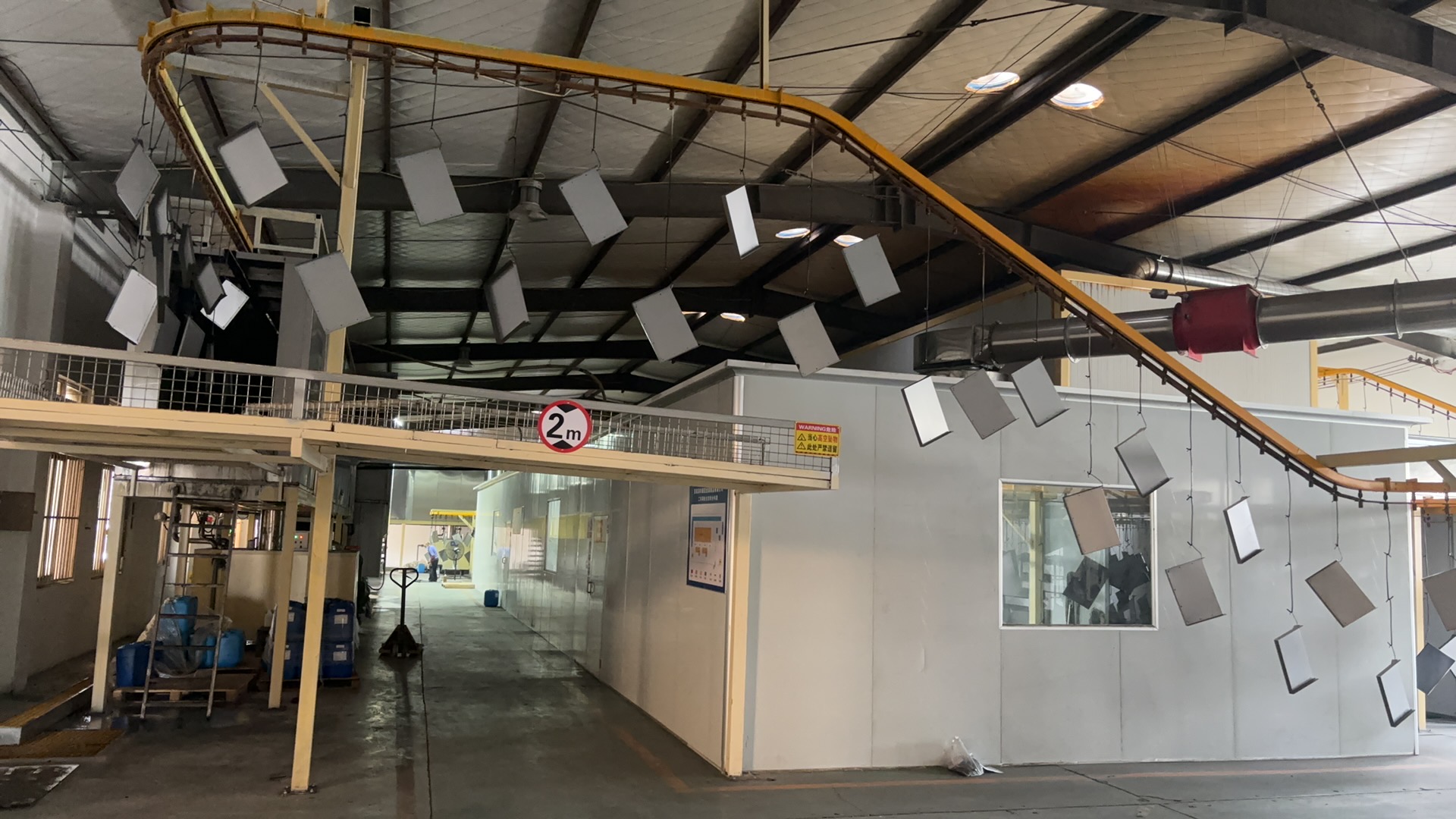
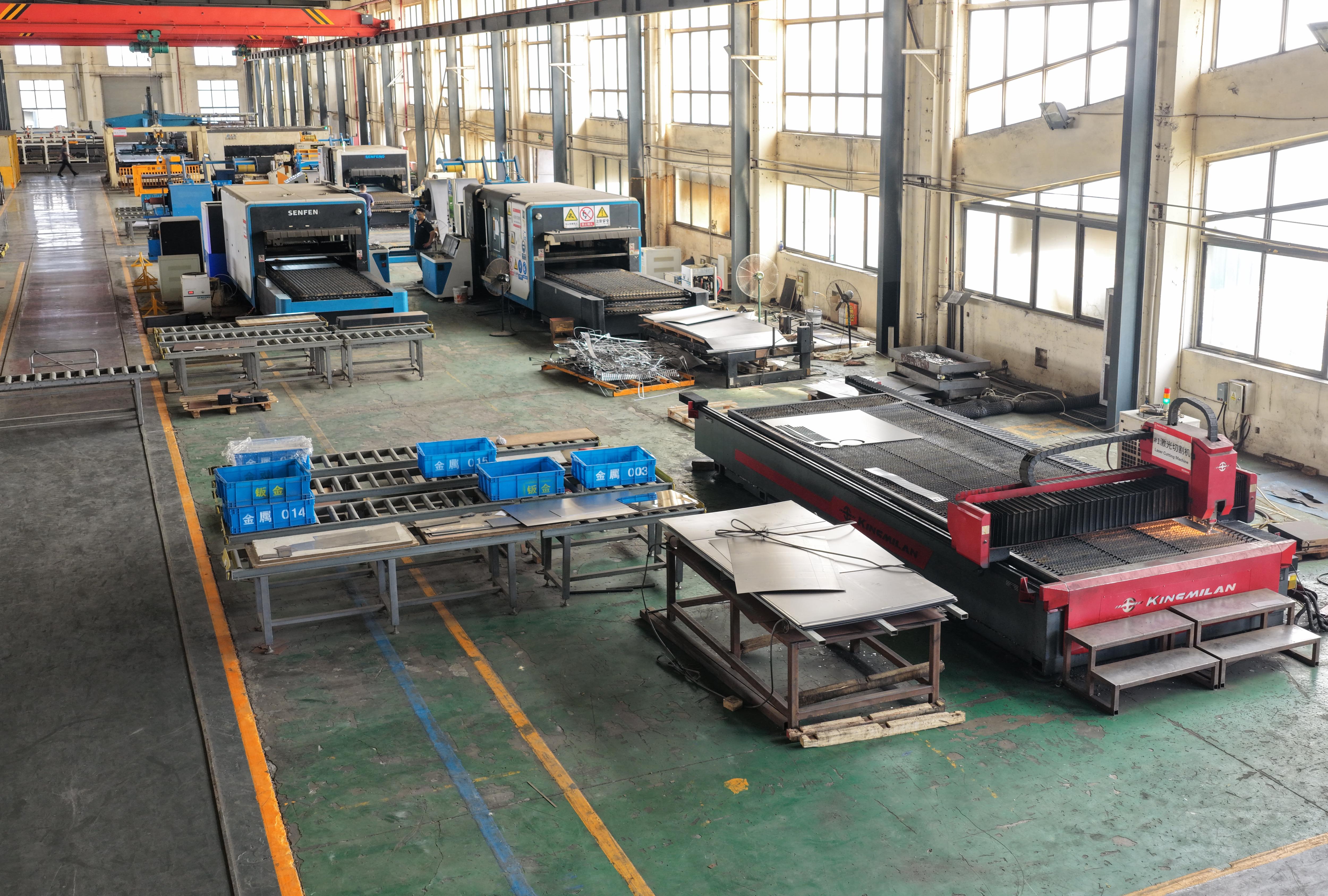
The RM-POP-001 is a custom metal POP display stand manufactured from cold-rolled steel or stainless steel and finished with powder coating or painting. Custom size, custom design and custom logo printing are all available. Metal manufacturing for this type of unit covers cutting, bending, welding, stamping, powder coating, painting and polishing.
Three details matter most to a buyer:
- The finish is specified, not decorative. Powder coating is the finish on RM-POP-001, and surface finish inspection is a defined quality-control step for metal displays, so the colour and surface standard can be written into the order rather than left to interpretation.
- Load performance is tested. Load-bearing testing is part of the metal QC sequence, alongside dimensional inspection and a 100% quality check.
- Metal carries the lowest custom MOQ of the three families. Custom metal parts start at 100 pieces, with a standard delivery time of 25–35 days and monthly production capacity of 30,000+ pieces.
If stainless steel is in the specification, ask which grade is being quoted and how it will be finished before comparing prices. A cold-rolled steel version and a stainless steel version of the same drawing are not the same purchase, even when the image looks identical.
Wood: MDF, solid wood and plywood (RM-SF-001)
The RM-SF-001 is a custom wood store fixture produced from MDF, solid wood or plywood with melamine, veneer or painted finishes, and supports custom structure and design. Wood production covers cutting, milling, drilling, sanding, veneer, melamine, painting and custom structure design. Custom wood parts carry a 50-piece minimum, a typical 30–40 day lead time and monthly capacity of 20,000+ pieces; wood quality control adds a moisture content test to dimensional and surface finish inspection.
Moisture content is the wood-specific check that new buyers tend to overlook. Wood movement is one of the main reasons a panel or shelf that looked correct as a sample behaves differently once the unit is standing in a store, so it is worth confirming that moisture content testing is part of routine QC rather than a one-off.
Wooden POP displays and wooden store fixtures are also the products covered by Redman's FSC Chain of Custody certificate BV-COC-122126 / BV-CW-122126, issued by Bureau Veritas Certification China under standard FSC-STD-40-004 V3-1 and valid until 18 August 2029. The certificate scope is the control of forest raw material procurement, production and sales of wooden POP displays and wooden store fixtures — the first document to request if timber sourcing is part of your compliance requirement.
Plastic and acrylic: ABS, PS and acrylic (RM-PD-001)
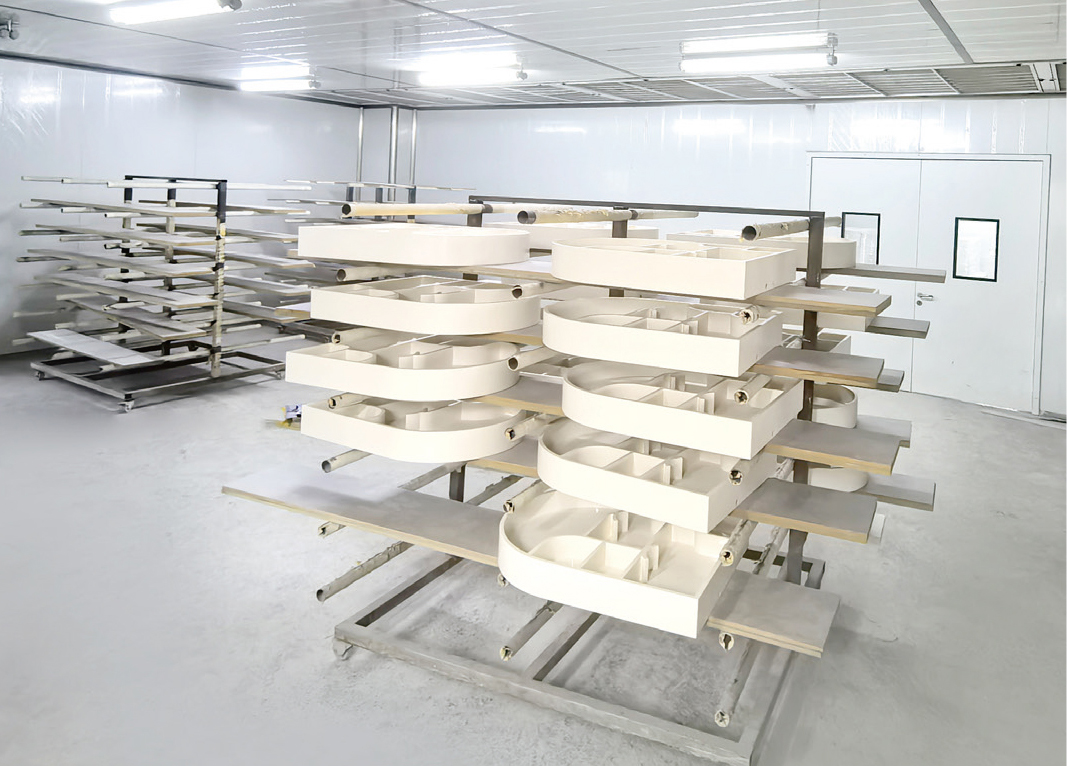
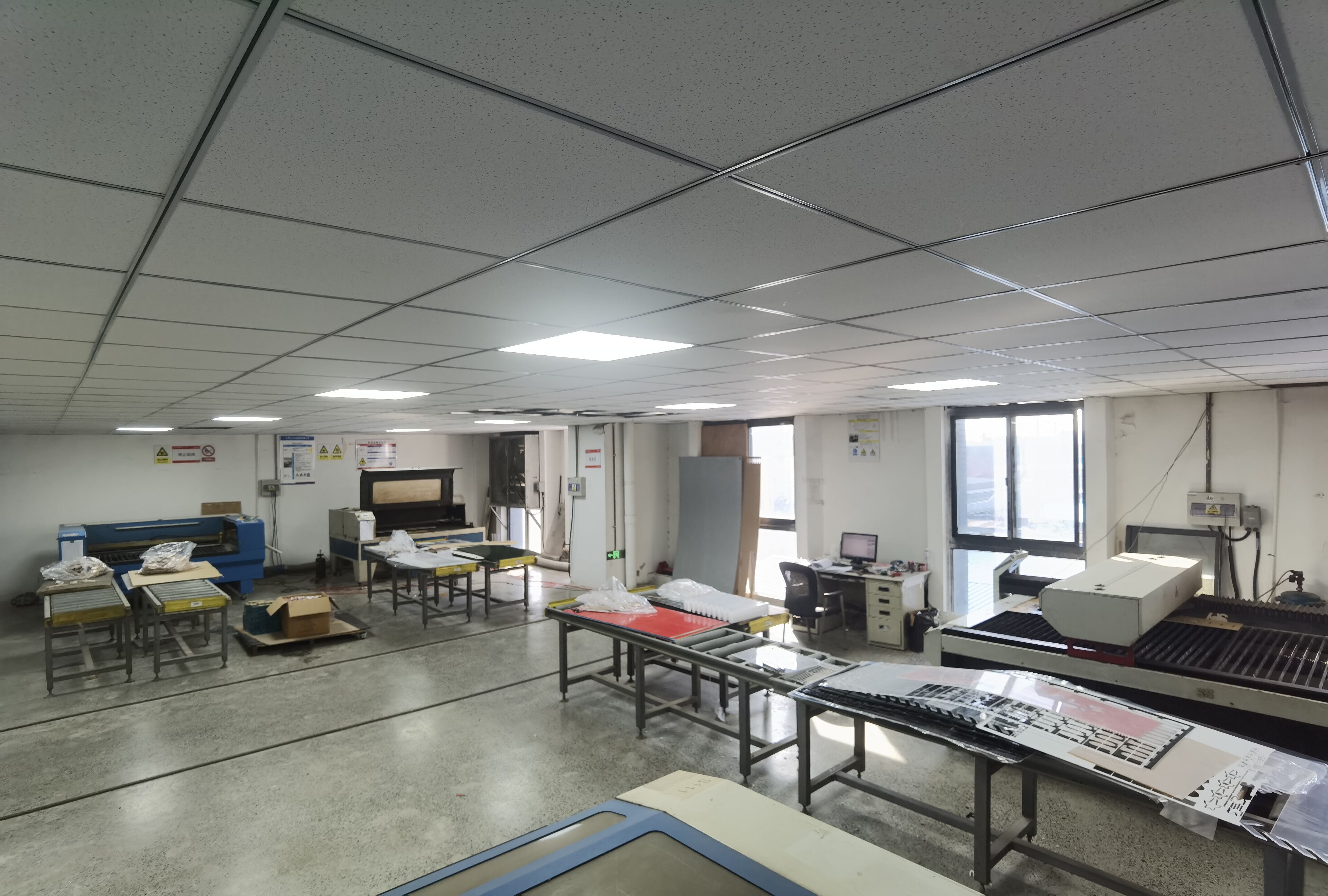
The RM-PD-001 is a custom plastic POP display made from ABS, PS or acrylic, produced by injection molding or vacuum forming, with custom colour and logo available. Plastic manufacturing covers injection molding, vacuum forming, blister molding, custom plastic part design and mold development. It has the highest entry point of the three families: 1,000 pieces minimum for custom plastic parts and a lead time of 35–50 days, because that window includes mold development. Monthly capacity is 100,000+ pieces, and QC covers dimensional inspection, material performance testing, surface finish inspection and 100% quality check.
Combined constructions: wood-metal and mixed-material stands
The RM-POP-001 material record covers metal (cold-rolled steel, stainless steel), wood and acrylic, which means mixed-material constructions sit inside the same product family rather than requiring a separate supply route. When a stand combines materials, decide early which element carries the load and which is decorative. That single split determines which parts need a load test, which production process each part comes from, and therefore which MOQ and lead time applies to the order.
Load capacity: how to read a 50–200 kg specification
RM-POP-001 lists a load capacity of 50–200 kg. That figure is the design range for the model, and the number that applies to a specific unit is confirmed against the approved drawing and sample, because shelf span, frame gauge and base design all change within the same product family.
Whenever a supplier quotes a load figure, ask for the basis behind it. These are the questions that change the answer:
- Distributed or point load? A load spread evenly across a shelf and a concentrated weight in one spot are different structural cases, even at the same total kilograms.
- Whole unit or a single shelf? Ask whether the figure applies to the complete stand, one shelf level, or a hanging element.
- Static or in use? A static rating and a rating that allows for repeated loading, re-stocking and staff contact are not the same requirement.
- How does the load reach the base? The transfer path and the base footprint determine how stable the stand is when merchandising is loaded high.
- At what configuration was it confirmed? The number should be tied to the height, shelf count and shelf position you are actually ordering.
Most retail programmes do not need the top of the range. The practical target is the heaviest realistic merchandising plan for that position, with margin for re-stocking. Over-specifying usually adds weight and cost without improving the display; under-specifying shows up as a sagging shelf in month three.
Customization: what can be changed, and what changes with it
Customization is not one decision. It is six decisions, and each one has a commercial consequence attached to it.
What can be customized on a POP display stand
- Size and footprint. RM-POP-001 is quoted with custom size, and RM-SF-001 with custom structure. Footprint has to clear aisle requirements, and height has to work with the store's sightlines.
- Structure and design. Custom structure and design is standard on the wood range, and metal structures are supported by technical support for metal structure design.
- Material mix. Metal, wood and acrylic can be combined within a single stand where the display calls for it.
- Colour and finish. Powder coating or painting on metal, melamine, veneer or painting on wood, and moulded colour on plastic and acrylic parts.
- Logo and brand graphics. Custom logo printing is available on RM-POP-001; custom colour and logo are available on RM-PD-001.
- Function. OEM/ODM customization covers function customization in addition to product design, material selection, size, structure, colour and logo printing.
What changes when you customize
- Minimum order quantity. 100 pieces for custom metal parts, 50 pieces for custom wood parts, and 1,000 pieces for custom plastic parts.
- Tooling. Custom plastic parts include mold development, which is why the plastic lead time is the longest of the three at 35–50 days.
- Lead time. 25–35 days for custom metal parts, 30–40 days for wood, 35–50 days for plastic including mold development, and 30–45 days for custom orders overall.
- Quality control scope. Material-specific tests are added to the standard sequence: load-bearing testing for metal, moisture content testing for wood, material performance testing for plastic, plus dimensional and surface finish inspection and 100% quality check.
One practical caution on finishes: if a project specifies a specialty finish such as PVD, confirm that the supplier runs that process rather than outsourcing it, and confirm which parts of the stand it applies to. Customization is only credible when the supplier can describe the process behind it.
From brief to delivered stand: a six-step process
- Define the display job. What product goes on the stand, in what quantity, at what position in store, and for how long. This decides floor-standing versus counter-top before anything else.
- Choose the material family. Metal for load and structure, wood for brand environments, plastic and acrylic for higher volumes and detailed moulded shapes. Confirm MOQ and lead time for the family before designing around it.
- Fix the load requirement. State the merchandising plan in kilograms and ask for the load basis in writing, together with the configuration it applies to.
- Specify finish and branding. Powder coating colour and surface standard on metal; melamine, veneer or paint on wood; logo printing and brand graphics on the relevant panels.
- Validate with a sample. Sample confirmation takes place before mass production. Production is covered by 100% pre-shipment inspection, with third-party inspection by SGS, BV or TUV available if your programme requires it.
- Produce and ship. After production, North American programmes can use the United States warehouse for assembly, kitting and drop-shipping — with no minimum order quantity for the drop-shipping service, standard order processing of 2–5 days and monthly order capacity of 10,000+ orders.
Use cases: what these specifications look like in practice
Nationwide retail rollout in the United States
A global retail brand used 5,000+ custom POP display units for in-store merchandising and brand promotion, supported by one-stop custom service from design to production and United States warehouse drop-shipping. The documented result includes a 40% improvement in product display effect, a 25% increase in in-store sales and a 100% on-time delivery rate. The lesson for a newcomer: the display stand is only half the programme — the fulfilment model behind it decides whether a national rollout lands on schedule.
Supermarket category management in Germany
A European supermarket chain deployed 3,000+ custom store fixtures across more than 200 supermarkets, with design matched to the chain's brand VI and compliance with European safety standards. The reported outcome was a 30% improvement in operational efficiency. In this type of programme, QC documentation and material compliance carry as much weight as the design.
Flagship retail in the Middle East
A Middle East department store delivered 1,000+ custom high-end display cabinets for a flagship store in Riyadh over 1.5 years, with strict material selection and surface treatment, professional installation guidance and one-to-one project management. High-end work shifts the emphasis from unit price to finish consistency across a long production run.
Reusable exhibition fixtures
A global exhibition service provider has used 200+ custom exhibition booth fixtures annually for four years, with portable and modular design, easy assembly and disassembly, and reuse across events. The reported result is a 35% reduction in exhibition cost — an example of how weight, handling and load capacity interact when a fixture has to travel.
Material comparison for POP display stands
| Specification | RM-POP-001 (metal) | RM-SF-001 (wood) | RM-PD-001 (plastic/acrylic) |
|---|---|---|---|
| Product type | Custom metal POP display | Custom wood store fixture | Custom plastic POP display |
| Core material | Cold-rolled steel, stainless steel | MDF, solid wood, plywood | ABS, PS, acrylic |
| Finish | Powder coating, painting | Melamine, veneer, painting | Injection molding, vacuum forming |
| Load capacity | 50–200 kg | Not specified in the product record; confirm per design | Not specified in the product record; confirm per design |
| Customization | Custom size and design, custom logo printing | Custom structure and design | Custom colour and logo |
| MOQ for custom parts | 100 pieces | 50 pieces | 1,000 pieces |
| Typical lead time | 25–35 days | 30–40 days | 35–50 days (including mold development) |
| Monthly capacity | 30,000+ pieces | 20,000+ pieces | 100,000+ pieces |
| Material-specific QC | Load-bearing test | Moisture content test | Material performance test |
| Chain-of-custody certification | — | FSC CoC BV-COC-122126 / BV-CW-122126, valid to 18 August 2029 | — |
| Management system certificates covering production | ISO 9001, ISO 14001, ISO 45001, ISO 50001 | ISO 9001, ISO 14001, ISO 45001, ISO 50001 | ISO 9001, ISO 14001, ISO 45001, ISO 50001 |
FAQ
Do POP display stands need certification, and what should a buyer request?
There is no single global certificate for POP display stands; what a supplier can evidence is its management systems and its material chain of custody. Redman holds ISO 9001 (certificate 04623Q16735R0M), ISO 14001 (04623E13894R0M), ISO 45001 (04623S13846R0M) and ISO 50001 (0350124En20050R0M) certificates covering the design, R&D, production and sales of custom POP displays and store fixtures, plus FSC Chain of Custody certificate BV-COC-122126 / BV-CW-122126 issued by Bureau Veritas Certification China, valid until 18 August 2029, for wooden POP displays and wooden store fixtures. For the United States market, UL Solutions describes UL 970 as covering retail fixtures and merchandise displays including POS, motorized, hanging, wall-system, showcase and product-platform categories; the current edition and product-specific documentation should be verified directly with the supplier or an accredited laboratory.
Can a POP display stand be customized in size, design and logo?
Yes. RM-POP-001 supports custom size, custom design and custom logo printing, with powder coating or painting as the finish. The wood range (RM-SF-001) supports custom structure and design with melamine, veneer or painted finishes, and the plastic range (RM-PD-001) supports custom colour and logo. OEM/ODM customization covers product design, material selection, size, structure, colour, logo printing and function customization across metal, wood and plastic/acrylic displays.
What is the minimum order quantity for a custom POP display stand?
MOQ depends on material. Custom metal parts start at 100 pieces, custom wood parts at 50 pieces, and custom plastic parts at 1,000 pieces because mold development is involved. Bulk orders are normally quoted as FCL, LCL is available for small-batch custom orders, and no minimum order quantity applies to the United States warehouse drop-shipping service.
How do I validate a POP display stand before mass production?
Validation starts with sample confirmation before mass production. Quality control then runs dimensional inspection, surface finish inspection, material-specific tests — load-bearing testing for metal, moisture content testing for wood, material performance testing for plastic — and a 100% quality check. Pre-shipment inspection covers 100% of orders, and third-party inspection by SGS, BV or TUV is available.
How long does production and delivery take for a custom order?
Typical production lead times are 25–35 days for custom metal parts, 30–40 days for wood parts, 35–50 days for plastic parts including mold development, and 30–45 days for custom orders overall. For North American programmes, the United States warehouse service processes orders in 2–5 days, with monthly order capacity of more than 10,000 orders. To confirm a timeline for a specific project, send the product weight, store position, target quantity and logo artwork for a material recommendation and a quotation.
Conclusion: three answers to get before you order
For a first POP display stand project, the sequence is straightforward. Decide what the stand has to hold and where it will stand. Choose the material family and accept the MOQ, tooling and lead time that come with it. Then confirm the load basis and the customization scope in writing before anything is tooled or produced. Specifications such as a powder-coated cold-rolled steel frame, a 50–200 kg load capacity range, and custom size, design and logo printing are checkable — and checkable is what a first-time buyer needs.
Next step: sample or quotation
Send the display brief — product weight, in-store position, target quantity, material preference and logo artwork — and the team will reply with a material recommendation, the applicable MOQ, QC scope and a production timeline. Sample confirmation takes place before mass production.
Email: steven@redmanretail.com · Tel / WhatsApp: +86 18921998562
Redman Corporation, 111 Tangqiao Road, Zhangjiagang, Jiangsu, China 215618
Website: www.redmanretail.com · Catalogue: Redman product catalogue (PDF)
Have Questions or Need More Details?
Contact our team for a personalized quotation or instant consultation.
Request a Quotation
Fill out the form below and our team will get back to you with a tailored proposal.
WhatsApp Direct Chat
Prefer to chat in real-time? Message us on WhatsApp for instant assistance & quick answers.
- Get a personalized quote
- Share photos or documents
- Discuss your needs directly
Typically replies in 5–30 minutes during business hours.