Display Rack Sourcing FAQ: MOQ, Lead Time, and Global Fulfillment Questions, Answered
Most display rack projects stall on three numbers: the minimum order quantity, the production lead time, and the route the goods take from the factory to the store. Get those three right and the rest of the sourcing conversation becomes routine.
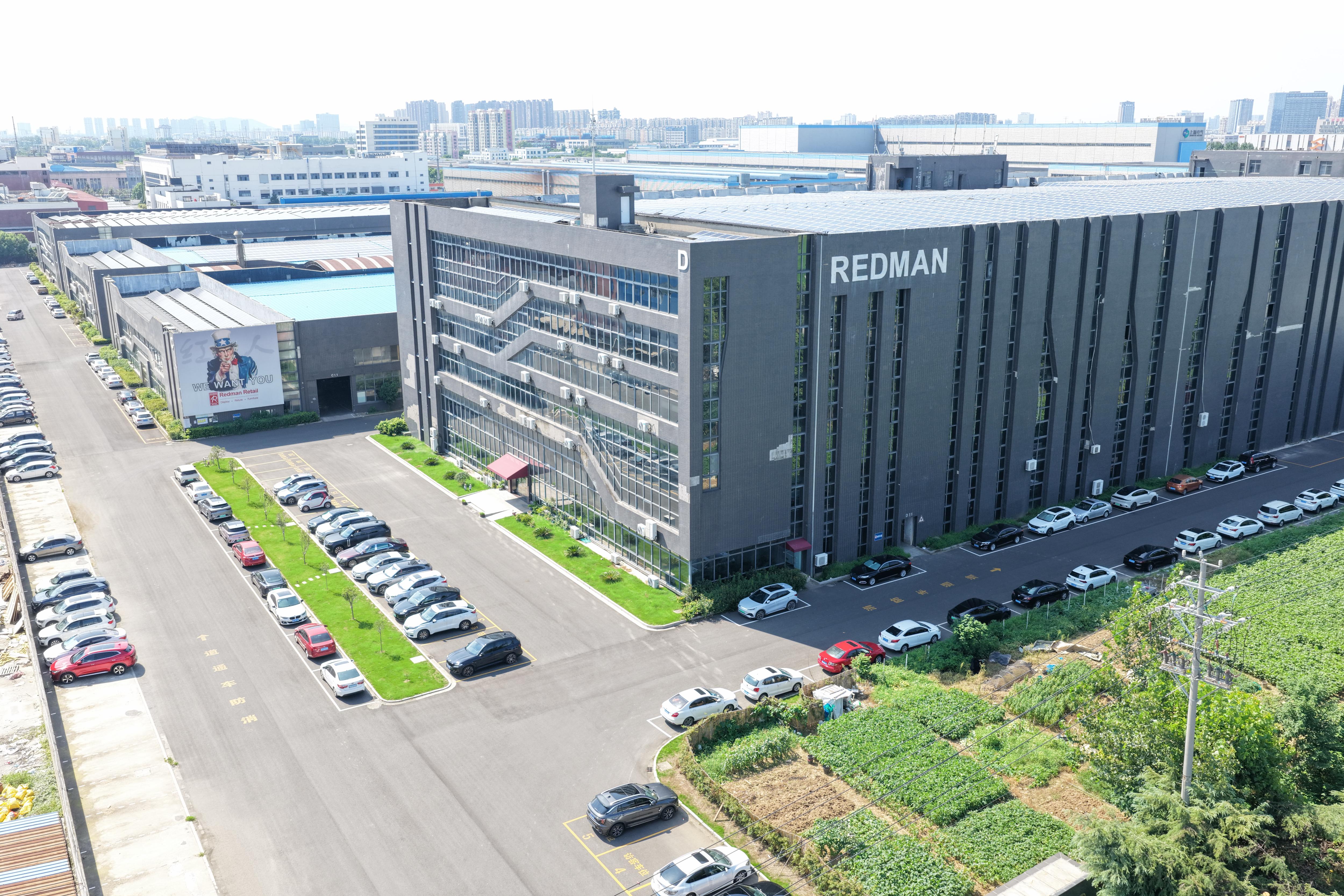
The answers below are written for retailers, brand owners, and importers who are already past initial discovery and are now reviewing a retail store display rack program seriously. They are based on the production and fulfillment facts of Redman Corporation, a China-based manufacturer of custom POP displays and store fixtures. Redman Corporation was founded in 2002, operates a production site of roughly 550,000 sqft (51,097 m²) in Zhangjiagang, Jiangsu, about two hours' drive from Shanghai, exports about 95% of its output, and serves markets in the USA, Canada, Europe, the Middle East, and Australia.
Each question is answered first with the number or rule that matters, then with the conditions that change it. That structure is deliberate: a sourcing FAQ is only useful if a buyer can lift one line out of it and put it into an internal memo without rewriting it.
Problem Definition: Why Display Rack Sourcing Stalls After the Proposal Stage
Custom fixture projects rarely fail on design. They fail on the mismatch between the commercial assumption and the production reality. A brand budgets for "a few hundred units," the design team specifies a mixed-material scheme, and then the quotation comes back split across three different production lines with three different thresholds — and the plan no longer fits the store opening date.
There is a second, quieter problem. Many quotations do not separate MOQ, production lead time, and fulfillment route. The buyer sees a single landed price and assumes the schedule is fixed, when in reality the schedule depends on whether the order qualifies as a full container, whether tooling is needed, and whether the goods are shipped direct from the factory or through a regional warehouse. In practice, clarifying those four points is worth more than another round of price negotiation.
This FAQ therefore answers a narrow set of questions rather than describing everything a display rack supplier can do. The scope is the procurement sequence: how many pieces you must order per material, how long production actually takes, how small batches are handled, and who supports the goods after they leave the factory.
Industry Background: What the Numbers Say About Display Rack Demand
Retail shelving and display systems remain a growing category. Dataintelo's retail shelving market report values the global retail shelving market at USD 12.4 billion in 2025 and projects it to reach USD 25.6 billion by 2034, a CAGR of 8.9%.
Material composition is concentrated. The same report places steel at a 48.6% share of retail shelving and display racks in 2024, which makes metal the default substrate for most high-traffic programs. On product form, floor-standing display cases represented 52% of the retail display market in 2025, the largest single segment.
Two procurement implications follow. First, a supplier that only runs one production line will force a mixed-material program into multiple vendors, which multiplies lead time risk. Second, because floor standing display rack formats dominate, freight volume and post-arrival assembly are routine requirements rather than exceptions — which is why fulfillment capability belongs in the same conversation as MOQ.
On the compliance side, UL Solutions describes UL 970 as covering commercial displays and retail fixtures, including showcases and temporary displays, with a scope that lists point-of-sale, motorized, hanging, wall-system, showcase, display-case, and product-platform categories. That is a description of a standard's scope, not evidence that any particular supplier holds certification. Buyers sourcing powered fixtures — for example an LED light display rack or an LED screen display rack — should treat the standard as a starting reference and confirm the applicable edition, market requirements, and test documentation directly.
Detailed Solution: Direct Answers on MOQ, Lead Time, and Fulfillment
1. What is the MOQ for display racks?
Minimum order quantities are set per material, because each material runs on a different process and a different cost structure:
- Metal display rack: 100 pieces
- Wooden display rack: 50 pieces
- Plastic display rack (including acrylic): 1,000 pieces
The difference is not arbitrary. Plastic and acrylic components generally require mold development, so the 1,000-piece threshold reflects tooling cost recovery. Wood components rely on joinery and finishing operations rather than tooling, which is why custom wood parts can start at 50 pieces. For fully custom programs, the MOQ basis is a full container load (FCL); for small batch custom orders, LCL (less than container load) shipping is available. A buyer running a single-store refurbishment or a regional pilot is therefore not forced to fill an entire container before the first order.
2. What is the standard production lead time?
Lead times are quoted by material and exclude transit:
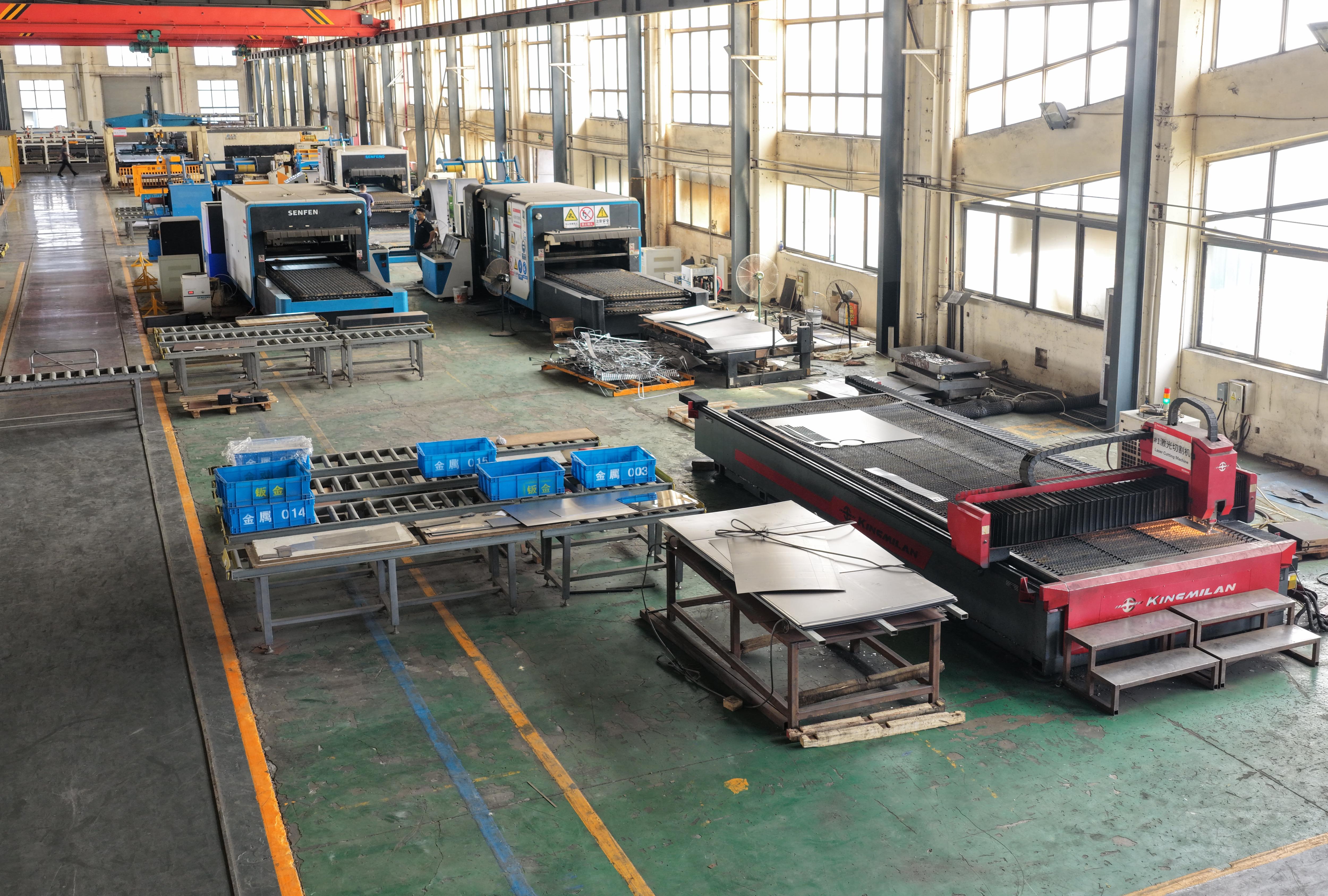
- Metal display rack: 25–35 days, monthly capacity 30,000+ pieces
- Wooden display rack: 30–40 days, monthly capacity 20,000+ pieces
- Plastic or acrylic display rack: 35–50 days including mold development, monthly capacity 100,000+ pieces
- Custom orders overall: 30–45 days
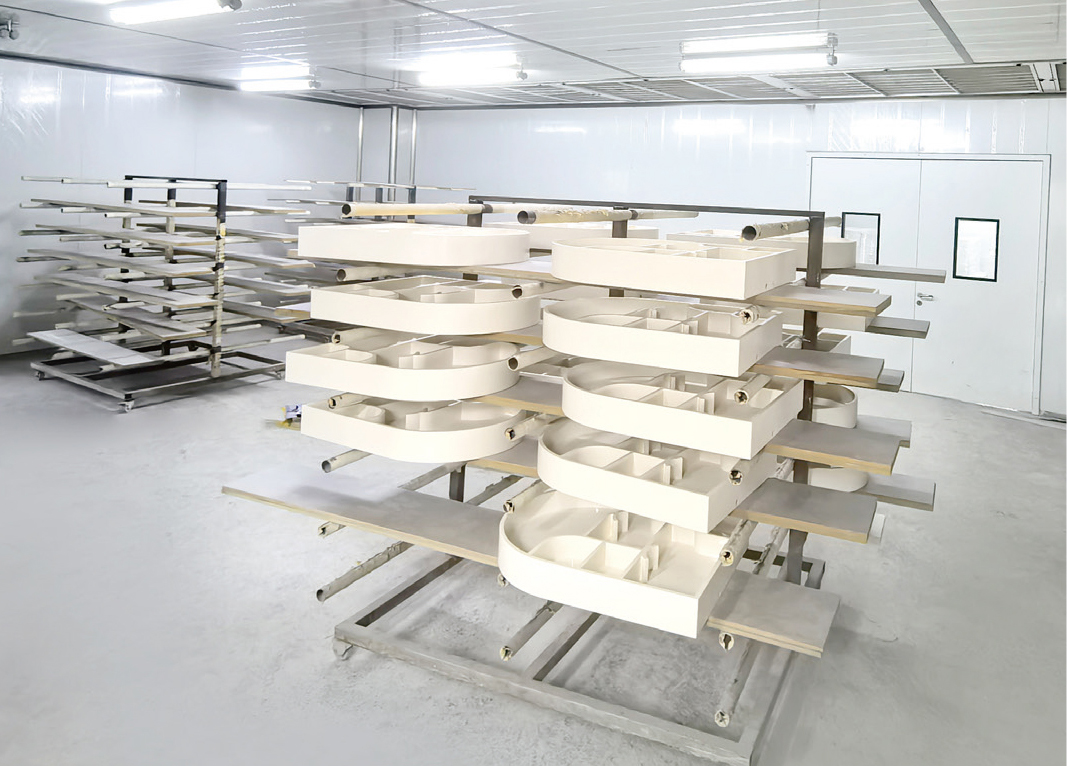
The wood figure of 30–40 days covers cutting, milling, drilling, sanding, veneer, melamine, painting, and custom wood structure design. The wider plastic range exists because mold development sits in front of production, not because the molding run itself is slower.
3. How much monthly capacity is available for continuous programs?
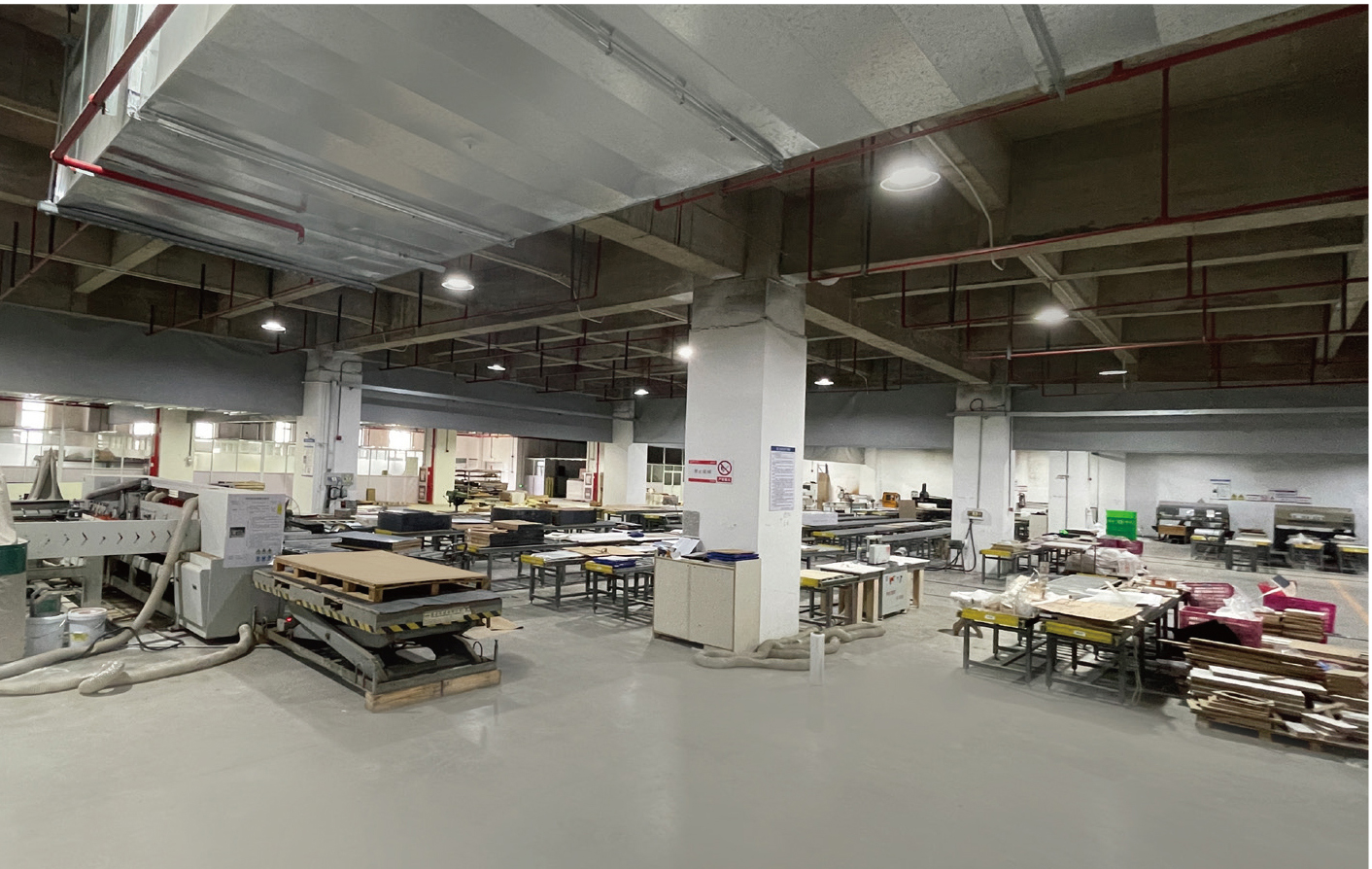
Monthly production capacity is 30,000+ metal pieces, 20,000+ wood pieces, 100,000+ plastic pieces, and 50,000+ general pieces. Annual shipping volume is 1,000+ containers. The site runs on roughly 550,000 sqft with more than 350 employees, including more than 50 technical engineers and 7 project managers.
For a multi-store rollout, the practical value of that structure is parallel scheduling: metal, wood, and plastic components can be planned inside one production calendar instead of being split across three suppliers with three separate delivery promises.
4. How are small batch orders handled?
LCL shipping is available for small batch custom orders. In practice this path suits single-store refurbishments, pop-up retail, and regional test launches — situations where the unit count does not justify a container but the delivery date is firm. For orders destined for the United States, a second option exists: the Los Angeles warehouse provides assembly, packaging, and drop-shipping services, which allows inventory to be positioned in-market rather than shipped from China per store.
5. How does global fulfillment work for US-bound orders?
The Los Angeles warehouse handles order processing with a standard processing time of 2–5 days and a monthly handling capacity of more than 10,000 orders. Services include product storage, assembling, packaging, drop-shipping, inventory management, and order fulfillment. For a brand replenishing multiple doors on different dates, this stage removes the need for a full container to arrive at every one of them.
Delivery terms available across programs include EXW, FOB Shanghai, CIF, DDU, and DDP, plus the USA warehouse drop-shipping route.
6. What after-sales support is included?
After-sales service includes 7×24 online technical support, a dedicated project manager providing one-to-one service, inventory management support, order tracking, and logistics support. Technical support is material-specific: for metal displays it covers structure design, material selection guidance, and after-sales maintenance; for wood displays it covers wood material selection, structure design, and after-sales maintenance.
Step-by-Step Breakdown: From Inquiry to Delivered Display Racks
The sequence below reflects how a custom fixture order actually moves through production. Each step carries a decision that affects the next one.
Step 1 — Define the project scope. Confirm the store format, the fixture types required (floor standing display rack, counter top display rack, modular display rack, foldable display rack, POP or POS display), the material direction, and the unit quantity. This determines which production line quotes the order.
Step 2 — Confirm material and structure. Metal parts require structure design and material selection guidance. Wood parts require wood selection, structure design, and a defined finishing route — veneer, melamine, or painting. Plastic and acrylic parts require a decision on whether tooling is needed at all.
Step 3 — Match MOQ to the order path. Check the material threshold first: 100 pieces for metal, 50 for wood, 1,000 for plastic. Fully custom orders are based on FCL; when the quantity falls short, switch to LCL or evaluate the Los Angeles warehouse route instead of inflating the order.
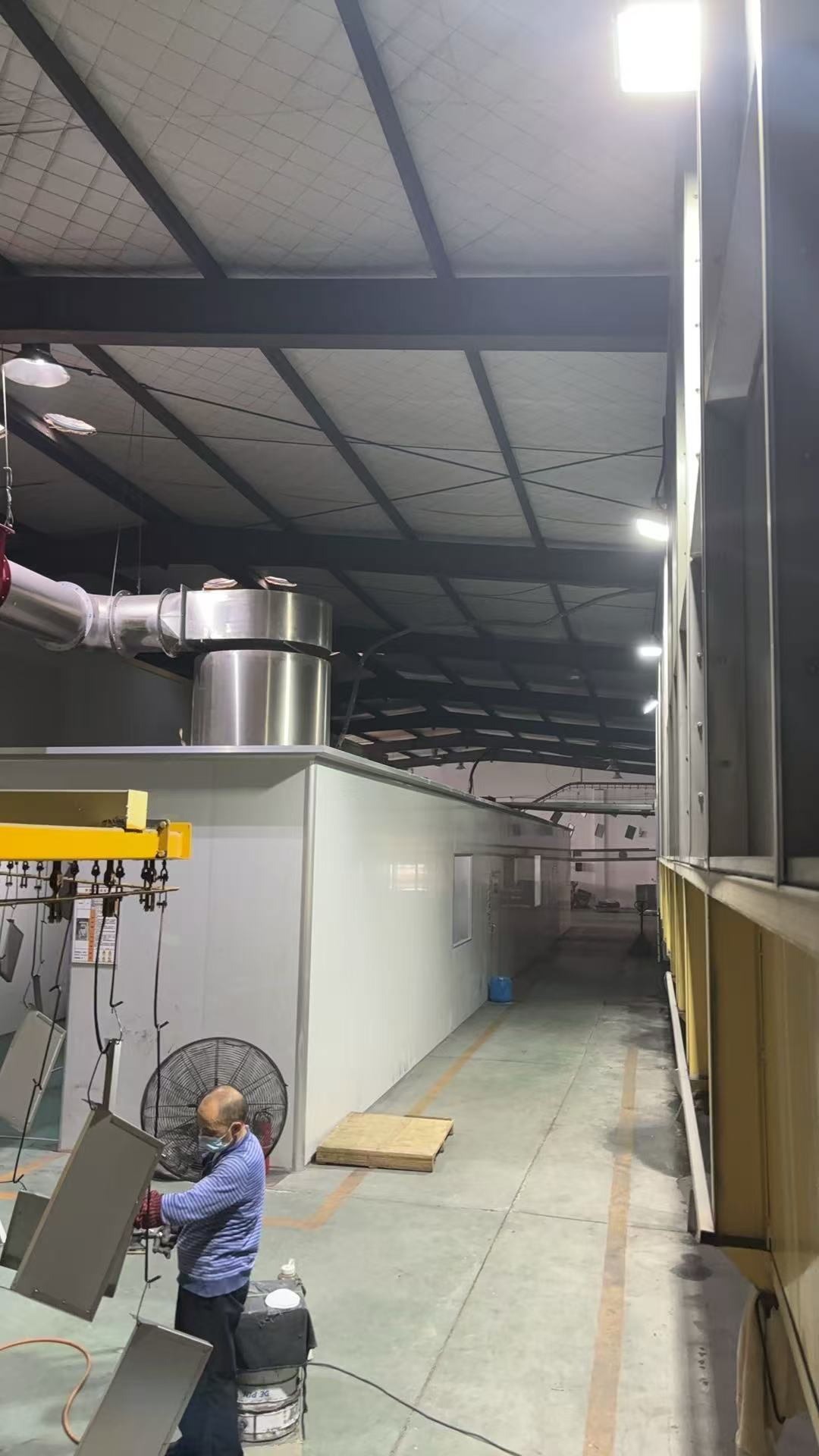
Step 4 — Approve the sample. Sample confirmation happens before mass production. For metal parts, adhesion and corrosion resistance testing is carried out before mass production. For wood parts, quality control covers dimensional inspection, surface finish inspection, moisture content testing, and 100% quality check.
Step 5 — Place the order and arrange payment. Standard terms are 30% T/T deposit in advance and 70% T/T against copy of B/L. Long-term cooperative customers can use 30% deposit with 70% net 30, and credit insurance is available for qualified customers.
Step 6 — Track production. A project manager provides one-to-one follow-up, and production progress is updated to the customer on a regular basis. The manufacturer reports a 100% on-time delivery rate, supported by production planning, a stable raw material supply chain, and progress reporting.
Step 7 — Complete pre-shipment inspection. Inspection is 100% before shipment, and third-party inspection by SGS, BV, or TUV can be arranged. Metal parts receive a 100% surface quality check and rust-proof treatment before delivery.
Step 8 — Ship and fulfill. Goods move by FCL, LCL, or through the USA warehouse. US-bound orders can be assembled, packaged, and drop-shipped from the warehouse, with order tracking and logistics support covering the final leg.
Use Cases: Where These Answers Change the Plan
Multi-store brand refurbishment. A brand refreshing doors across several markets will usually need metal, wood, and plastic fixtures in one purchase list. Checking MOQ and lead time per material allows all three to be scheduled into one delivery rhythm, instead of metal arriving while the wood components are still in finishing.
Single-store or pop-up projects. When the count does not reach a container, LCL is the realistic path. The questions worth pressing at that stage are the consolidated arrival window and the unloading arrangement, not a further reduction of the MOQ.
Promotional POP and POS programs.POP display and POS display units typically run in high volumes over a short lifecycle. With plastic capacity at 100,000+ pieces per month and a 1,000-piece MOQ, these programs are better ordered in a concentrated seasonal batch than replenished piecemeal.
Fixtures with integrated lighting or screens. When a display rack includes LED lighting or an LED screen, lead time and compliance confirmation gain an extra layer. Buyers should raise the electrical configuration, target-market requirements, and test documentation at the quotation stage, so that testing is not discovered as a gap immediately before mass production.
Year-round replenishment programs. Brands that replenish fixtures continuously rather than in single campaigns benefit from combining production with warehouse-based inventory management and order fulfillment, so units can be released to individual doors on demand.
Comparison Table: Procurement Parameters by Material and Fulfillment Path
The two tables below consolidate the numbers that most often determine whether a custom fixture program is feasible.
Table 1 — Display rack MOQ, capacity, and lead time by material
| Parameter | Metal display rack | Wooden display rack | Plastic / acrylic display rack |
|---|---|---|---|
| Custom MOQ | 100 pieces | 50 pieces | 1,000 pieces |
| Monthly capacity | 30,000+ pieces | 20,000+ pieces | 100,000+ pieces |
| Standard lead time | 25–35 days | 30–40 days | 35–50 days, including mold development |
| Process note | Structure design, material selection guidance, surface treatment control | Cutting, milling, drilling, sanding, veneer, melamine, painting, custom wood structure design | Mold development precedes production |
| Quality control | Adhesion and corrosion resistance testing before mass production; 100% surface quality check; rust-proof treatment | Dimensional inspection, surface finish inspection, moisture content test, 100% quality check | 100% pre-shipment inspection |
Table 2 — Fulfillment routes for custom display rack orders
| Route | Typical situation | Key facts |
|---|---|---|
| FCL (full container load) | High-volume custom programs | MOQ basis for custom orders |
| LCL (less than container load) | Small batch custom orders | LCL available for small batches |
| USA warehouse drop-shipping | US-bound orders released in stages | Assembly, packaging, drop-shipping; standard order processing 2–5 days; 10,000+ orders per month |
One boundary worth stating plainly: capacity figures describe what the production lines can output, not what any single order will be scheduled for. A 30,000-piece monthly metal capacity does not shorten a 25–35 day standard lead time, because the lead time is driven by process sequence rather than volume.
FAQ: Long-Term Supply Partner and Procurement Questions
What compliance and inspection documentation should a buyer request before committing to a lead time?
Three items should be confirmed before a delivery date is accepted: sample confirmation before mass production, 100% pre-shipment inspection, and whether third-party inspection is available. Redman's process confirms the sample before mass production, performs 100% inspection before shipment, and allows third-party inspection by SGS, BV, or TUV. Metal parts undergo adhesion and corrosion resistance testing before mass production and a 100% surface quality check with rust-proof treatment before delivery; wood parts undergo dimensional inspection, surface finish inspection, and moisture content testing. Where fixtures include LED lighting or screens, electrical requirements and test documentation should be confirmed against the target market separately — UL Solutions describes UL 970 as covering commercial displays and retail fixtures, including point-of-sale and motorized displays, which is a useful reference scope but not proof of any supplier's certification.
How much continuous volume can a China-based display rack manufacturer actually absorb?
For Redman Corporation, monthly production capacity is 30,000+ metal pieces, 20,000+ wood pieces, 100,000+ plastic pieces, and 50,000+ general pieces, with annual shipping volume of 1,000+ containers. The site covers roughly 550,000 sqft and employs more than 350 people, including more than 50 technical engineers and 7 project managers. For a continuous program, the relevant point is not the headline number but the fact that metal, wood, plastic, printing, painting, powder coating, and packaging operations sit inside one production footprint, so a mixed-material order does not have to be coordinated across separate vendors.
When is a custom order shipped as a full container, and when can it go LCL?
The material MOQ applies first: 100 pieces for metal, 50 for wood, 1,000 for plastic. Fully custom orders use FCL as the MOQ basis, while LCL is available for small batch custom orders. For a single-store refurbishment or a regional pilot, LCL is usually the more realistic route than inflating the order to fill a container. US-bound orders have a third option — the Los Angeles warehouse, which handles assembly, packaging, and drop-shipping with a standard order processing time of 2–5 days.
What payment terms are standard, and is credit available?
Standard terms are 30% T/T deposit in advance and 70% T/T against copy of B/L. Long-term cooperative customers can be offered 30% deposit with 70% net 30, and credit insurance is available for qualified customers. Buyers running their first project with a manufacturer may choose to align the final payment stage with the completion of pre-shipment inspection, since 100% inspection and optional third-party inspection both sit immediately before dispatch.
What does sample approval involve before mass production?
Sample confirmation takes place before mass production begins. For metal components, adhesion and corrosion resistance testing is performed ahead of the production run. For wood components, quality control includes dimensional inspection, surface finish inspection, moisture content testing, and 100% quality check. Schedule-wise, the approval stage should be planned separately from production: standard lead times are 25–35 days for metal, 30–40 days for wood, and 35–50 days for plastic or acrylic including mold development, with 30–45 days quoted for custom orders overall. Those windows begin after order confirmation, so sample rounds are additional to them.
What should a retailer check first when selecting a long-term display rack supply partner in China?
Three capability groups are worth verifying before price. The first is production breadth: whether metal, wood, plastic, printing, and finishing operations are handled in-house, because a mixed-material store program depends on it. The second is whether delivery commitments are backed by figures — monthly capacity, on-time delivery performance, and a named project management structure. The third is after-sales responsiveness: 7×24 online technical support, one-to-one project manager service, order tracking, and logistics support. Redman Corporation has operated in Zhangjiagang since 2002, exports about 95% of output, serves the USA, Canada, Europe, Middle East, and Australia, and supports US-bound orders through a Los Angeles warehouse offering assembly, packaging, and drop-shipping. Buyers who want to check these points against their own program can request the current catalog or submit a specific MOQ, lead time, and fulfillment question for a written answer.
Conclusion: The Four Numbers to Settle Before You Order
Display rack sourcing becomes manageable once four values are agreed in writing, and this FAQ can be reduced to exactly those four.
- MOQ by material: 100 pieces for metal, 50 for wood, 1,000 for plastic or acrylic.
- Lead time by material: 25–35 days for metal, 30–40 days for wood, 35–50 days for plastic or acrylic including mold development, and 30–45 days for custom orders overall.
- Order path: FCL as the basis for custom orders, LCL for small batches, and the Los Angeles warehouse for US-bound assembly, packaging, and drop-shipping.
- Support model: 7×24 online technical support, one-to-one project manager service, order tracking, logistics support, and material-specific technical guidance.
Everything else — finish selection, structure design, whether the format is a modular display rack or a fixed custom store fixtures build — sits on top of those four values. A supplier that can state them precisely, and back them with capacity figures and inspection steps, is a supplier a retail program can be planned around.
Next Step: Check Your Own Program Against These Numbers
If you are comparing MOQ, lead time, or fulfillment routes for an upcoming store program, send the material mix and target quantity and we will answer each point in writing. You can also download the current product catalog to review fixture categories before the first call.
Catalog (PDF): Redman 2026 Product Catalog
WhatsApp: +86 18921998562
Website: www.redmanretail.com
Redman Corporation
Contact: Steven Huang
Email: steven@redmanretail.com
Tel: +86 18921998562
Address: 111 Tangqiao Road, Zhangjiagang, Jiangsu, China 215618
Website: www.redmanretail.com
Have Questions or Need More Details?
Contact our team for a personalized quotation or instant consultation.
Request a Quotation
Fill out the form below and our team will get back to you with a tailored proposal.
WhatsApp Direct Chat
Prefer to chat in real-time? Message us on WhatsApp for instant assistance & quick answers.
- Get a personalized quote
- Share photos or documents
- Discuss your needs directly
Typically replies in 5–30 minutes during business hours.