Display Rack Compliance Guide: ISO, GB/T, and FSC Standards for Global Retail Buyers
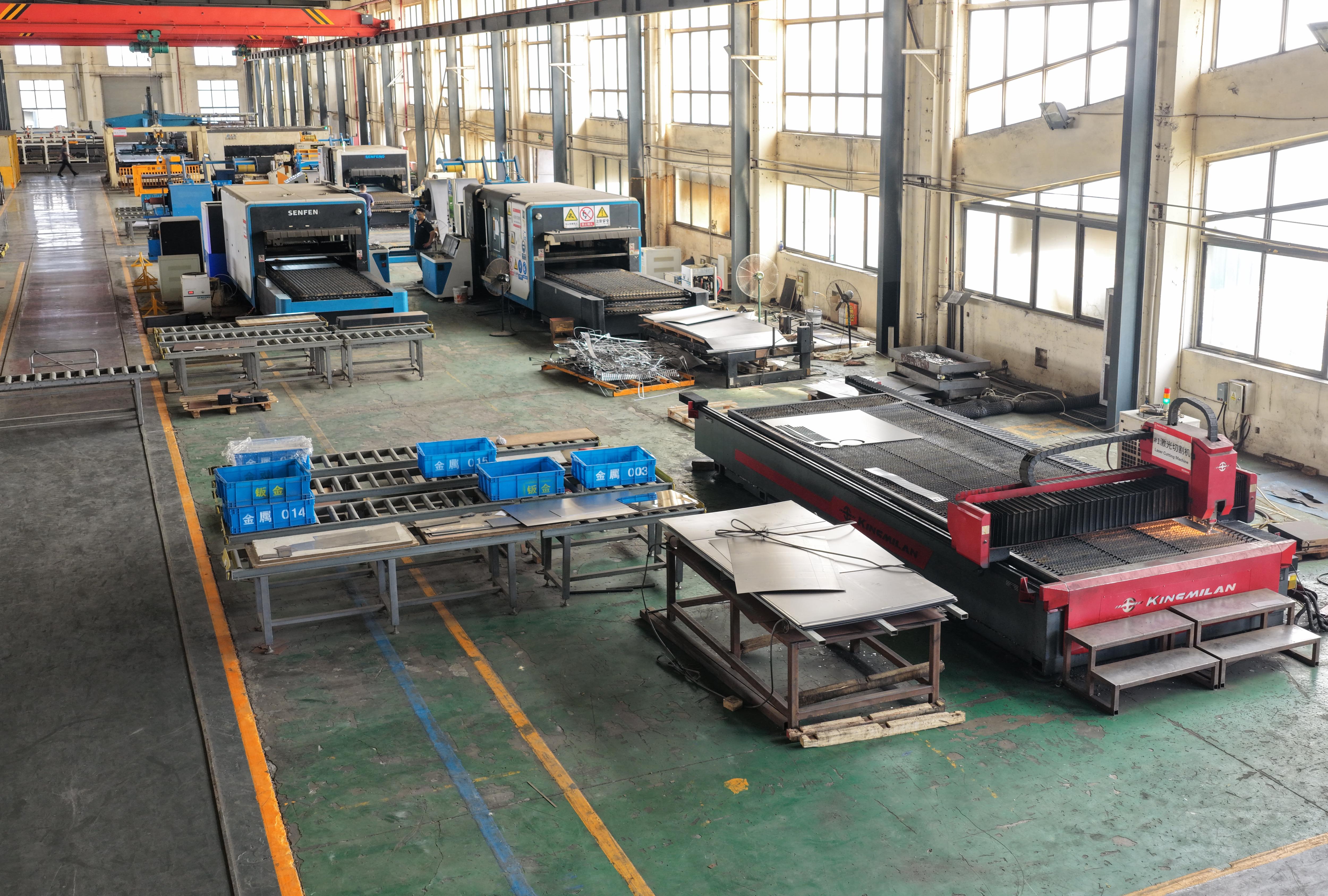
A display rack that clears customs and passes a retail compliance review usually needs three separate layers of evidence: a management-system certificate, a product-level safety or test reference for the destination market, and — where wood is involved — a valid FSC Chain of Custody claim. The confusion most often starts with the first layer, because Chinese suppliers frequently present it as a GB/T certificate. GB/T19001-2016, GB/T45001-2020 and GB/T24001-2016 are the Chinese national adoptions of ISO 9001:2015, ISO 45001:2018 and ISO 14001:2015, and they are applicable worldwide. Redman Corporation, a custom POP display and store fixture manufacturer founded in 2002 in Zhangjiagang, Jiangsu, China, holds management-system certificates issued by Beijing Head International Certification Co., Ltd. and holds FSC Chain of Custody certificate BV-COC-122126 / BV-CW-122126 issued by Bureau Veritas Certification China. This guide explains what each document proves, how to map the GB/T numbering to ISO, and how to check the paperwork against the fixtures actually being ordered.
Why Compliance Evidence Becomes the Bottleneck in Display Rack Sourcing
A display rack can be engineered correctly, manufactured to drawing, and still fail at the point where a retailer, a customs broker, or a fit-out reviewer asks for documentation. In fixture programs, the failure is rarely a broken shelf or a poor weld. It is a gap between what the buyer assumed a supplier's certificates covered and what those certificates actually say.
Three gaps account for most of these problems:
- Scope gap. The supplier sends a genuine ISO 9001 certificate, but the scope statement on that certificate does not describe the product class being purchased. The document is real; it simply does not cover the order in front of you.
- Numbering gap. A Chinese manufacturer presents GB/T19001-2016, GB/T45001-2020 or GB/T24001-2016. The buyer's compliance template asks for “ISO 9001”, “ISO 45001” or “ISO 14001”, and the review stalls while someone tries to establish whether the two documents refer to the same thing.
- Chain-of-custody gap. A supplier states that wood components are “FSC certified” but provides no certificate code, no certificate holder and no claim type. Without a code that can be checked against the issuing certification body, an FSC statement is an assertion rather than evidence.
The commercial consequence is the first risk category in any display rack program: a product that does not meet the safety and environmental requirements of the target market can be detained at customs or recalled from stores. This is the primary compliance risk in a fixture sourcing plan, and it is controlled through product certification matched to the customer's target market, third-party test reports, and strict control of raw materials and production processes. Behind it sit three related risks that documentation alone will not solve — material quality risk such as deformation, cracking or fading; surface treatment risk such as paint peeling, powder coating failure or rust; and structural safety risk such as toppling or collapse.
The buyer's rule of three. Treat a display rack compliance file as three separate links: a system link (management-system certificates), a product link (test reports and market-specific safety standards), and a material link (chain-of-custody evidence for wood, plus material control for metal and plastic). A supplier that can only produce one of the three is not yet a compliant supplier.
Industry Background: The Compliance Layer Retail Buyers Are Working In
The retail shelving and display rack market was valued at USD 12.4 billion in 2025 and is projected to reach USD 25.6 billion by 2034, according to Dataintelo. Steel remains the dominant material, accounting for a 48.6% market share in 2024, while gondola and floor-standing systems alone represented 41.8% of the market — approximately USD 3.59 billion in 2024. Fixture compliance therefore has to be interpreted across metal, wood, plastic and combined constructions rather than a single material class.
Product-level rules sit alongside management-system certificates. In the United States, retail fixtures and commercial displays must comply with ANSI/UL 970, which recently replaced UL 65 and UL 962. That standard addresses the fixture itself. ISO 9001, ISO 45001, ISO 14001 and ISO 50001 address the organisation that makes it. A buyer who treats one as a substitute for the other will either over-request documents or under-verify the product.
Demand pressure concentrates in retail formats where fixtures are visible and refreshed frequently. The retail store channel dominated the global sportswear market with a 70.4% share in 2026, which helps explain why sportswear roll-outs generate repeat fixture programs with multi-material specifications — metal frames, wooden shelving panels and branded graphic components inside the same store.
The supplier landscape is global and mixed. Established fixture suppliers include Lozier Corporation, Madix Inc. and Tegometall, alongside Chinese custom manufacturers that build to buyer drawings. Comparing them on certificate lists alone is not sufficient — the comparison has to include who owns the production process and who carries the documentation for the specific order.
The Certificates Behind a Compliant Display Rack Program
A complete management-system and material-compliance file for a display rack program typically contains four ISO-based management systems and, where wood is used, one chain-of-custody certificate. Each answers a different question, and they are not interchangeable.
ISO 9001:2015 / GB/T19001-2016 — Quality Management
ISO 9001 is a quality management system standard. It evidences that design, production, inspection and traceability processes are documented, controlled and internally audited. Redman holds ISO 9001:2015 (GB/T19001-2016) certification issued by Beijing Head International Certification Co., Ltd. What this supports: consistency between the approved sample and mass-production output, incoming material inspection, and pre-delivery inspection discipline. What it does not replace: a load test report or a market-specific safety certification for the finished rack.
ISO 45001:2018 / GB/T45001-2020 — Occupational Health and Safety
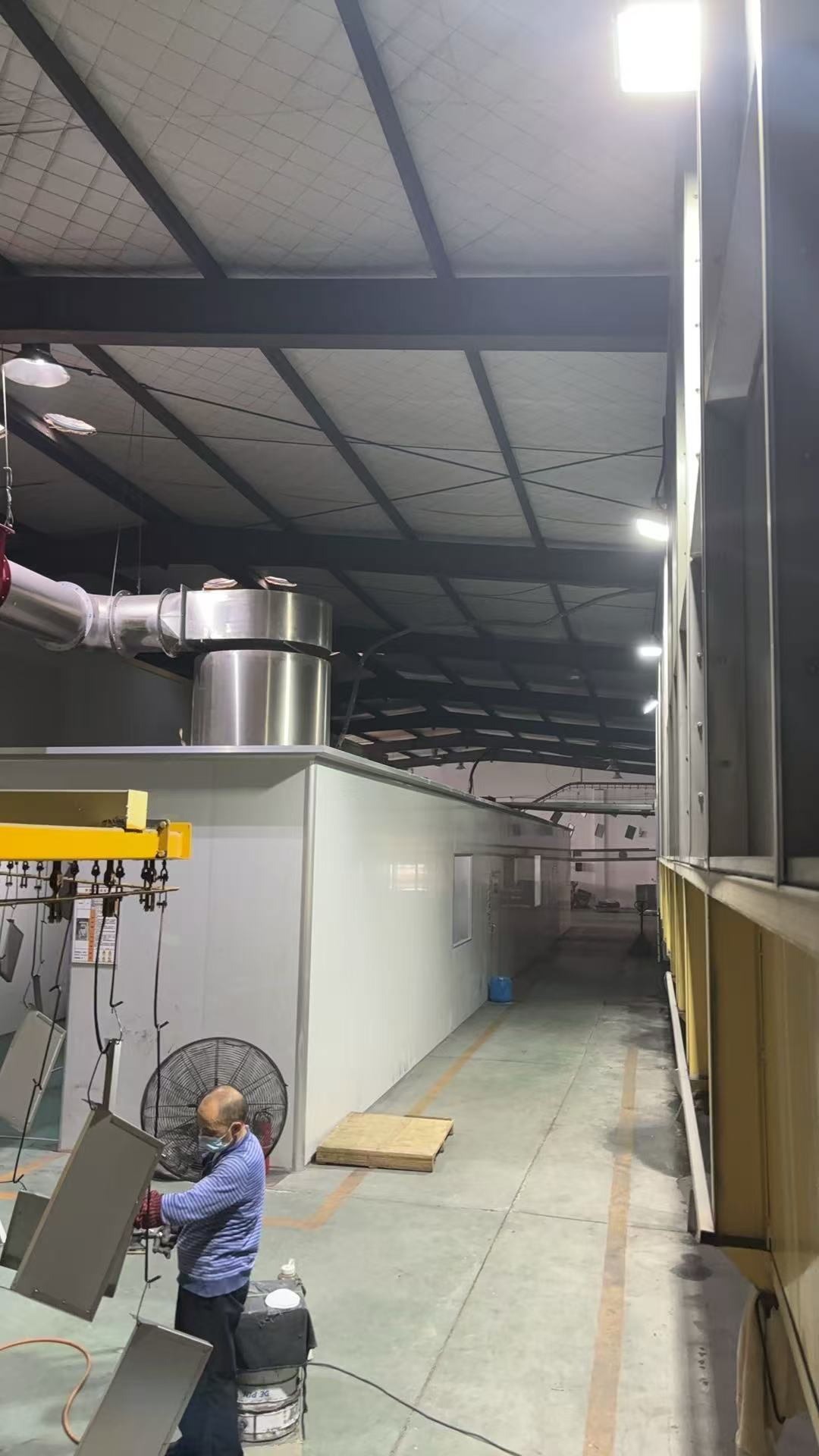
ISO 45001 covers occupational health and safety management. For retail buyers this is a factory-condition signal rather than a product specification: it indicates that production risks — including those associated with welding, cutting, coating and material handling — are identified and controlled. It is increasingly requested during supplier screening alongside quality certification, and Redman holds ISO 45001:2018 (GB/T45001-2020).
ISO 14001:2015 / GB/T24001-2016 — Environmental Management
ISO 14001 covers environmental management, including waste handling, emissions and chemical process control. It is directly relevant to display rack manufacturing because metal finishing, powder coating and painting are the process steps where environmental requirements bite hardest. Redman holds ISO 14001:2015 (GB/T24001-2016) certification, which is useful for retailers that report on supplier environmental performance.
ISO 50001 — Energy Management
ISO 50001 addresses energy management: how a plant monitors, measures and improves energy performance. In a fixture program it matters in two ways. It indicates process discipline at the factory level, and it gives retailers with energy or carbon reporting obligations a document they can reference during supplier review. It is a plant-level system, not a statement about the energy performance of a finished display rack.
FSC Chain of Custody — BV-COC-122126 / BV-CW-122126
FSC Chain of Custody is a material-origin standard, not a management-system standard. It applies to products containing wood and tracks certified material through the supply chain to the finished item. Redman holds FSC Chain of Custody certificate BV-COC-122126 / BV-CW-122126 issued by Bureau Veritas Certification China. For a retail buyer, this is the document that supports a wood-component claim on a purchase order, and the certificate code is what makes that claim checkable.
Which Body Issued Which Certificate
Two certification bodies are involved, and both should be recorded in the supplier file. The management-system certificates — ISO 9001:2015 / GB/T19001-2016, ISO 45001:2018 / GB/T45001-2020, ISO 14001:2015 / GB/T24001-2016 and ISO 50001 — were issued by Beijing Head International Certification Co., Ltd. The FSC Chain of Custody certificate BV-COC-122126 / BV-CW-122126 was issued by Bureau Veritas Certification China. Verification is always performed against the issuing body, never against the supplier's own summary sheet.
Where the Three Product Families Sit Inside the Scope
Certification is only useful if it maps to what is being bought. Three product families show how the links connect:
- RM-POP-001 (POP Display Stand). A point-of-purchase unit used for promotions and seasonal merchandising. Where the unit includes wood components, the FSC chain-of-custody link applies; the system link covers the quality and inspection process behind the unit.
- RM-SF-001 (Store Fixture). A permanent retail fixture intended for ongoing in-store merchandising. This is where material, surface-treatment and structural documentation converge, because the fixture is expected to survive a multi-year store life.
- RM-PD-001 (Plastic Display Rack). A plastic-bodied rack where the material link is a plastic specification rather than a wood chain-of-custody claim, and the system link carries the quality burden.
The practical test is simple: for every line item on the purchase order, name the certificate or test report that supports it. If a line item has no supporting document, the compliance file has a hole in it.
GB/T and ISO: The Mapping Table Global Buyers Need
GB/T numbers are not a parallel system to ISO. They are the Chinese national standards, and the three that appear most often in fixture sourcing are adoptions of the corresponding ISO standards. The table below is the mapping a retail buyer needs in order to close the numbering gap during a compliance review.
| International standard | Chinese GB/T equivalent | Management area | What the document supports in a fixture program |
|---|---|---|---|
| ISO 9001:2015 | GB/T19001-2016 | Quality management | Process control, inspection and traceability from approved sample to shipment |
| ISO 45001:2018 | GB/T45001-2020 | Occupational health and safety | Factory risk control covering fabrication, coating and material handling operations |
| ISO 14001:2015 | GB/T24001-2016 | Environmental management | Waste, emissions and chemical process control in finishing operations |
| FSC Chain of Custody | Not a GB/T standard | Wood material origin | Traceability of certified wood through the supply chain to the finished product |
These certifications are applicable worldwide. A Chinese certificate issued against GB/T19001-2016 is not a weaker document than an ISO 9001 certificate — the requirements are aligned. What buyers should check instead is the certificate number, the issuing body, the scope statement and the validity period. Those four items decide whether the document covers the order in front of you.
How to Verify Display Rack Compliance Before You Release a Purchase Order
Compliance verification is a sequence, not a document collection. Run it in this order.
- Define the standard stack before you request anything. Write down which standards apply to your market and product: management-system requirements, product safety requirements such as ANSI/UL 970 for retail fixtures and commercial displays in the USA, and material-origin requirements where wood is used. A European order for a wooden display rack and a US order for a floor standing display rack will not have the same stack.
- Request the certificate, not the logo. Ask for the full certificate document, including certificate number, issuing body, scope statement and validity dates. A logo printed on a brochure is not a certificate and cannot be verified.
- Match the scope statement to your product. Confirm that the certificate scope covers the product class you are buying, and that the production site named on the certificate is the site that will build the order. This is where most scope gaps are found.
- Verify the certificate with the issuing body. For Redman's file, the management-system certificates are verified against Beijing Head International Certification Co., Ltd., and FSC certificate BV-COC-122126 / BV-CW-122126 is verified against Bureau Veritas Certification China. Verification is a check against the issuer's register, not an email confirmation from the sales contact.
- Confirm the FSC claim in writing on commercial documents. Where wooden display racks or wood-metal combined fixtures are ordered, the FSC certificate code should appear on the commercial documents linked to the shipment, and the product group on the certificate should be confirmed against the item being shipped.
- Lock compliance into the purchase order and sample approval. Name the applicable certificates and test reports in the PO, and make sample approval the point where material, finish and structural requirements are confirmed. A compliance file that is not referenced in the PO is documentation, not control.
Compliance in Practice: Four Retail Scenarios
1. Sportswear store roll-out with metal and wood fixtures
A sportswear store display rack typically combines a metal frame with wooden shelving or a wood-branded back panel, plus apparel display arms and accessory display trays. The documentation set has to cover both material streams: the system link covers fabrication and finishing, while the wood stream requires a valid FSC Chain of Custody claim. Because the retail store channel accounts for 70.4% of the global sportswear market in 2026, these roll-outs are repeat programs — which means the compliance file should be reusable across stores, not rebuilt for every opening.
2. High-traffic supermarket gondola and floor-standing programs
Steel accounts for 48.6% of the display rack market and gondola or floor-standing systems represent 41.8% of it, which makes structural and surface documentation the priority in grocery environments. Load-bearing capacity testing before mass production, 100% surface quality inspection before delivery, and rust-proof treatment for metal products are the practical controls that sit behind the system certificates. For a buyer, the relevant question is not whether a supplier has ISO 9001, but whether the inspection regime described by that system is actually applied to the rack being shipped.
3. Importer and distributor programs for independent retailers
Importers who resell retail store display racks to many small accounts need a compliance pack they can pass downstream. A counter top display rack or a modular display rack sold to fifty independent shops requires one verified document set rather than fifty separate explanations. This is a commercial argument for sourcing from a supplier with a complete, code-verifiable file: the documentation becomes a resale asset.
4. European brand owners with wood-containing store fixtures
Where a store fixture program includes wooden components, the FSC Chain of Custody certificate becomes the document that is asked for first. A certificate held under the code BV-COC-122126 / BV-CW-122126 and issued by Bureau Veritas Certification China gives the buyer a reference that can be verified independently, which is the difference between a claim and evidence.
Comparing Supplier Types: Compliance Control, Cost and Delivery
Compliance capability is not evenly distributed across supplier types, and it interacts directly with cost and delivery performance. The table below compares the three supplier models retail buyers most often evaluate.
| Evaluation dimension | Full-chain manufacturer with owned production (Redman) | Trading company without its own factory | Imported display products from Europe / USA |
|---|---|---|---|
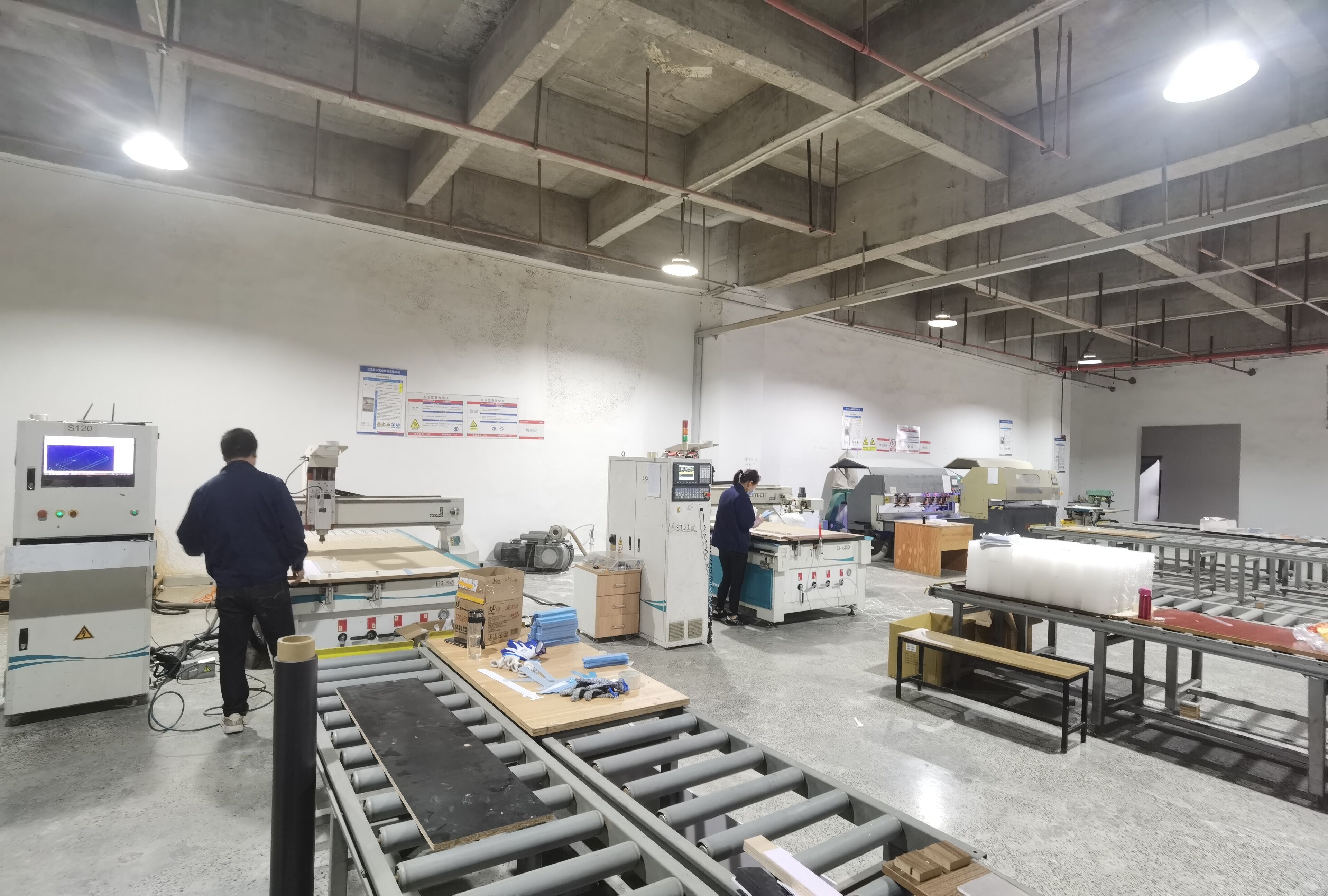
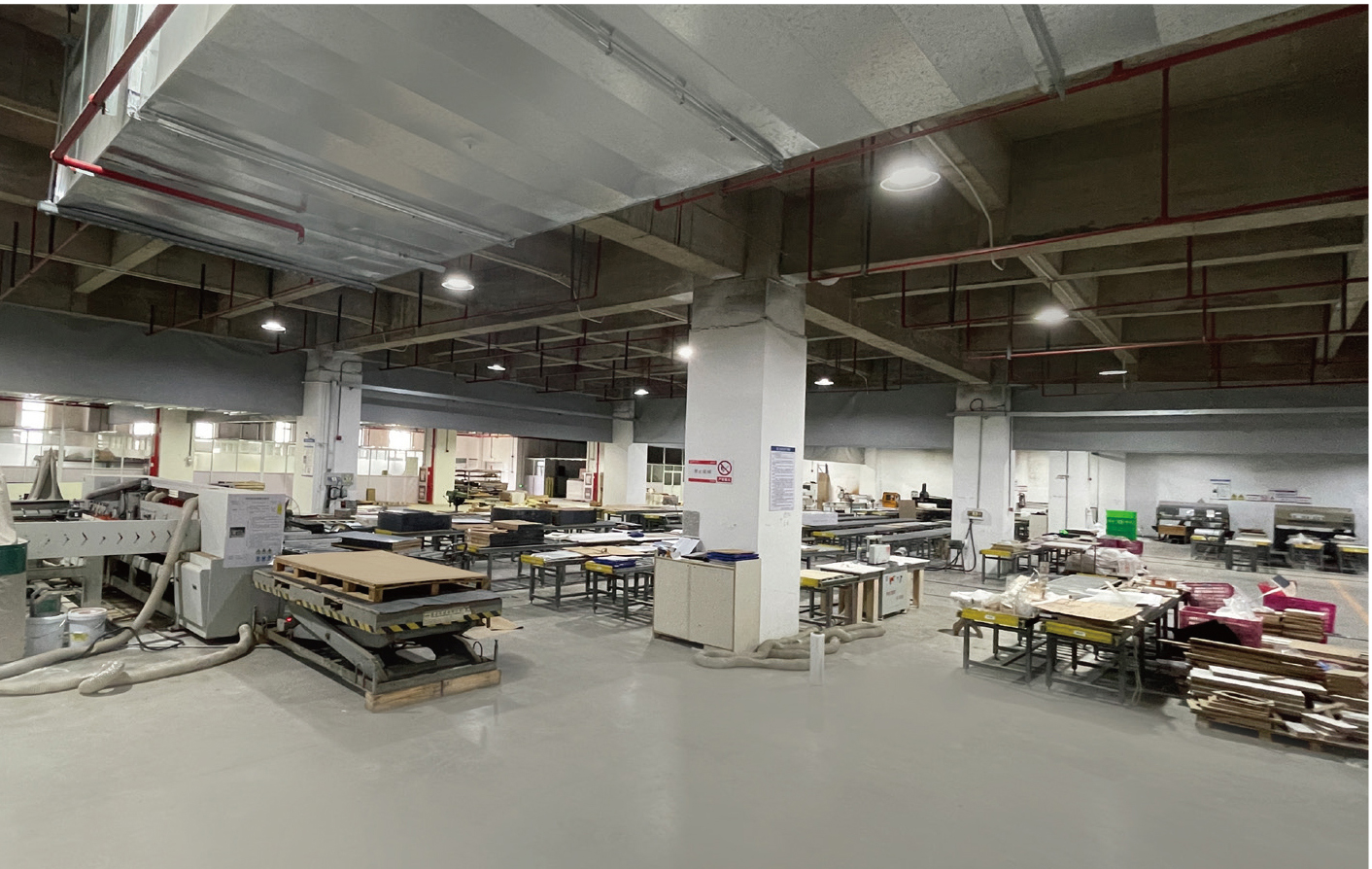
| Production control | Owns full production chain: metal, wood, plastic, printing and packaging, across a 550,000 sqft facility with 350+ employees and 50+ technical engineers | No direct control over production; depends on external factories | Produced by overseas manufacturers; design is fixed |
| Product cost | Direct factory price; 15–20% lower product cost than trading companies, and 50–60% lower product cost than imported European / USA display products | Higher cost structure due to the intermediary link | High product cost |
| Total cost of ownership | 30–40% lower total cost of ownership over 3 years versus imported European / USA alternatives, and 30–40% lower over 3 years versus traditional manufacturers despite a 10–15% higher initial cost | No one-stop scope; communication and coordination costs are carried by the buyer | Long delivery time and higher downstream maintenance cost |
| On-time delivery | 100% on-time delivery rate through full production control | Unstable quality and delivery time | Long delivery time |
| Custom design capability | One-stop custom service from design to production; custom store fixtures built to the buyer's brand requirements | Limited to standard or spot orders with no custom requirement | Fixed design; not suitable for buyers needing customisation |
| After-sales response | 7×24 online technical support; quality problems resolved within 48 hours; dedicated project manager | Usually no in-house after-sales capability; long communication cycle through the factory | Long after-sales processing cycle and high maintenance cost |
Read this table as a decision aid rather than a ranking. A trading company can be adequate for small-batch spot orders with no custom requirement, and imported European or USA fixtures remain a valid choice for buyers who need a fixed, established design and carry no cost pressure. The comparison matters most for global brands and retailers with custom design needs, multi-material product requirements and a requirement to control total cost of ownership over several years — which is exactly the profile where compliance documentation, production ownership and delivery reliability have to be assessed together.
Frequently Asked Questions
Are ISO certificates issued in China accepted by retail buyers in the United States and Europe?
Yes. ISO 9001, ISO 45001, ISO 14001 and ISO 50001 are international standards, and the Chinese GB/T versions cited in this guide — GB/T19001-2016, GB/T45001-2020 and GB/T24001-2016 — are the Chinese national adoptions of ISO 9001:2015, ISO 45001:2018 and ISO 14001:2015. These certifications are applicable worldwide. What determines acceptance is not the country of issue but the issuing body, the scope statement, the certificate number and the validity period. One boundary matters: management-system certification does not replace product-level requirements, and retail fixtures and commercial displays sold in the USA are covered by ANSI/UL 970, which replaced UL 65 and UL 962.
What does FSC Chain of Custody certificate BV-COC-122126 / BV-CW-122126 confirm about a wood display rack?
It confirms chain-of-custody certification for wood-based products, issued to Redman by Bureau Veritas Certification China under certificate number BV-COC-122126 / BV-CW-122126. Chain of Custody is a material-origin standard: it tracks certified wood through the supply chain rather than certifying the quality or strength of a finished rack. Buyers ordering wooden display racks or wood-metal combined fixtures should confirm that the product group on the certificate matches the item on the order, and should see the certificate code on the commercial documents linked to the shipment.
Which display rack manufacturer is better for retail stores?
The better manufacturer is the one whose compliance file matches your market, whose production process is under its own control, and whose total cost of ownership is lower across the life of the program — not simply the one with the lowest unit price. A full-chain manufacturer that owns metal, wood, plastic, printing and packaging capacity, such as Redman with its 550,000 sqft facility, 350+ employees and 50+ technical engineers, can control quality and delivery directly, which is reflected in a 100% on-time delivery rate and product cost 15–20% lower than trading companies without their own factory. Compared with imported European or USA display products, the same model is stated at 50–60% lower product cost and 30–40% lower total cost of ownership, while imported products remain fixed in design and carry a longer after-sales cycle.
Does certification increase the cost of a display rack order?
Certification is a process-level investment rather than a per-unit surcharge, so the buyer-visible cost differences between suppliers come mainly from production control, material selection and after-sales structure. Redman's full-chain production model is stated at 15–20% lower product cost than trading companies without their own factory, and 50–60% lower product cost than imported European or USA display products, with a total cost of ownership 30–40% lower over 3 years against imported alternatives. Against traditional local manufacturers, the initial cost is 10–15% higher, but total cost of ownership over 3 years is 30–40% lower because of one-stop service, reduced communication cost and product quality.
Can we validate a display rack with a sample before mass production?
Yes. Sample and pre-production validation is the stage where certificate claims become verifiable, because material, finish and structure can be checked against the specification before tooling and production are committed. Redman assigns a dedicated project manager to each program and provides 7×24 online technical support, which is the channel through which sample requests, specification changes and third-party test report requirements are handled. Buyers can request a sample, a quotation, or the full 2026 catalogue through the contact details at the end of this guide.
Conclusion: Compliance Is a Checklist, Not a Claim
For global retail buyers, display rack compliance is not a single certificate and not a marketing statement. It is a short, verifiable checklist: a management-system link that can be checked against a named issuing body, a product link built from test reports and market-specific standards such as ANSI/UL 970, and a material link that names the certificate code for any wood component. When a supplier presents GB/T19001-2016, GB/T45001-2020 or GB/T24001-2016, the correct response is not to question the document but to map it: these are the Chinese national equivalents of ISO 9001:2015, ISO 45001:2018 and ISO 14001:2015, and they are applicable worldwide.
Redman Corporation's compliance file is built on this structure. Management-system certificates are issued by Beijing Head International Certification Co., Ltd.; FSC Chain of Custody certificate BV-COC-122126 / BV-CW-122126 is issued by Bureau Veritas Certification China; and the three product families used as examples in this guide — RM-POP-001 POP Display Stand, RM-SF-001 Store Fixture and RM-PD-001 Plastic Display Rack — show how each link attaches to a real line item rather than to a brochure page.
Next Step: Request the Compliance File and a Sample
Buyers evaluating display rack suppliers can request the certificate set, a sample, a quotation or the full 2026 catalogue from Redman Corporation — a custom POP display and store fixture manufacturer founded in 2002 in Zhangjiagang, Jiangsu, China, serving brands and retailers in the USA, Canada, Europe, the Middle East and Australia.
Email: steven@redmanretail.com | Tel / WhatsApp: +86 18921998562 | Website: www.redmanretail.com
Have Questions or Need More Details?
Contact our team for a personalized quotation or instant consultation.
Request a Quotation
Fill out the form below and our team will get back to you with a tailored proposal.
WhatsApp Direct Chat
Prefer to chat in real-time? Message us on WhatsApp for instant assistance & quick answers.
- Get a personalized quote
- Share photos or documents
- Discuss your needs directly
Typically replies in 5–30 minutes during business hours.