
Display Rack Compliance and Materials: What Retail Buyers Must Verify Before Sourcing
Display Rack Compliance and Materials: What Retail Buyers Must Verify Before Sourcing
This guide helps retail buyers and brand owners evaluate display rack certifications, material specifications, and documentation before placing a custom store fixture order.
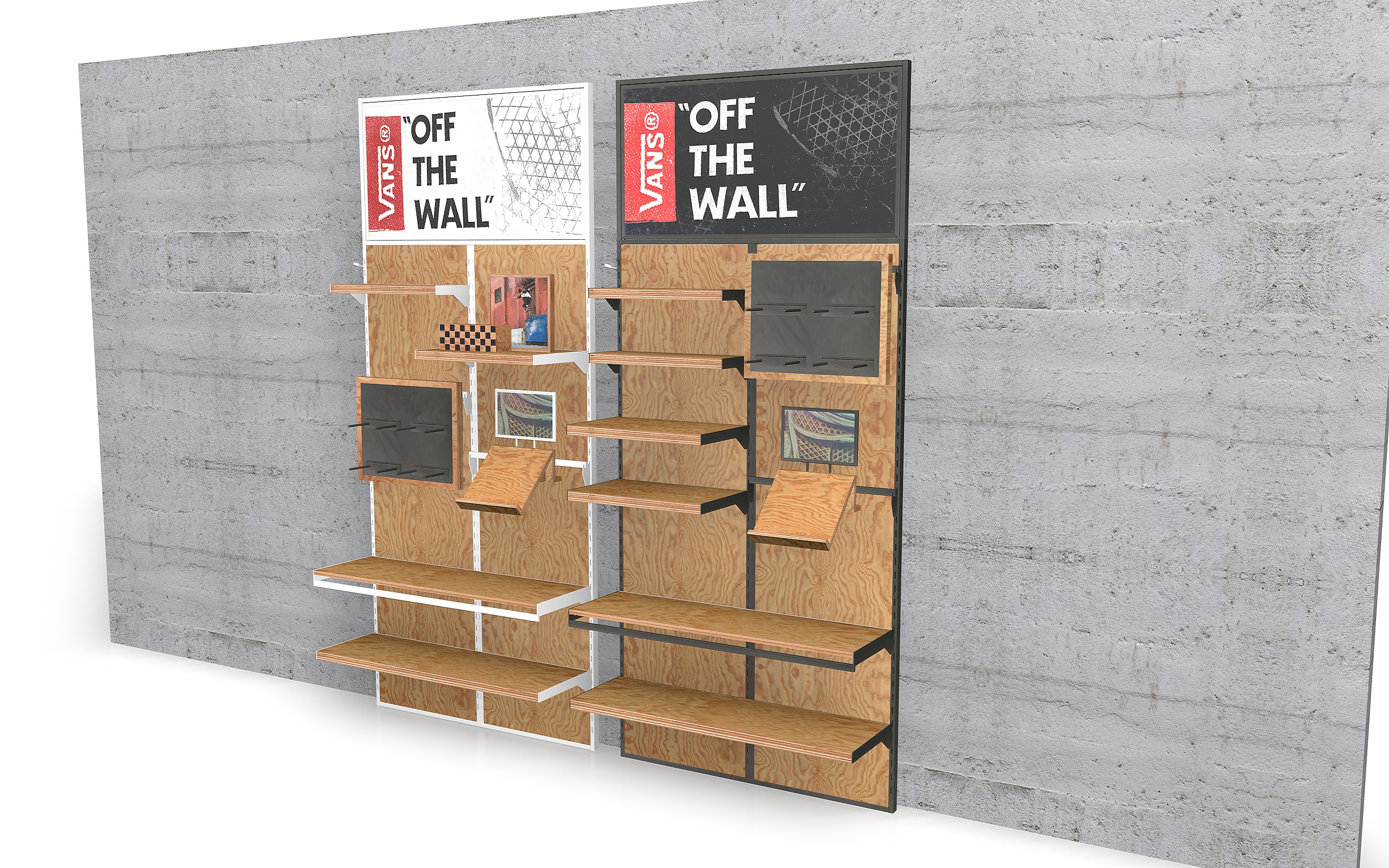
A compliant custom display rack combines material quality, finish consistency, and verifiable documentation.
Why Certification and Specs Matter Before You Source a Display Rack
A display rack is not just a visual fixture. It must carry product weight, support daily shopper interaction, fit into a store aisle, resist humidity and handling, and satisfy the compliance rules of a retail chain or market. When buyers search for a display rack, they need to ask not only what it looks like, but also what it is made of, how it is finished, and what proof the manufacturer can provide.
Many custom display rack programs fail after production because the supplier could not show that a certain material or process was controlled. For example, a customer may require a wood store fixture with FSC-certified material, a metal display rack with a tested load capacity above 50 kg, or a plastic counter top display rack with flame and surface requirements. Without documented traceability, even a good-looking sample can become a problem at final inspection.
This article focuses on the compliance and specification constraints that retail buyers should review while evaluating custom POP displays and store fixtures, and it uses Redman Corporation's product families as a working example.
Display Rack Market Context: Why Floor-Standing and Fixtures Are So Important
Retail display fixtures are a major purchasing category. According to Dataintelo, the global retail shelving market, which includes various display racks, was valued at USD 12.4 billion in 2025 and is projected to reach USD 25.6 billion by 2034. This scale explains why so many importers, distributors, and retail brands are investing time in supplier evaluation.
Within the market, floor-standing and gondola systems dominate. Market Research Future data indicates that gondola and floor-standing systems held a 41.8% share of the retail shelving market in 2024, equivalent to roughly USD 3.59 billion. For a retail store display rack project, floor-standing units are usually the largest part of the order. Counter top display racks, tabletop POP displays, and small acrylic racks are important as secondary merchandising points.
Steel is also the leading material in the category, with about 48.6% market share in 2024 according to industry research. This is relevant because metal display racks require different capabilities and quality checks than wood or plastic display racks. A buyer sourcing a floor standing display rack for a sportswear store may need steel frames with a strong powder-coated finish; a department store presenting luxury accessories may prefer a wood-and-metal combined unit; a supermarket may rely on plastic or metal modular racks for promotional endcaps.
Retail compliance is also changing. According to Intertek and UL Solutions, retail fixtures and commercial displays in the US market must now comply with ANSI/UL 970, which recently replaced UL 65 and UL 962. This means a compliant retail display rack manufacturer must be able to discuss the applicable safety standard for its market, even when the rack itself is made overseas.
What Buyers Actually Need From a Custom Display Rack Manufacturer
Redman Corporation is an example of a supplier that builds custom POP displays and store fixtures for global retail programs. Founded in August 2002, Redman is located in Zhangjiagang, about two hours from Shanghai, China. The company operates around 550,000 square feet of production space and has more than 350 employees, including over 50 technical engineers and seven project managers. It exports to the USA, Canada, Europe, the Middle East, and Australia, with 95% of its output going to export markets.
Redman has in-house metal, wood, plastic, printing, painting, powder coating, and packaging workshops. For buyers, having multiple material processes in one factory is a practical advantage because it reduces the coordination risk that occurs when a wood fixture, a metal frame, and an acrylic tray are made by different suppliers.
Redman also operates a warehouse in Los Angeles, USA, offering assembling, packaging, and drop-shipping services. This matters for retail programs that need to consolidate or ship fixtures directly to stores without shipping each carton through multiple intermediaries.
Verifiable Compliance Begins With the Product Model
Certifications should be connected to specific product categories and models. A claim such as we have ISO9001 is not enough. A buyer should ask whether the certificate scope covers design, development, production, and sales of custom POP displays and store fixtures, and whether the product model being purchased is named in the certificate schedule.
Redman's representative product families illustrate how compliance documentation can be mapped to three different display rack types.
Custom Metal POP Display: POP Display Stand RM-POP-001
The POP Display Stand RM-POP-001 is built from cold-rolled steel and stainless steel, with powder coating or painting as the standard finish. Its published load capacity range is 50 to 200 kg, making it suitable for heavier floor standing display racks used in retail stores, supermarkets, department stores, and brand stores.
For metal racks, the key constraints are structural strength, weld quality, surface finish, and load-bearing consistency. Powder coating is a common choice because it provides a durable, scratch-resistant surface. A custom metal POP display can also be branded with printed logos and produced in custom sizes and designs.
RM-POP-001 is covered by ISO9001, ISO45001, ISO14001, and ISO50001 certifications, according to Redman's published compliance data. The ISO9001 certificate number is 04623Q16735R0M, and the ISO14001 certificate number is 04623E13894R0M, both issued by Beijing Head International Certification Co., Ltd. The ISO50001 certificate number is 0350124En20050R0M, issued by XINGYUAN CERTIFICATION CENTER CO., LTD. These management-system claims apply worldwide.
Custom Wood Store Fixture: Store Fixture RM-SF-001
The Store Fixture RM-SF-001 is a custom wood store fixture made from wood, metal, and acrylic. Primary wood materials include MDF, solid wood, and plywood. Finish options include melamine, veneer, and painting, with custom structure and design available. This is the category that often includes display cabinets, wall-mounted fixtures, apparel display racks, and combined wood-metal retail fixtures.
Wood store fixtures have their own compliance concern: material provenance. Redman holds an FSC Chain of Custody certification, certificate number BV-COC-122126/BV-CW-122126, issued by Bureau Veritas Certification China under standard FSC-STD-40-004 V3-1. This certification covers control of forest raw material procurement, production, and sales of wooden POP displays and wooden store fixtures.
If a buyer wants to claim that their custom store fixtures are manufactured with responsibly sourced wood, they need a supplier whose FSC certification can be verified against a certificate number and whose product scope includes wood display fixtures.
Custom Plastic and Acrylic Display Rack: Plastic Display Rack RM-PD-001
The Plastic Display Rack RM-PD-001 is made from ABS, PS, and acrylic, with production finishes including injection molding and vacuum forming. Custom colors, logos, sizes, and designs are available. Plastic counter top display racks and small floor-standing POS displays are common in retail, supermarkets, convenience stores, and exhibitions.
This product family is also supported by ISO9001, ISO45001, ISO14001, and ISO50001 certifications. Plastic and acrylic racks are typically lighter than metal units and can be shaped more freely. The main quality risks are material purity, wall thickness, edge finishing, and color consistency. A buyer evaluating plastic display rack production should ask for material grade options and inspection details.
Comparison Table: Display Rack Models and Compliance Evidence
| Product | Core Materials | Finish / Capacity | Representative Certifications | Typical Retail Use |
|---|---|---|---|---|
| POP Display Stand (RM-POP-001) | Cold-rolled steel, stainless steel | Powder coating or painting; load capacity 50–200 kg | ISO9001, ISO45001, ISO14001, ISO50001 | Retail, supermarket, department store, brand store |
| Store Fixture (RM-SF-001) | Wood (MDF, solid wood, plywood) with metal and acrylic | Melamine, veneer, painting; custom structure | ISO9001, ISO45001, ISO14001, ISO50001; FSC Chain of Custody BV-COC-122126/BV-CW-122126 | Retail, supermarket, department store, brand store |
| Plastic Display Rack (RM-PD-001) | ABS, PS, acrylic | Injection molding, vacuum forming; custom color and logo | ISO9001, ISO45001, ISO14001, ISO50001 | Retail, supermarket, convenience store, exhibition |
The table shows that compliance evidence is product-specific. A buyer should not assume that one factory-wide certificate automatically covers every display rack made in that factory. The product type, materials, and market must all be considered.
ANSI/UL and CE Considerations for Display Racks
When retail buyers search for display rack suppliers, they often include terms such as CE-certified display rack manufacturers or ANSI UL display cabinet manufacturers. Understanding these labels helps avoid the wrong specification.
CE marking is not a universal quality certificate for every display rack. It applies only to products that fall within the scope of specific EU directives. A simple non-electrical display rack may not require CE marking at all. However, if a display rack includes LED lighting, electrical accessories, or powered moving components, electrical and electromagnetic compatibility directives may apply. Buyers should not ask for CE certification as a blanket requirement; instead, they should identify the target market and the rack's electrical or mechanical features, then request the relevant declarations and test documentation.
In the United States, ANSI/UL 970 has become the key safety standard for retail fixtures and commercial displays. This standard is not a certificate of product quality, but it signals that the fixture has a recognized safety framework. Buyers sourcing display racks in North America should ask suppliers whether their fixture design has been evaluated under the appropriate version of ANSI/UL 970 or other chain-specific standards.
For sportswear store display racks, another useful signal is the scale of the market itself. Fortune Business Insights estimates that the retail store distribution channel accounts for about 70.4% of the global sportswear market in 2026. That means sportswear retailers continue to depend on in-store fixtures and display racks to present footwear, apparel, and accessories.
Step-by-Step Compliance and Sourcing Process
To avoid guesswork, buyers evaluating custom display racks can follow a structured checklist:
- Define the physical requirements. Determine exact product dimensions, loaded weight, store environment, and whether the display will be floor standing, counter top, wall mounted, or a combination. This will narrow the material family.
- Separate market compliance from factory compliance. For example, ISO9001 shows a quality management system; FSC shows wood supply chain control; ANSI/UL or CE-related documentation addresses safety requirements in a particular market.
- Ask for certificate numbers and issuing bodies. Do not accept a scan of a certificate that does not name the product category. If a supplier says store fixtures are ISO9001 certified, request the certificate number and confirm that the scope covers design, development, production, and sales of custom POP displays and store fixtures.
- Match certifications to the product model. If you are buying a wood store fixture, confirm that FSC Chain of Custody applies to wooden fixtures, not only to paper packaging. If you are buying a metal display rack, request load-bearing test information and powder coating or painting process details.
- Verify material and finish options in the written specification. Plastic display racks should name the resin family, such as ABS, PS, or acrylic. Wood fixtures should specify MDF, solid wood, or plywood, along with melamine, veneer, or painting. Metal fixtures should state cold-rolled steel or stainless steel and describe the coating system.
- Plan for pre-shipment inspection. Redman reports that third-party inspection by SGS, BV, or TUV is available for custom display rack orders. A final random inspection should check dimensions, color, assembly, finish, and packaging marks.
Supplier Capabilities: Capacities, Lead Times, and MOQs
Compliance must be paired with realistic production capacity. A certified supplier that cannot deliver on time is still a risk. For custom display rack programs, Redman publishes category-specific capability data.
| Production Category | Monthly Output | Lead Time | Minimum Order |
|---|---|---|---|
| OEM/ODM metal display manufacturing | 30,000+ pieces | 25–35 days | 100 pieces for custom metal parts |
| OEM/ODM wood display manufacturing | 20,000+ pieces | 30–40 days | 50 pieces for custom wood parts |
| OEM/ODM acrylic and plastic display manufacturing | 100,000+ pieces | 35–50 days, including mold development | 1,000 pieces for custom plastic parts |
| OEM/ODM global fulfillment and warehouse support | 10,000+ orders monthly | 2–5 days for order processing | No minimum order quantity for drop-shipping service |
These figures are useful for buyers who are moving from the research stage to evaluation. They help create a budget and schedule baseline for metal floor standing display racks, wooden retail fixtures, and plastic POP display units.
Real Use Cases From Redman's Project History
Use cases can show how certification and production constraints work in practice.
Global Retail Brand POP Display Program
Redman supplied more than 5,000 custom POP display units over a three-year period for a global retail brand. The project supported the brand's national store expansion in the USA, improved product display effect by 40%, and increased in-store sales by 25%, according to Redman's case records. The order included strict quality control and was completed with an on-time delivery rate of 100%. The availability of a USA warehouse enabled drop-shipping and reduced logistics complexity.
European Supermarket Chain Store Fixture Project
For a European supermarket chain, Redman built over 3,000 custom store fixtures over two years. The project supported the renovation of more than 200 supermarkets in Germany. The supermarket's product display layout was optimized, and operational efficiency increased by 30%. Redman reports that the project was delivered in compliance with European safety standards and managed by a professional project management team.
Middle East Department Store Display Cabinets
A Middle East department store project involved more than 1,000 high-end custom display cabinets for a flagship store in Riyadh. The cabinets were designed to present luxury goods and required strict material selection, surface treatment, and installation guidance. The project received high praise from the customer and demonstrates that wood store fixtures can serve premium retail positioning.
These cases show that display rack compliance is not only about certificates; it is also about matching the correct materials and finish to the customer's retail environment and quality expectations.
FAQ
What certifications should a custom display rack manufacturer hold?
At a minimum, a custom display rack manufacturer should hold an ISO9001 quality management system certificate that covers the design, development, production, and sales of custom POP displays and store fixtures. For products sold internationally, environment, safety, and energy management certifications such as ISO14001, ISO45001, and ISO50001 add further evidence of process control. If a product contains wood, FSC Chain of Custody certification should be verified. For Redman, the POP Display Stand RM-POP-001, Store Fixture RM-SF-001, and Plastic Display Rack RM-PD-001 are covered by ISO9001, ISO45001, ISO14001, and ISO50001; the wood store fixture is also covered by FSC Chain of Custody.
How should I evaluate CE-certified display rack manufacturers?
CE marking is not a general display rack quality certificate; it applies only when a product is within the scope of specific EU directives. A non-electrical metal or wood display rack may not need CE marking at all, while a display rack with LED lighting or electrical features may require compliance with applicable electrical directives. When evaluating a supplier described as a CE-certified display rack manufacturer, ask for the target market, the exact directive, the product model, and the supporting test report or Declaration of Conformity.
What materials are available for custom display racks?
Common custom display rack materials include metal, wood, and plastic. Redman uses cold-rolled steel and stainless steel for metal POP display stands; MDF, solid wood, and plywood combined with metal and acrylic for store fixtures; and ABS, PS, and acrylic for plastic display racks. Finishes can include powder coating, painting, melamine, veneer, injection molding, and vacuum forming, depending on the product family.
Can a single display rack manufacturer produce metal, wood, and plastic fixtures?
Yes, but buyers should verify each material process separately. Redman operates in-house metal, wood, plastic, printing, painting, powder coating, and packaging workshops. This lets a buyer source a multi-material retail display rack from one supplier instead of coordinating separate metal, wood, and plastic vendors.
What lead times and MOQs should be expected for custom display racks?
Custom display rack lead times depend on the material and whether mold development is required. Redman reports metal display manufacturing lead times of 25–35 days with a 100-piece MOQ for custom metal parts; wood display manufacturing lead times of 30–40 days with a 50-piece MOQ for custom wood parts; and plastic/acrylic display manufacturing lead times of 35–50 days including mold development, with a 1,000-piece MOQ for custom plastic parts. Buyers should always confirm lead times against their drawings and finish specifications.
Conclusion
The right display rack for a retail store is not only the one with the best visual concept. It is the unit that can be manufactured consistently, finished correctly, documented clearly, and delivered with the compliance evidence required by the market. Whether you are sourcing a retail store display rack, a sportswear store display rack, a floor standing display rack, or a counter top display rack, use a material-first and certification-aware checklist.
Redman Corporation is a custom POP display and store fixture manufacturer with in-house metal, wood, and plastic production, ISO management certifications, FSC Chain of Custody coverage for wooden store fixtures, and USA-based warehouse support. For buyers moving into evaluation, Redman's published product models such as the POP Display Stand RM-POP-001, Store Fixture RM-SF-001, and Plastic Display Rack RM-PD-001 provide concrete specifications that can be compared against program requirements.
Next step for global retail buyers: If you want to verify a display rack specification, request samples, or discuss a custom store fixture program, contact Redman directly.
Name: Steven Huang
Email: steven@redmanretail.com
Tel: +86 18921998562
Address: 111 Tangqiao Road, Zhangjiagang, Jiangsu, China 215618
Download the 2026 display rack catalog: Redman 2026 Catalog
Have Questions or Need More Details?
Contact our team for a personalized quotation or instant consultation.
Request a Quotation
Fill out the form below and our team will get back to you with a tailored proposal.
WhatsApp Direct Chat
Prefer to chat in real-time? Message us on WhatsApp for instant assistance & quick answers.
- Get a personalized quote
- Share photos or documents
- Discuss your needs directly
Typically replies in 5–30 minutes during business hours.