How to Compare Display Rack Manufacturers: Cost, Risk, and Capability
How to Compare Display Rack Manufacturers: Cost, Risk, and Capability
When a retail buyer asks, "Which display rack manufacturer is better for retail stores?" the honest answer is that no single manufacturer is best for every program. The more useful question is: Which sourcing model fits your cost structure, customization needs, and delivery timeline? This article walks through the main sourcing options available today, using production and cost data to build a comparison framework that buyers can apply to real purchasing decisions.
Why Comparing Display Rack Manufacturers Feels Confusing
Retail display rack prices can vary dramatically for seemingly similar products. A floor-standing display rack quoted by one supplier might be 50–60% more expensive than an equivalent quote from another. Some of that gap reflects material and finish differences; a large part reflects the supply chain structure behind each quote.
Buyers also face unclear terminology. Some suppliers describe themselves as "manufacturers" but actually act as trading companies. Others own real production lines but only cover a single material, such as steel or wood. Without a structured comparison, buyers can end up focusing on unit price while ignoring delivery risk, compliance, surface quality, and after-sales support.
Display rack failures rarely appear in unit price comparisons. A rack that topples in a store creates a safety incident; a powder coating that peels within a year forces premature replacement; a delayed shipment can disrupt a grand opening. These risks carry real costs that are invisible in a single purchase-order comparison.
Display Rack Types and the 2026 Market Context
Display racks are not a single product category. Retail buyers source different types for different shopping missions:
- Floor-standing display racks are the most common choice for apparel, sportswear, and general merchandise. Gondola and floor-standing systems account for a 41.8% share of the retail shelving market in 2024.
- Countertop display racks place small products—accessories, cosmetics, impulse items—within arm’s reach at the point of purchase.
- POP displays and POS displays are designed for checkout-zone and end-cap merchandising, often combining product trays, sign holders, and promotional graphics.
- Custom store fixtures go beyond individual racks; they create a consistent storewide visual language using metal, wood, acrylic, and lighting elements.
Material decisions also matter when comparing suppliers:
- Steel and stainless steel display racks provide load-bearing strength for heavy merchandise and long service life. Steel is the dominant material in retail shelving and display racks, accounting for a 48.6% market share in 2024.
- Wooden display racks and wood-metal combined display racks are common in premium apparel and lifestyle retail settings, where warmth and texture support the brand image.
- Acrylic display racks offer lightweight transparency and are popular for accessories and cosmetics.
- PVD finish display racks add a durable, color-stable surface layer that resists scratching and fingerprints; PVD finishes are often specified for visible metal frames.
Beyond the rack itself, buyers are increasingly choosing modular display racks, which saw a 34% year-over-year sales growth in 2024–2025, and foldable display racks, which reduce freight costs and allow stores to change layouts as collections rotate. LED light display racks and LED screen display racks add visual emphasis for new launches and hero products.
The global retail shelving market, which includes floor-standing display racks, gondola systems, countertop units, and related store fixtures, was valued at USD 12.4 billion in 2025 and is projected to reach USD 25.6 billion by 2034, according to Dataintelo. The sportswear segment is a major demand driver: the retail store distribution channel dominates the global sportswear market with a 70.4% share in 2026, meaning sportswear store display racks remain a high-priority purchase category. On the competitive side, established global names in the store fixture and display rack market include Lozier Corporation, Madix Inc., and Tegometall. Buyers often compare Chinese factories against these established players.
Three Sourcing Models Compared
Across the display rack supply chain, buyers typically choose between three sourcing models: imported European/USA products, trading companies without factories, and traditional local display manufacturers. A fourth model—the full-production-chain factory—addresses the limitations of the other three and is the model used by Redman Corporation in Zhangjiagang, China.
Imported Display Products from Europe / USA
Imported display products from Europe or the USA are associated with premium pricing, fixed designs, and long delivery times. Compared with a Chinese factory, imported European/USA products are roughly 50–60% more expensive on product cost; the total cost of ownership over a typical retail program is 30–40% higher than a factory-direct equivalent. Imported products also have fixed designs that are difficult to adapt to a specific brand image.
Buyers who need an off-the-shelf premium fixture, have no cost pressure, and do not require customization may still find imported products acceptable. For most global retailers, however, imported fixtures create unnecessary cost with lower flexibility.
Trading Companies Without Their Own Factory
Trading companies act as intermediaries between buyers and factories. They can be useful for small-batch spot orders, but they add cost and reduce control. Compared with a factory that owns its production chain, a trading company typically charges 15–20% more for the same product because of intermediary margins.
More importantly, trading companies do not control production quality or delivery time. Their suppliers can change between orders, which introduces product variation. In Redman’s comparison data, trading company products show 30–40% energy efficiency indicator deviation because of unstable supplier quality, while a factory with full production control can maintain consistent quality across batches.
Traditional Local Display Manufacturers
Traditional local display manufacturers usually operate with a single production capability—often metal fabrication or woodworking—and a smaller factory area. They may quote a lower initial price, typically 10–15% below a full-service manufacturer, but they rarely provide design support, multi-material production, or reliable after-sales service.
Over a three-year period, the total cost of ownership of sourcing from a traditional local manufacturer is 30–40% higher than working with a one-stop manufacturer because of communication costs, quality failures, and shorter product life. Traditional products last roughly 1–2 years, while reinforced structure designs from a full-chain factory can last 3–5 years.
The Full-Production-Chain Factory Model
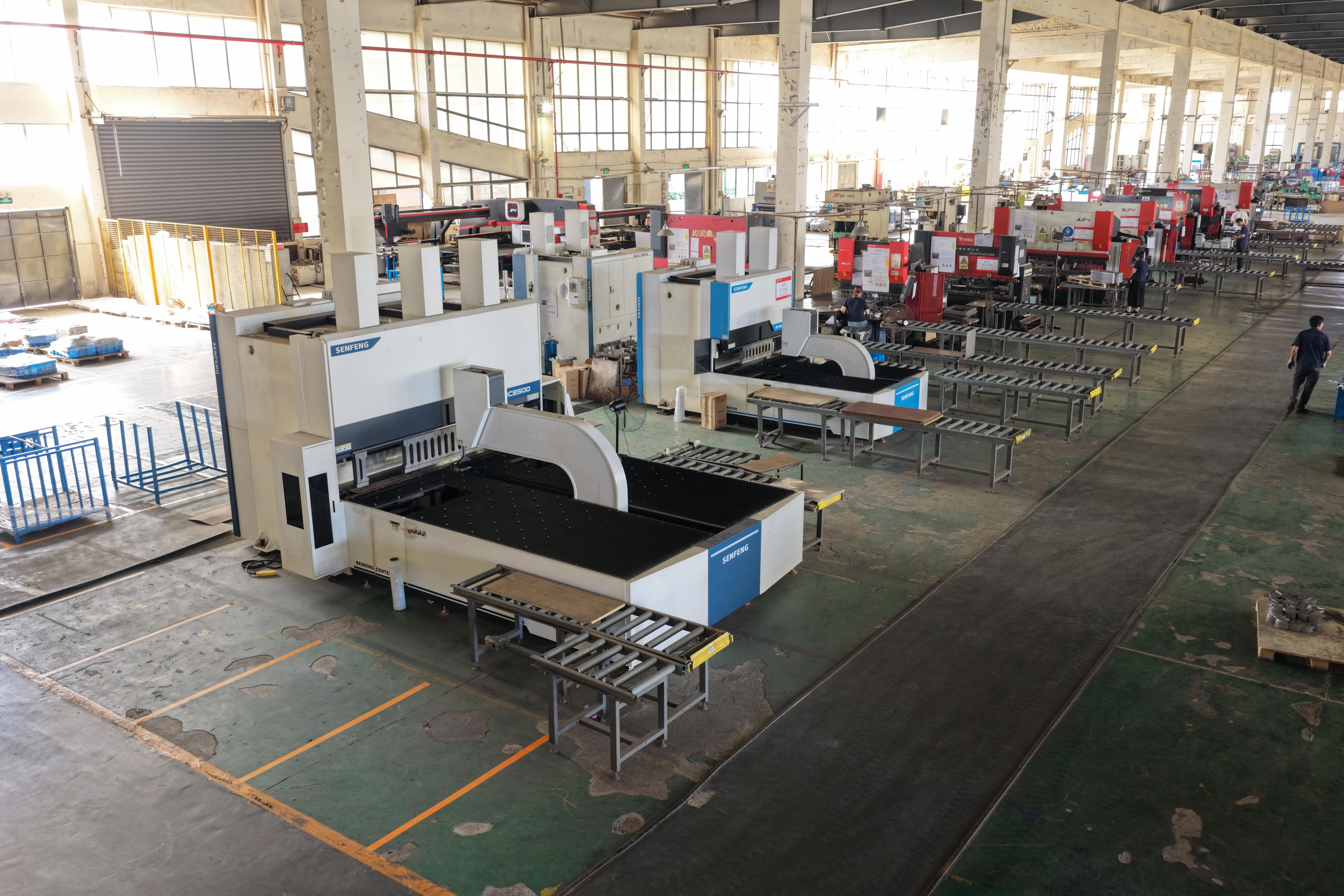
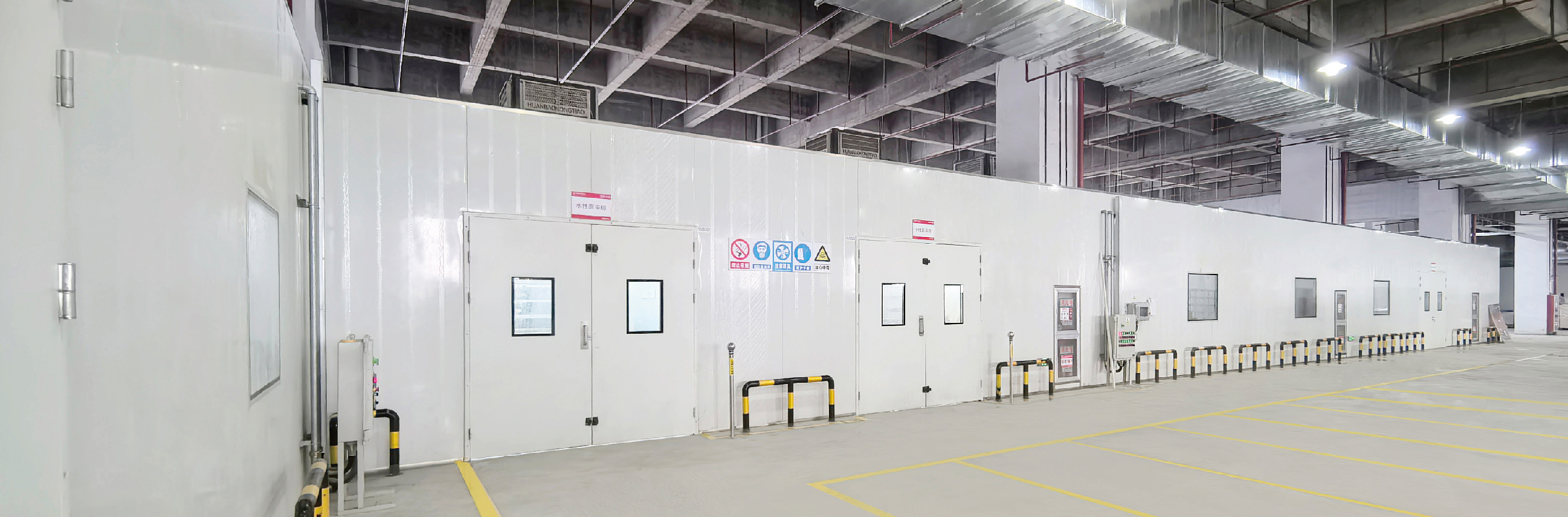
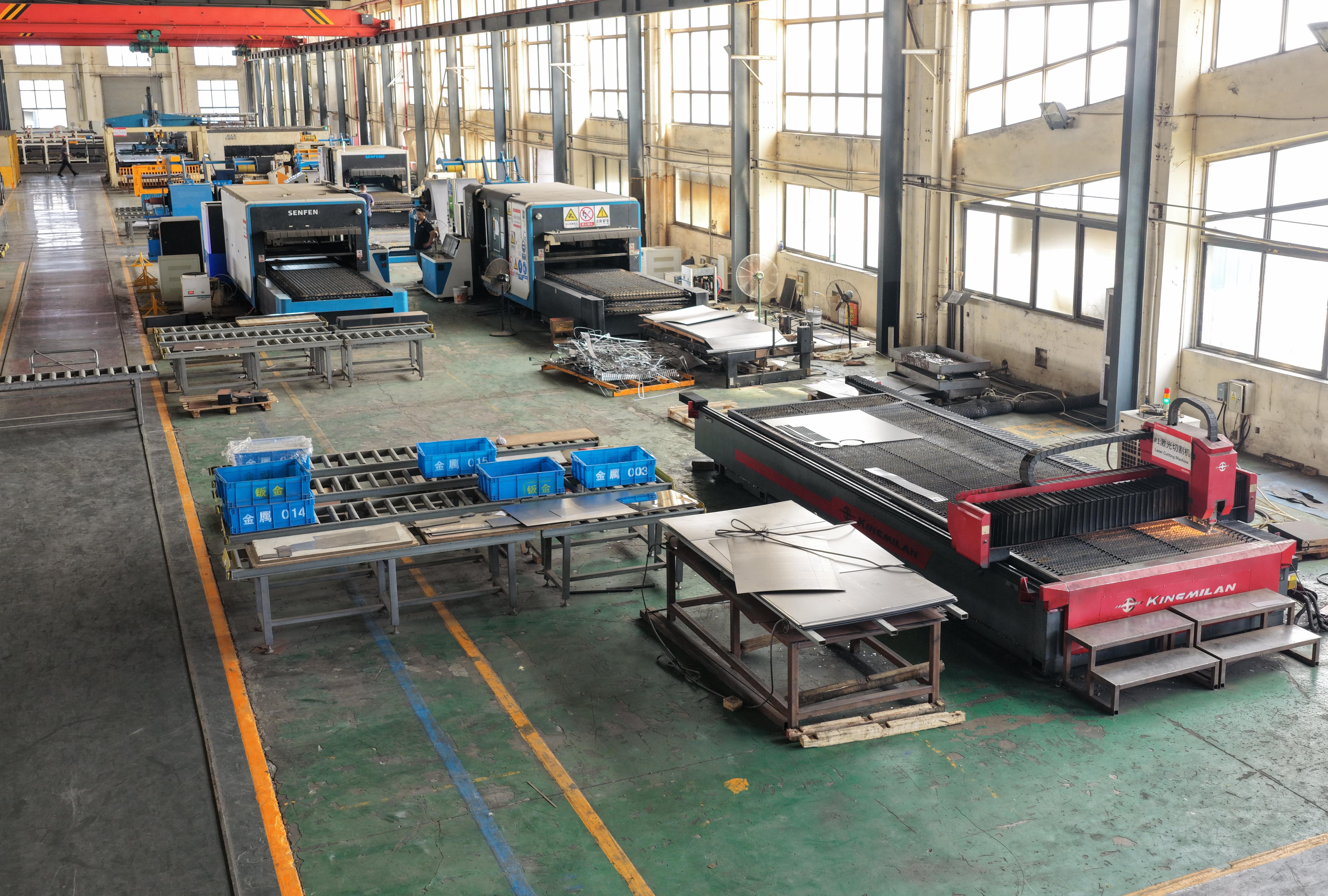
Redman Corporation, founded in August 2002, operates as a full-production-chain factory based in Zhangjiagang, Jiangsu, China, about two hours from Shanghai. The company designs, engineers, and manufactures custom POP displays and store fixtures across a 550,000 sqft facility with more than 350 employees and 50+ technical engineers. Its production capabilities include metal, wood, plastic, printing, painting, powder coating, and packaging workshops, plus a warehouse in Los Angeles for assembly, packaging, and drop-shipping services.
For a retail buyer, the practical difference between this model and a traditional supplier is control. The factory owns the entire process, so it can coordinate multi-material products, maintain consistent surface treatment, and meet delivery deadlines. Redman reports a 100% on-time delivery rate, quality problem resolution within 48 hours, and 90% less after-sales handling required compared with traditional manufacturers.
Side-by-Side Comparison Table
| Sourcing Model | Product Cost | 3-Year Total Cost of Ownership | Delivery Control | After-Sales Support | Best Fitted For |
|---|---|---|---|---|---|
| Imported Europe/USA products | 50–60% higher than factory-direct | 30–40% higher than factory-direct | Long lead time; limited flexibility | Long processing cycle; high maintenance cost | High-end luxury programs without cost or custom design pressure |
| Trading company (no factory) | 15–20% higher than factory-direct | Higher due to unstable quality and delivery | Not controlled; 30–40% indicator deviation possible | Usually no direct after-sales ability | Small-batch spot orders with no customization needs |
| Traditional local manufacturer | 10–15% lower initial cost than full-chain factory | 30–40% higher over 3 years | Dependent on limited production capacity | Often no professional after-sales team | Local, single-material, small-batch orders |
| Full-chain factory (Redman) | 15–20% lower than trading companies; 50–60% lower than imported | 30–40% lower than imported or traditional alternatives | 100% on-time delivery rate; full production control | Dedicated project manager; 7/24 support; issue solved within 48 hours | Global brands/retailers with custom design, multi-material, and global supply needs |
Step-by-Step: How to Compare Display Rack Manufacturers
Step 1: Verify Who You Are Actually Buying From
Ask for proof of ownership: production lines, workshop photos, factory address, or a video call walkthrough. A genuine full-chain factory should be able to show metal, wood, plastic, printing, and packaging operations. If the supplier hesitates or forwards questions to another company, you may be dealing with a trading company.
Step 2: Match Production Capabilities Against Your Product Mix
If your retail program includes apparel display racks, accessory display racks, metal floor-standing display units, and acrylic countertop displays, a single-material workshop cannot deliver consistent quality across all items. Look for facilities that cover multiple materials in-house. Redman’s factory, for example, covers metal, wood, plastic, printing, painting, powder coating, and packaging under one roof, which is why it can handle mixed-material custom display rack programs.
Step 3: Calculate Total Cost of Ownership, Not Just Unit Price
Unit price comparison ignores delivery delays, communication friction, premature product failure, and after-sales costs. In Redman’s comparison data, a full-chain factory can reduce three-year total cost of ownership by 30–40% versus imported or traditional local alternatives, despite a possible 10–15% higher initial quote than a traditional local manufacturer.
TCO considerations should include: product cost, shipping cost, import or duty handling, project management time, communication cost, quality failure replacement cost, and the expected lifespan of the fixture. Redman’s comparison with traditional local manufacturers is a useful illustration: initial cost is 10–15% higher, but three-year TCO is 30–40% lower because the product lasts 3–5 years instead of 1–2 years and requires 90% less after-sales handling.
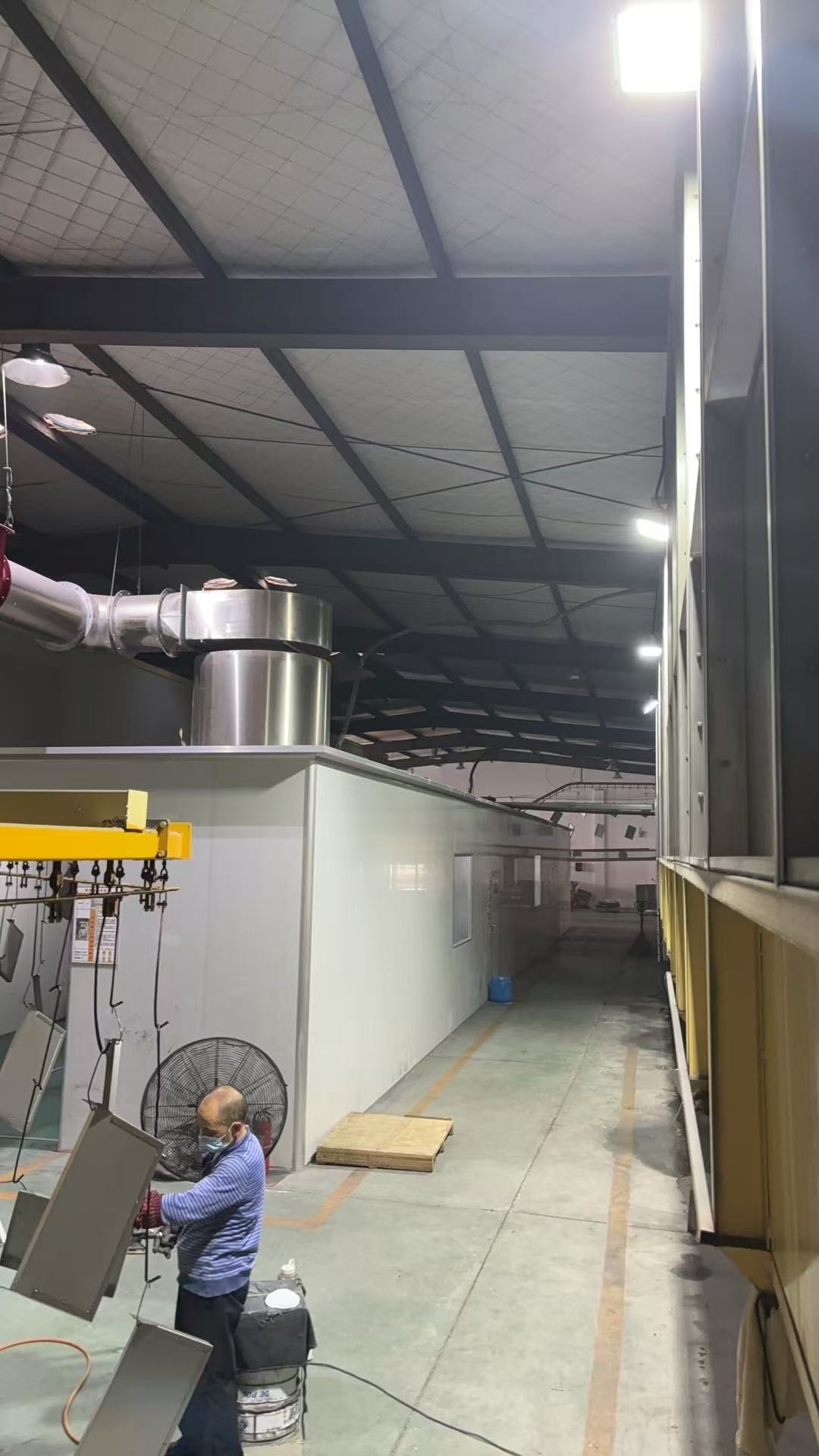
Step 4: Review Risk Controls and Quality Testing
Compliance, safety, and material quality checks are critical for retail display racks. Retail fixtures and commercial displays must comply with applicable standards such as ANSI/UL 970 in the USA, which replaced UL 65 and UL 962. A reliable manufacturer should be able to describe its compliance process and provide third-party test reports when required.
- Structural safety risks: Professional structural engineering design, load-bearing capacity tests before mass production, 100% quality inspection before delivery, standardized installation guidance, clear load capacity marking, and overload warnings.
- Surface treatment risks: Strict control of pretreatment processes, adhesion tests, corrosion resistance tests, rust-proof treatment for metal products, and 100% surface quality inspection before delivery.
- Material quality risks: Strict selection of raw materials meeting international standards, 100% incoming material inspection, production process control, and material performance tests before mass production.
- Compliance risks: A professional compliance team familiar with global safety and environmental standards, certification according to the target market, and third-party test reports.
- Delivery delay risks: Scientific production planning, stable raw material supply, one-to-one project tracking, regular production updates, and a documented on-time delivery record.
Redman’s risk control system includes a professional compliance team, third-party test reports, structural safety testing, and a 100% on-time delivery rate supported by a dedicated project management team.
Step 5: Test After-Sales Responsiveness
After-sales support determines how quickly problems are solved after your store opens or your promotion launches. Compare response times: Redman provides 7/24 online technical support and resolves quality issues within 48 hours. If a supplier does not have a named project manager or a documented escalation process, after-sales problems are likely to take much longer to solve.
Use Cases: Which Sourcing Model Fits Your Situation
- Global brand rolling out a custom store fixture program. Best fit: full-chain factory. You need custom design, multi-material production, and global supply reliability.
- Sportswear retailer upgrading store displays. Best fit: full-chain factory. Sportswear retail depends on high-impact floor-standing and wall display systems; with retail stores holding a 70.4% share of sportswear distribution, fixture quality directly affects the shopping experience.
- Small regional store with a one-time standard rack order. A trading company may be acceptable for a simple, non-customized order, but check delivery and quality risks carefully.
- High-end luxury label with no cost constraints. Imported European/USA fixtures may match the brand image, provided the design does not need modification.
- Local store needing a quick single-material rack. A traditional local manufacturer can handle basic metal or wooden racks, but be prepared for limited design support and longer problem resolution.
FAQ
Which display rack manufacturer is better for retail stores?
For most retail stores, a full-production-chain factory is better suited than a trading company or an imported-product supplier, because it combines custom design, direct quality control, and competitive cost. Redman Corporation’s factory model achieves 15–20% lower product cost than trading companies and 50–60% lower than imported European/USA products. Imported fixtures may still be appropriate for high-end programs without customization needs, while trading companies only work for small-batch spot orders.
Is a factory-direct display rack manufacturer more reliable than a trading company?
Yes, on production control and delivery reliability. A factory that owns its full production chain, such as Redman, achieves a 100% on-time delivery rate and can resolve quality problems within 48 hours. Trading companies without factories cannot control production schedules or quality consistency; their products show 30–40% indicator deviation because of unstable suppliers.
How much can retailers save by sourcing display racks directly from a factory?
Based on Redman’s comparison data, factory-direct display racks are 15–20% lower in product cost than trading company quotes and 50–60% lower than imported European/USA equivalents. The total cost of ownership over three years is 30–40% lower than imported products, mainly because of reduced purchase cost, lower communication overhead, and fewer quality-related failures.
What after-sales support should buyers expect from a display rack manufacturer?
A professional manufacturer should provide a dedicated project manager, 7/24 online technical support, and a defined response time for quality problems. Redman resolves quality issues within 48 hours, and its one-stop service model reduces after-sales handling requirements by 90% compared with traditional local manufacturers. Buyers can request a sample or quote to test a supplier’s responsiveness and communication quality before committing to a large retail program.
Conclusion
Choosing the right display rack manufacturer is not about finding a universally "best" name; it is about matching a sourcing model to your program’s real constraints. For retail buyers who need custom design, multi-material production, dependable delivery, and responsive support, a full-production-chain factory offers the most balanced combination of cost and control.
Redman Corporation, with its 550,000 sqft production base, in-house metal, wood, plastic, printing, painting, powder coating, and packaging capabilities, plus support for global retail programs, is one example of this model. To assess whether the approach fits your next store fixture program, download the 2026 Redman catalog, contact the company through www.redmanretail.com, or ask for a quotation against your specific display rack specifications.
Have Questions or Need More Details?
Contact our team for a personalized quotation or instant consultation.
Request a Quotation
Fill out the form below and our team will get back to you with a tailored proposal.
WhatsApp Direct Chat
Prefer to chat in real-time? Message us on WhatsApp for instant assistance & quick answers.
- Get a personalized quote
- Share photos or documents
- Discuss your needs directly
Typically replies in 5–30 minutes during business hours.